After 10 years in office, outgoing European Commission president Jose Manuel Barroso will make way. Today is his last day before the new Commission under Jean-Claude Juncker takes over.
After chairing 444 meetings of the College of Commissioners, Barroso said in Brussels he is proud of having helped steer the 28-nation bloc through one of the worst economic crises in decades. In his own words, he leaves a "stronger and better equipped Europe."
"Thanks to the competencies granted to the EU and the European Commission and the ECB in particular, we today have a stronger EU which is better equipped to face the challenges of the future. The reality is that despite all hesitations in some capitals it has been possible to strengthen the EU in institutional terms," Barroso said.
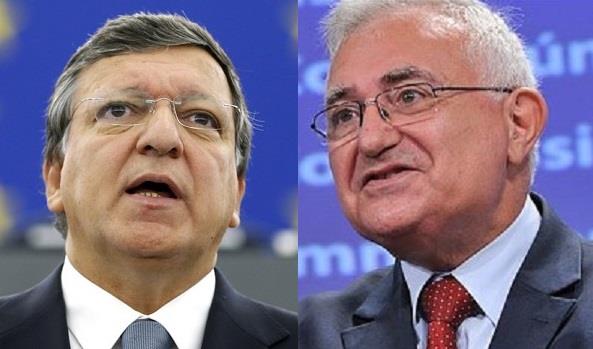
Under Barroso, Malta became a European Union member in 2004, and later also joined the eurozone. But perhaps his greatest memory of Malta will be the resignation of Maltese European Commissioner John Dalli two years ago, a case that is still having its reverberations both locally and in Brussels. Dalli had resigned after an investigation by EU's anti-fraud agency OLAF in 2012.
Setting stricter budget rules, tightening fiscal regulation and starting to build a European banking union are all part of Barroso's legacy.
The former Portuguese Prime Minister particularly praised the process of enlargement he led during the last 10 years, calling it "one of the greatest achievements in European history". Since 2004, 13 countries have joined the Union.
"Imagine that those countries have not joined the EU when they did. In that case, probably we would not only be discussing about Ukraine. We would probably be discussing now about Bulgaria or the Baltic States so it was the right thing to do," Barroso added.
But Barroso's departure has been darkened by a rise of anti-EU populist parties and a UK-led eurosceptic movement that have shaken the foundations of the European project.
He is "concerned", Barroso says, about the "disconnect" between European citizens and EU institutions.
"I am very concerned about the huge disconnect and mistrust of citizens, citizens that have been hit by the crises and are indeed an easy pray for intolerance and populism," Barroso said.
As for his future, Barroso left the door open to rumours that he might consider becoming the next UN Secretary General in 2016. After 20 years in politics, he said, he deserves a "pause".