Prof. Robert Bowker from the Centre for Arab and Islamic Studies at the Australian National University speaks to John Cordina about developments in the southern Mediterranean after the 'Arab Spring' uprisings that shook the world, and their uncertain aftermath.
The Arab Spring uprisings may have had a questionable outcome so far, but according to Australian Middle East expert Robert Bowker, the process is still at a very early stage.
Prof. Bowker is an adjunct professor at the Centre for Arab and Islamic Studies at the Australian National University in Canberra, a position he took up after retiring from the Australian Foreign Service in 2008. He specialised in Middle East issues during his 37-year career in the foreign service, serving as the Australian ambassador to Egypt (2005-08) and to Jordan (1989-92) in addition to postings in Saudi Arabia (1974-76) and Syria (1979-81).
He is in Malta as a guest of the University of Malta's Mediterranean Academy of Diplomatic Studies (MEDAC) which celebrated its 25-year anniversary with a conference whose theme was "The Mediterranean in Transition."
The Arab Spring uprisings which began in the final days of 2010 are arguably a key contribution to the region's transition. But while they led to the overthrow of four long-serving national leaders, the aftermath has not been as straightforward, with civil wars in Libya and Syria and ongoing political violence elsewhere.
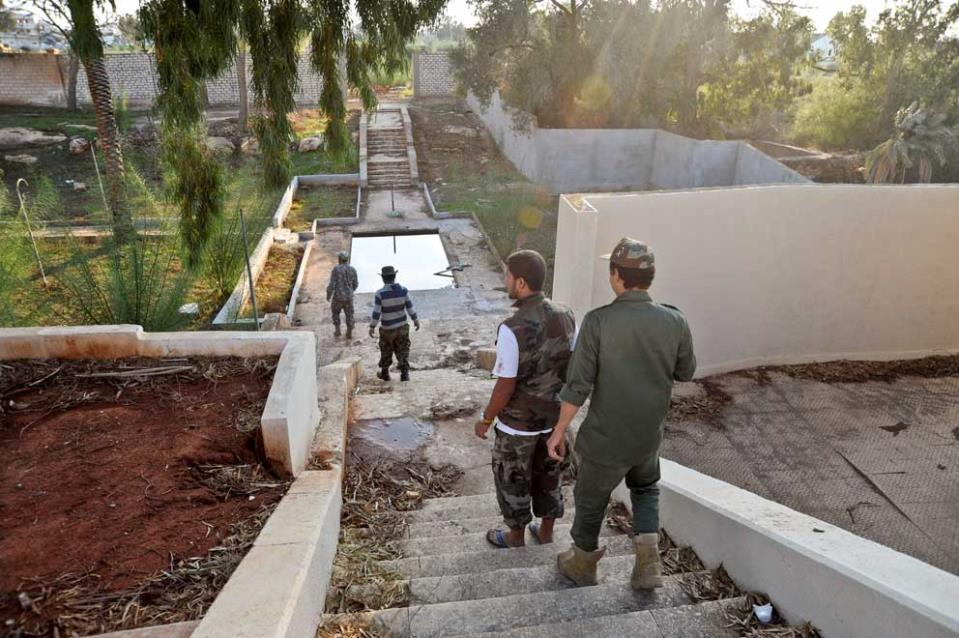
However, it is too early to write the uprisings off, Prof. Bowker maintains.
He notes that the uprisings were the result of people's frustration with the "sclerotic systems" that denied them effective political expression becoming powerful enough to cause a short-term political response.
"The effect of the turmoil was essentially ephemeral, as far as the political structures themselves were concerned: they were an important manifestation of that frustration but they had no programmatic value," he states, adding that in many cases, the response to the uprising was initially a containment of the disruption, and a subsequent reversal of the openings that had been made.
However, he adds that the situation is still at a very early stage.
"I feel that over the course of 10-15 years, we will see the pressures that arise from the impact of factors such as education, connectivity and the capacity to link among like-minded elements within Arab societies once again resurface, and put pressure upon Arab governments to be more responsive to the aspirations of a young, increasingly well-educated and increasingly frustrated generation of their citizens."
As an example of how the situation can develop, Prof. Bowker recounts being in Cairo when the April 6 Youth Movement was established in 2008, and notes the movement had initially been dismissed. But three years later, the movement was at the forefront of the uprising which led to the overthrow of Egyptian President Hosni Mubarak.
"We should not underrate the capacity of political movements to learn from experience and acquire greater capability over time," he maintains.
"This was round one. We need to look at when round two will take place and what inputs will come from those who are still committed to reform."
Lack of civil society, not national identity
But the aftermath of Arab Spring revolts - as well as the ongoing political instability in Iraq - may also point to another factor: a lack of a strong national identity in Arab states whose national borders were largely arbitrarily set by colonial powers and which did not necessarily reflect sectarian, tribal or ethnic divisions.
However, Prof. Bowker disagrees that this is such a factor, arguing that the concept of a nation state has established roots in the Arab world in spite of the states' colonial or postcolonial origins.
"What has failed to develop is the notion of civil society and the respect for values such as constitutionality, tolerance of differences and a loyal opposition... and that is primarily the result of the autocratic nature of the governments that came into power in the aftermath of the colonial period," he explains.
The problem, he adds, is that there has been a significant weakening of governments' authority and legitimacy.
"So we are moving into a situation where you have states that are, I think, permanent, but with governments which are increasingly lacking the authority to drive programmes of reform fast enough to meet the demographic and political challenges that are being encountered now and will grow exponentially for Arab societies over the next 20 years."
Prof. Bowker also notes that one must appreciate that all may not go well over the next 20 years within states that not only struggle to deal with the "aspirations and expectations of an increasingly mobilised political audience," but which also have to deal with the pressures of terrorism, the growing economic gap between their own societies and the rest of the world, as well as the challenge of building civil society.
"These are issues which require strong legitimate political authority to address, and that is presently something which is rarely evident within the Arab world."
There were hopeful signs in Tunisia, he notes, and the country may show that it can be done, but war-torn countries such as Libya and Syria may lack the capacity to even begin to manage the process. Countries in the middle, such as Egypt and Lebanon, "are quite delicately positioned, and the potential for regression is quite high," he adds.

Islamic State's strategic threat 'should not be overrated'
Of course, there is one nascent Arab political entity with little regard for national borders, although it is something of an exceptional case: the Islamic State, which presently occupies large portions of Iraq and Syria. Militants in the eastern Libyan city of Derna have also pledged allegiance to its leader.
Prof. Bowker notes that the IS is an unusual case, given its control of significant financial and territorial resources which make it practically self-sustaining and which enable it "to think strategically about its objectives and to organise itself with a level of efficiency that should be of concern to those of us who are fundamentally opposed to its existence, let alone its values."
It presents an obvious territorial threat to the sovereignty of Iraq and Syria, and poses a potential military threat to a number of other countries, although Prof. Bowker argues that this is unlikely to present a realistic threat in the immediate future.
"On the other hand, we should not overrate the level of strategic threat posed by the Islamic State," he adds.
He notes that its leadership structures are now reasonably well known, and there is increasable visibility of its military and financial capabilities. But another factor - which may lead to its eventual undoing - is still to be properly assessed.
"What we do not have much visibility of is the motivation and the commitment of its rank-and-file membership, and so we do not really know at this point what will be the effect of the military containment or the slowing of its momentum," Prof. Bowker notes.
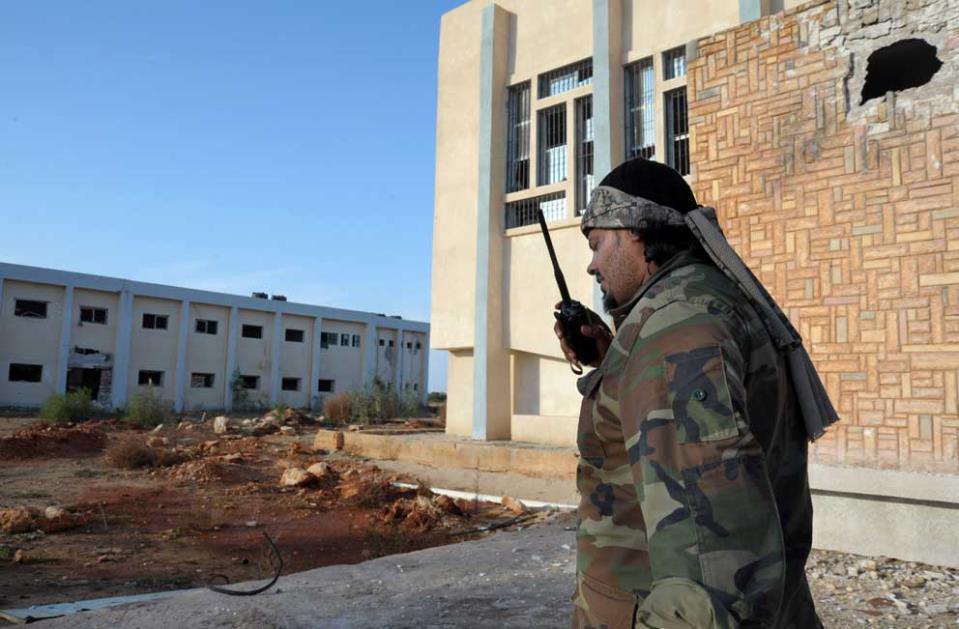
"We may find that with this momentum becoming increasingly difficult to maintain, the level of commitment that it currently appears to enjoy from its rank and file may start to reduce."
Presently, he notes, IS is still able to operate on multiple fronts in Iraq, but its capacity to threaten the predominantly Shia areas in southern Iraq is very limited. Its capacity to threaten the Kurdish-dominated areas in northern Syria and Iraq is also open to question.
IS' support is ultimately drawn from Sunni-majority areas, but Prof. Bowker notes that even there, it is not making much inroads in areas which the Iraqi government is prepared to resupply and support. Furthermore, it does not appear to be attracting the support of Iraqi Sunni tribes that were disengaged from conflict with either IS' predecessors or the Iraqi government forces.
So effectively, IS has brought together the various factions which were already opposed to the Iraqi government, in a country where Sunni Muslims often feel disenfranchised since the toppling of Saddam Hussein - a Sunni - led to an Iraqi government dominated by Shia Muslims, which did not provide them with an effective role in governing the country.
But while it may not be attracting the support of new factions within the territory it controls, IS does present an "alternative vision" for elements within the Arab world who feel alienated, Prof. Bowker notes. The same may apply in the western world to second-generation Muslim immigrants - and particularly, Muslim converts - who may feel aggrieved, alienated or marginalised.
"The situation in the Arab world increasingly presents a choice to young Arabs between unemployment, immigration and jihad. And what applies on the southern side of the Mediterranean may well apply among elements of Muslim communities on the northern side of the Mediterranean as well."