Discoveries of new species in Maltese waters often turn out to be records of non-native (or ‘alien’) species, that is, species which do not occur naturally in our waters but were directly or indirectly introduced here through human activities. Colonisation by non-native species very often represents a threat to indigenous marine life since alien species can compete directly or indirectly with native biota, may modify habitats, or lead to the introduction of new parasites and pathogens. Alien species can also impact the economy or even human health: little wonder therefore that reports of new pest seaweeds, poisonous fish or venomous jellyfish attract public attention.
Documenting the arrival of such newcomers is an important scientific endeavour, and the Marine Ecology Research Group (MERG) at the Department of Biology of the University of Malta has been at the forefront of this work for more than a decade. However, recording new species is only part of the story. For instance, some alien species have only been spotted once or twice and never sighted again (these are referred to as ‘casual’ species), and therefore do not represent a major ecological threat. On the other hand, other species now occur as reproducing and self-perpetuating populations in the wild (‘established’ species), and some of these have undergone a very rapid growth of the population to the extent that they affect the diversity or abundance of native species and the ecological stability of the ecosystem (‘invasive’ species). The latter are clearly of greater concern. To monitor changes in the status of non-native species in Maltese waters, MERG researchers have been undertaking regular biological surveys.
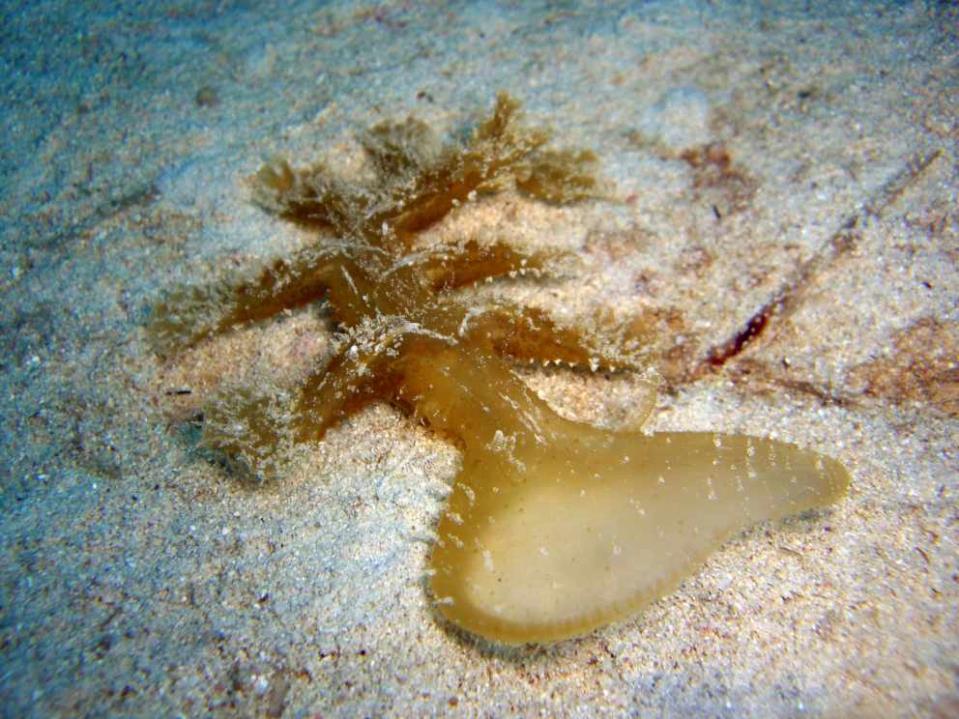
The sea-slug Meliba viridis, an Indo-Pacific species which was introduced into the Mediterranean via shipping in 1970, and was first recorded from the Maltese Islands in 2008. The animal in the photograph, taken off western Comino, is about 16 cm long. [Photograph © Sarah Gauci Carlton]
For management purposes, it is necessary to go beyond records and studies of individual species and to look at the broader picture. How many non-native species occur in Maltese waters? Which plant or animal groups do they belong to? Have they managed to establish themselves? How are they getting here in the first place? To answer these questions, Dr Julian Evans, Ms Jacqueline Barbara and Prof Patrick J Schembri have recently undertaken an extensive survey of the scientific and other literature recording the presence of new marine species in Maltese waters. These data were then combined with other authenticated but unpublished reports of such species, including sightings made during the ongoing biological surveys by the MERG team.
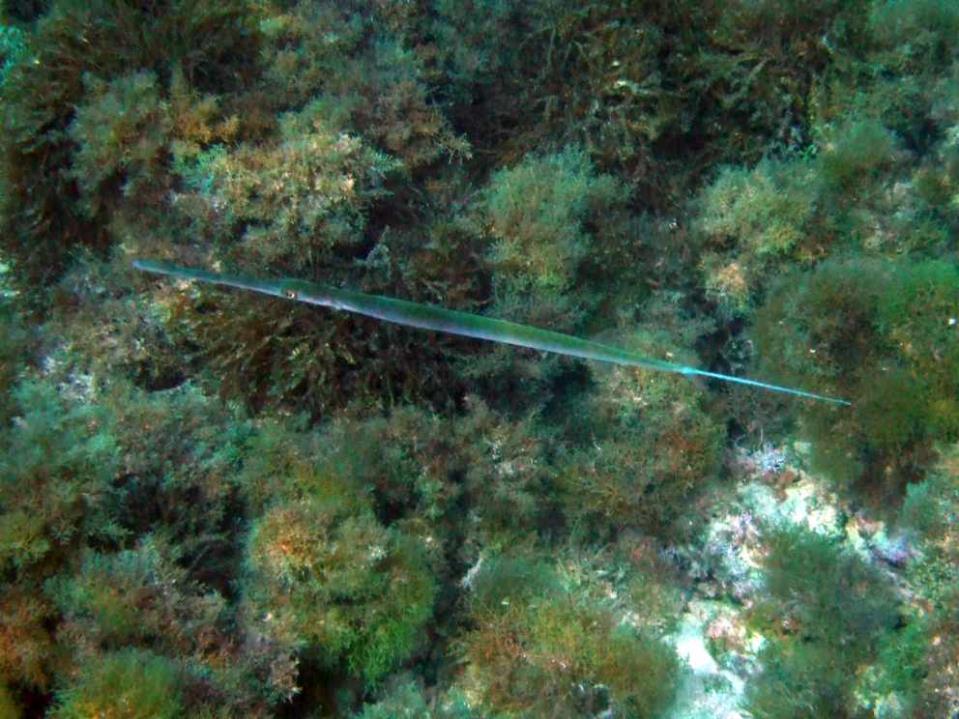
The blue-spotted cornetfish Fistularia commersonii, an Indo-Pacific species that entered the Mediterranean through the Suez Canal in 2000 and which reached the Maltese Islands in 2005. The fish in the photograph is some 80cm in length and was photographed in Gozo. [Photograph © Julian Evans]
From this review it resulted that by the end of last year, 61 authenticated alien species and another 5 unconfirmed ones had been recorded from Maltese waters. Analysis of the known or probable mode of arrival of these species indicated that most common mode of introduction is through boating and shipping. Other species were first introduced elsewhere in the Mediterranean and then managed to spread to Maltese Islands under their own steam. Thirty of these records were made since the turn of the century, clearly indicating that the rate of new records is at an all-time high. This is likely due to the present day warming trend of Mediterranean surface water, which favours the occurrence, establishment and range extension of warm-water species in the central Mediterranean. In fact, the MERG researchers have also documented another phenomenon – the spread of Atlantic warm-water species to the central Mediterranean – which is almost certainly related to this warming trend. To date, 7 such species have been recorded from the Maltese Islands, so the total number of new species (aliens + Atlantic range extenders) now stands at 73 species.
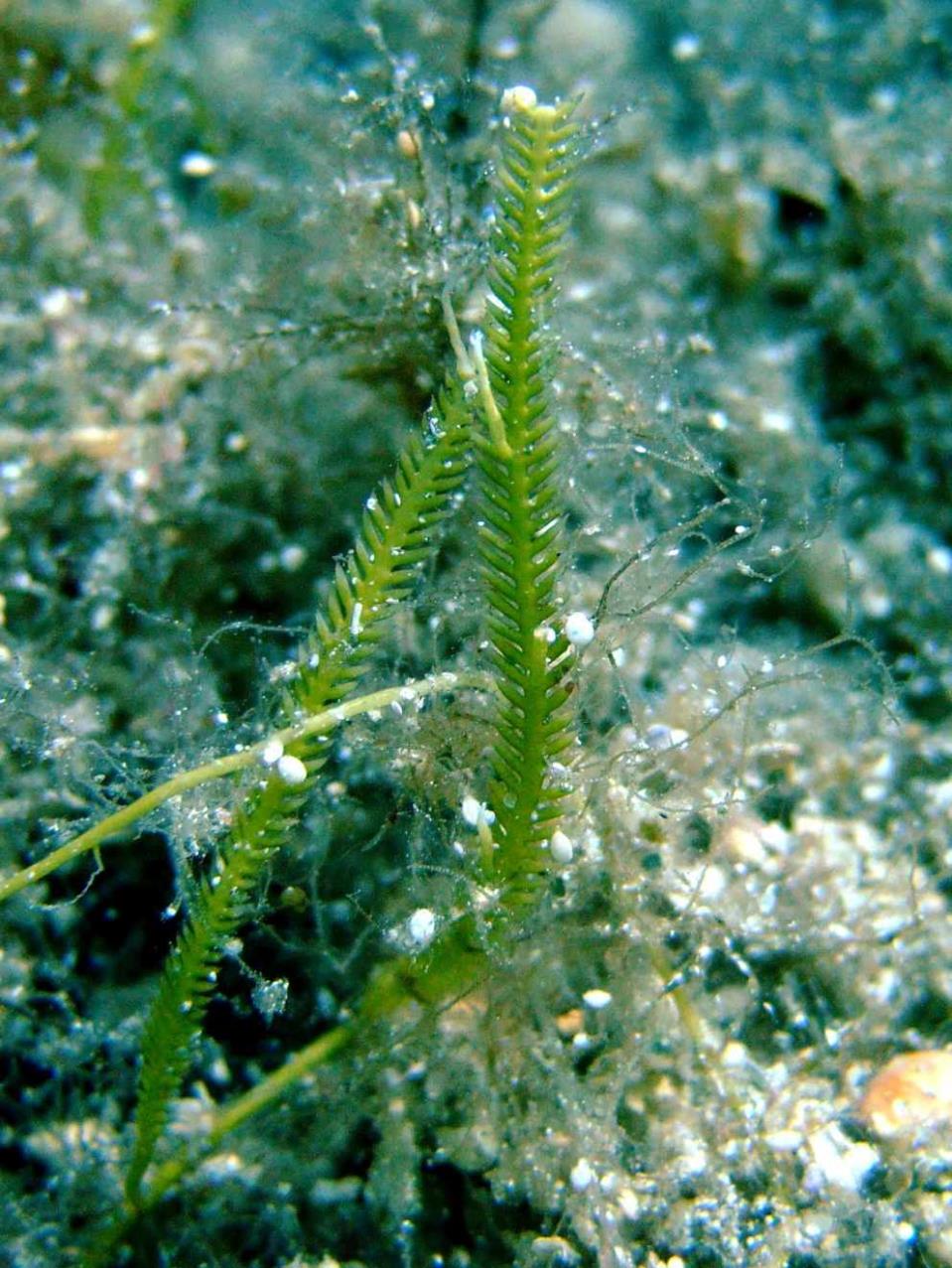
The green seaweed Caulerpa taxifolia var. distichophylla which was first recorded from Malta in 2013 after having been introduced into the Mediterranean in 2006. The small size of the fronds (the ones in the photo are some 5 cm long) and the fact that it tends to grow embedded among taller-growing algae makes it very difficult to spot, but ongoing surveys for this species are revealing that it has spread to various localities around the Maltese Islands. [Photograph © Julian Evans]
Overall, the most represented groups were molluscs (21 species), fish (15 species), crustaceans (8 species) and red algae (7 species). More than half of the newcomers (38 species) have established breeding populations, while a further 8 species are considered to be invasive. These species are the seaweeds Lophocladia lallemandii, Womersleyella setacea and Caulerpa cylindracea, the bivalve Brachidontes pharaonis, the crab Percnon gibbesi, and the fish Fistularia commersonii, Siganus luridus and Sphoeroides pachygaster. The latter species, a pufferfish, is particularly interesting because it is one of the Atlantic species that have extended their range to reach the central Mediterranean independent of any human involvement, and is therefore not considered to be an alien species. Although recognition of the threats posed by invasive species has resulted in the inclusion of management of such species in a number of recent policy actions, including local and EU legislation, these legal documents refer exclusively to “alien” species. The Maltese researchers have argued that all newcomer species have the propensity to disrupt native ecosystems, irrespective of whether they are considered to be “alien” or “naturally range-expanding” species. Therefore, although humans were not responsible for the introduction of range-expanding species, for management considerations, assessment and monitoring of such species is as important as for invasive alien ones.
Main picture: The blunthead puffer Sphoeroides pachygaster, a circumglobal species that extended its range from the Atlantic into the Mediterranean in the early 1980s, and has since spread throughout the entire Mediterranean Sea. It was first recorded from Maltese waters in 1999 and nowadays is often caught by trawl fishing.