The Malta Environment and Planning Authority (MEPA) today suspended a decision on the extension and renovation of St John's Co-Cathedral Museum after the United Nations Educational, Scientific and Cultural Organisation (UNESCO) expressed reservations on the project. The International Council on Monuments and Sites also expressed concerns about the project.
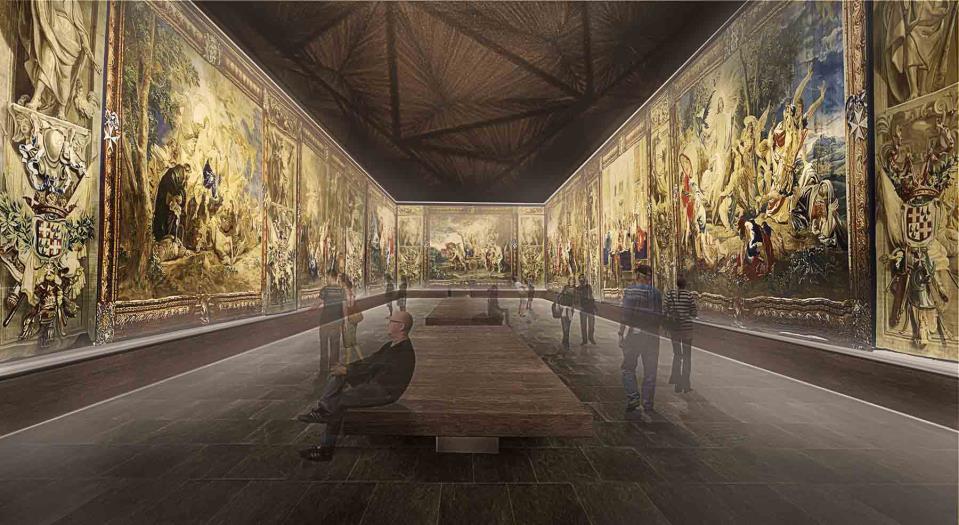
The St John’s Co-Cathedral Foundation had put forward a proposal to extend and refurbish the museum, allowing for 29 Flemish Tapestries, unique across the globe, to be exhibited together. At present, the museum only exhibits a third of the collection, because it does not have the 700 square metre area required.
The extension will also accommodate the ever-increasing tourists that visit the site, by creating a lobby as a waiting area for ticket purchasing.
During a meeting held to take a vote on the project, MEPA's CEO Johann Buttigieg announced that yesterday, UNESCO sent an email, expressing its concerns on the project and asking for more consultation meetings to be held before a decision is taken.
The details of UNESCO's concerns were not divulged however they seem to relate to the height of the proposed project.
The proposed project was also criticised by environment NGO Flimkien Għal-Ambjent Aħjar, which said that blocking the view of the co-cathedral from Merchants’ Street is unacceptable. It also disapproved plans to dismantle the grave where the heroes of the Great Siege are buried, to replace it with a small monument.
Architect Konrad Buhagiar said that in planning the project, the Foundation took a conservative approach, to preserve the heritage and cultural value of the museum and the surroundings of the co-cathedral. He added that the image of the church and the courtyard will be retained.
The facade will be renovated to include a niche - an element which is common in 16th century architecture. It will also have vertical division to interlink the building on top to that beneath it.
The renovation will also allow the museum to be accessible for wheelchair users, as a passage will be included, through excavation at basement level.
MEPA’s directorate noted that the site is one of high landscape value and is situated within the conservation plan area. MEPA's conservation policy states that Grade I buildings are to be preserved in their entirety, however extension and renovation is allowed if they allow for further use of the building.
Following a site inspection, MEPA noted that there is no alternative area to exhibit the tapestries, however stressed that this is a delicate intervention.
UNESCO’s purpose is to contribute to peace and security by promoting international collaboration through education, science and culture allowing for further universal respect for justice, human rights and fundemental freedom. It provides expertise to member states for their development policies and projects.

St John's Co-Cathedral Foundation reacts
In a press statement, the St John’s Co-Cathedral Foundation said that the preservation of St John’s Co-Cathedral and its priceless art collections are the focus of the extension and refurbishment of St John’s Co-Cathedral museum. It said that the project is designed to meet three pressing challenges.
First, to relieve the church from overcrowding and therefore to reduce conservation pressures on one of the world’s most important Baroque interiors. The sensitively designed museum will make use of all the spaces within its existing footprint and thus greatly improve the circulation of its visitors.
Secondly, to create a hall to exhibit the set of Flemish tapestries, a set that is the largest seventeenth-century series based on the creations of the world-renowned artist Peter Paul Rubens.
Thirdly, to install a Caravaggio Centre, which will be highly informative, where the visual interactive educational means will arouse curiosity and provide an exciting and enjoyable experience that appeal to all ages and levels of knowledge.
The statement said that the monument to the knights who fell in the Great Siege, will become the focus of attention as visitors enter the courtyard. This commemorative monument indeed will be given the attention it deserves, as the visitors tour will start from this point with an explanation on the audio guide highlighting its history. The concrete platform constructed in the 1960s will be redesigned to evoke interest to the space and allow better circulation around the monument.