The Commissioner for Health at the Office of the Ombudsman Charles Messina is of the opinion that denying free medication to certain cases which have been investigated by the Office, is causing them an injustice that needs to be remedied.
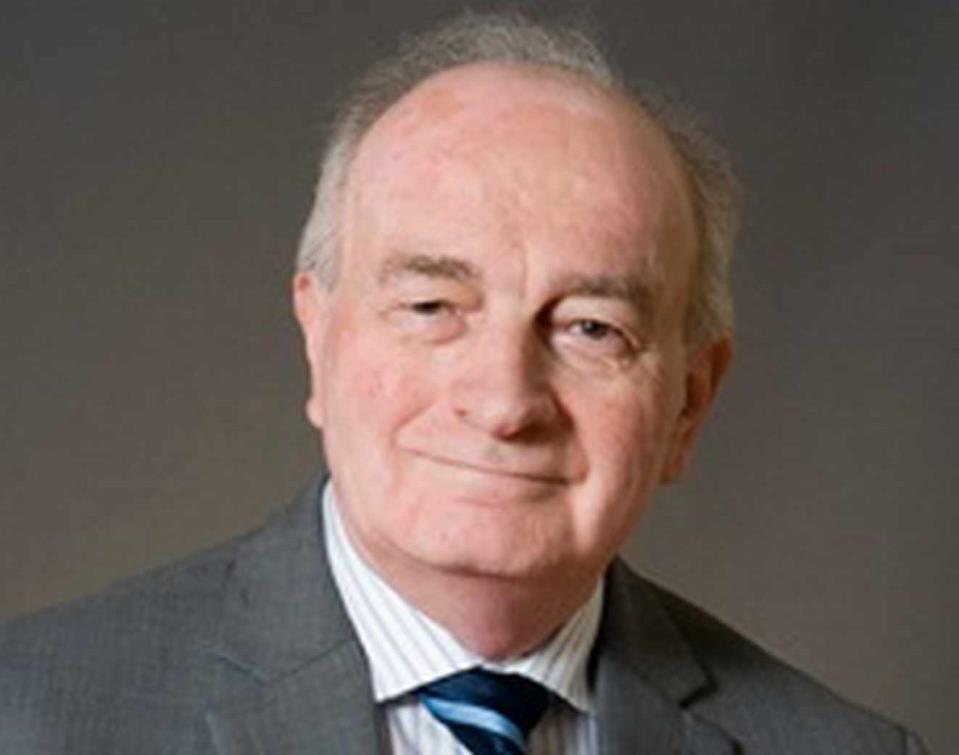
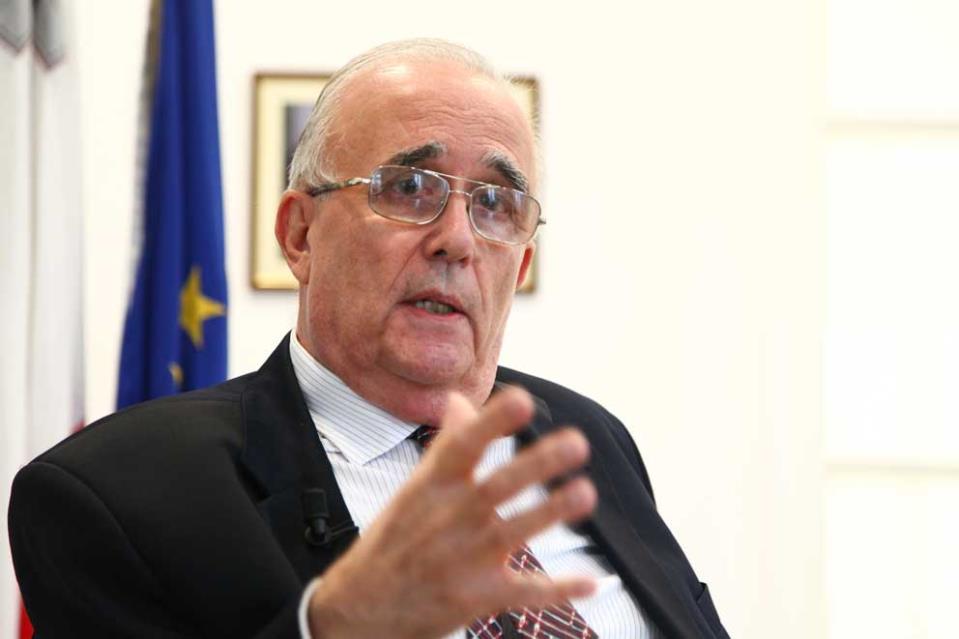
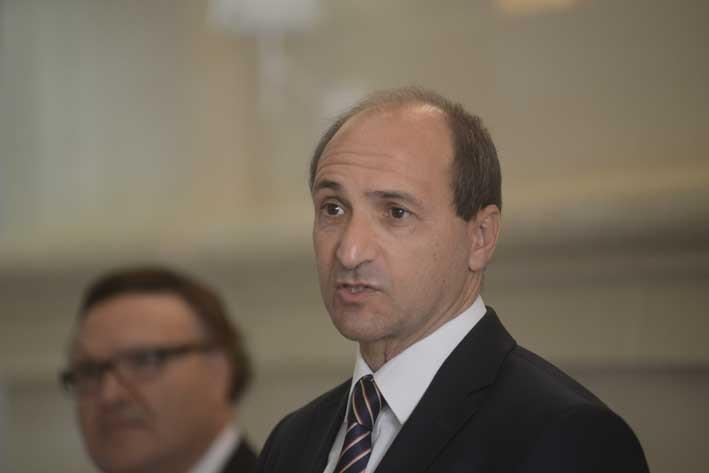
During a press conference at the Office of the Ombudsman, The Ombudsman (Joseph Said Pullicino) as well as the commissioner and consultant Anthony Vassallo said that a meeting with Parliamentary Secretary for Health Chris Fearne was held earlier today, in which they discussed the Commissioner’s recommendations. The Ombudsman explained that Mr Fearne had indicated that he will see how to solve the problems listed below.
The Commissioner had published his final opinion on the entitlement to the free supply of medicinals under the Social Securities Act. He referred to four cases he has investigated about which he is at an impasse with the Department of Health. “He had been in correspondence with the Health Authorities over these last two years”. The report was sent to the Prime Minister and referred for evaluation to the Standing Committee on Health.
One case concerns a Type 2 diabetic who had been prescribed Glargine Insulin by his Consultant Diabetologist. In the report he quoted the consultant - “I have prescribed Glargine as it is the best treatment for him. The other insulin types failed to control him adequately.” The Commissioner noted that the Department’s policy is to give this type of insulin only to Type 1 patients and therefore the patient was denied the treatment needed.
“This Office is of the opinion that once the medicinal is available within the health service provided by government and is indicated for the patient’s condition, the Department is wrong in insisting to give it only to Type 1 diabetic patients on the basis of a protocol which is not based on purely medical considerations and which in effect deprives the patient of his entitlement under the Social Security Act”.
The second case surrounds patients who need to have their blood sugar levels tested at least four times a day on instructions from their Consultant Diabetologist, “but the Department’s policy is to provide Haemaglucotest (HGT) Blood sugar testing strips, four every day, only to patients up to the age of eighteen”.
In a letter to the Commissioner shown in the Annex section of the document, the Permanent Secretary for Health said that the argument that such strips should be provided to all type 1 diabetes makes sense, “however one would need to analyse the whole picture”. The letter read that these strips are not the only kind of medication provided by government “nor are diabetes patients the only patients receiving free health care and medication. The administration within Health has the very difficult task to provide the best care for the maximum number of patients with its finite resources , hence the very difficult decision to put a ceiling to the amount of strips provided to a specific category of patients”.
The Commissioner is of the opinion that age should not be a determining factor. “In the circumstances of this case the decision of the Health Authorities is improperly discriminatory and is in violation of the fundamental right to equality and non-discrimination. This Office had already, in a case some years back, given its opinion on an analogous case of discrimination because of age, in respect of treatment with statin preparations, aimed at lowering cholesterol levels in the blood. Following this opinion the Health Authorities removed this discrimination and made the treatment available, where indicated, irrespective of age”.
The Health Commissioner also said that HGT strips can be used as a glycaemia control measure to prevent serious complications. “Indeed, in the document circulated to those who on 14 November 2014 attended the Seminar organised by the Health Promotion and Disease Prevention Directorate, on ‘Diabetes: A National Public Health Priority - Proposal for a National Strategy for Diabetes’ it is stated that “admissions (to Mater Dei Hospital) for lower limb ulcers and gangrene constitute the ‘vast majority’. Diabetic Ketoacidosis/Hyperglycaemic hyperosomolar syndrome and hyperglycaemia are the other complications that arise from inadequate glycaemic control.” Adequate glycaemia control can be obtained by checking with HGT strips”.
The Commissioner said that age discrimination is a factor in this, not made on medical grounds. “Such discrimination is improper and contrary to law”.
During the meeting with the Parliamentary Secretary, the Ombudsman was informed that government will try and implement this by next year.
The other two cases concern patients suffering from Hepatitis C, and the story can be found here.
The Commissioner is of the opinion that, “contrary to what the health authorities are maintaining”, all complainants in the cases mentioned above are eligible for free medical aid in terms of the Social Security Act.
The Commissioner recommends that a review of applicable legislation is carried out to ensure clarity and legal certainty about the rights of persons entitled to receive free medical aid in terms of Article 23 of the Social Security Act. “A review that should ensure that regulations/policies/protocols made by the competent authorities that determine, limit or condition the right of households or persons to receive free aid to which they are entitled, have the necessary vires in terms of the law under which they are issued. Moreover, and more importantly, these regulations must reflect not only the word but also the spirit of the Social Security Act as expressed by the people’s representatives in Parliament”.
The Social Security Act justly imposes on society a compulsory, contributive insurance for the benefit of the common good, he said. “It creates a social contract that entitles eligible persons to legislated benefits but also imposes on the State a corresponding obligation to deliver them. Fiscal and economic considerations in the management of available funds are primarily aimed at securing essential treatment to indigent households and/or persons suffering from serious and life threatening diseases or conditions - the most vulnerable sections of society”.
During the conference, the Ombudsman mentioned that in cases of patients holding a pink form, financial sustainability must come second, however there is leeway for those holding the yellow card, as the patients might be able to purchase the medication themselves.