Hardliners in Greek Prime Minister Alexis Tsipras' governing radical left Syriza party have split from the party and are forming their own independent movement within Parliament.
The 25 lawmakers announced their move in a letter to Parliament on Friday, a day after Tsipras resigned and called an early election to deal with a rebellion in Syriza over his signing Greece's third bailout deal and accepting austerity measures demanded by creditors.
The new group, which will be called Popular Unity and will be led by former energy minister Panagiotis Lafazanis, becomes the third largest group in the Greek Parliament.
That means it could receive the mandate to try to form a new government.
***
Earlier
Greece's president will launch the process Friday of asking opposition leaders to form a new government, after a party rebellion over a bailout deal forced Prime Minister Alexis Tsipras to call early elections next month.
The opposition is given little chance of uniting and forming a government, meaning that after five-plus years of a worsening financial crisis, Greece appears headed for its fifth national election in six years. Although Tsipras is widely tipped to win the election, if he fails to secure an outright majority he would have to seek a complex coalition deal that could hamper his ability to govern in the long term.
Outgoing government officials say the likeliest election date is Sept. 20, just under eight months after Tsipras' election on promises to fight creditor-demanded spending cuts and tax hikes, terms he later agreed to in order to secure Greece a third bailout as its economy was on the brink of collapse.
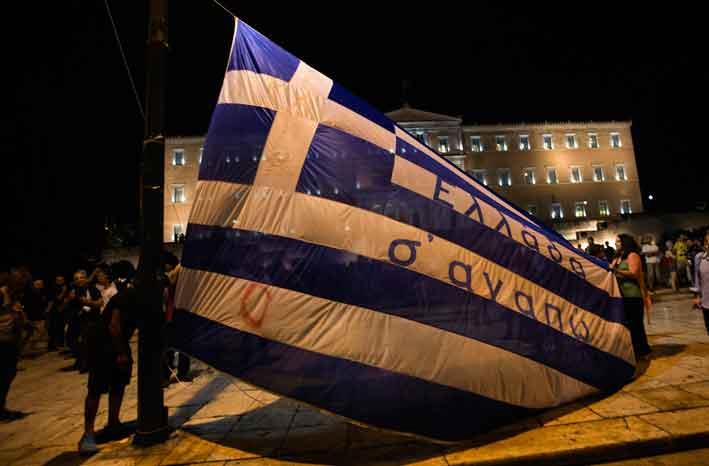
On Friday morning, President Prokopis Pavlopoulos will meet the head of conservative New Democracy party, Evangelos Meimarakis, and ask him to try to form a government. If Meimarakis fails within the maximum three-day limit, the next in line to try is the head of the Nazi-inspired Golden Dawn party. But neither party has enough allies to gain Parliament's support.
If both fail, Parliament will be dissolved and elections held within the next month.
Announcing his resignation in a televised address late Thursday, Tsipras said he secured the best deal possible when he agreed to a three-year, 86 billion euro ($95 billion) bailout from other eurozone countries to save Greece from a disastrous exit from the euro currency.
But the deal came with strict terms for mroe belt-tightening.
Tsipras' reversal in accepting the demands by the country's creditors led to outrage among hardliners in his Syriza party, which hamstrung his coalition. About one in four Syriza lawmakers refused to back the bailout's ratification in Parliament last week, which was only approved with backing from opposition parties.
Greece's European creditors did not appear dismayed by Tsipras' move, which was widely expected.
But Moody's credit rating agency warned in a statement that the snap elections "potentially, puts future (rescue loan) disbursements at risk."
The political uncertainty took its toll on Greece's stock market, with the Athens Stock Exchange closing 3.5 percent down on election speculation.
Tsipras had delayed a decision on whether to call new elections until after Greece received its first installment from the bailout and made a debt repayment to the European Central Bank; it did both Thursday.

"Now that this difficult cycle has ended ... I feel the deep moral and political obligation to set before your judgment everything I have done, both right and wrong, the achievements and the omissions," he said in the address.
Tsipras insists that he had to accept the unpalatable bailout terms to keep Greece in the euro, the EU's common currency. He is betting on a stronger mandate if polls are held before voters feel the impact of the steep tax hikes and spending cuts.
Tsipras acknowledged Thursday that the bailout deal was not what his government had wanted.
"I wish to be fully frank with you. We did not achieve the agreement that we were hoping for before the January elections," he said. "But ... (the agreement we have) was the best anyone could have achieved. We are obliged to observe this agreement, but at the same time we will do our utmost to minimize its negative consequences."
Quoting Turkish left-wing poet Nazim Hikmet, he added, "Our best days have yet to be lived."
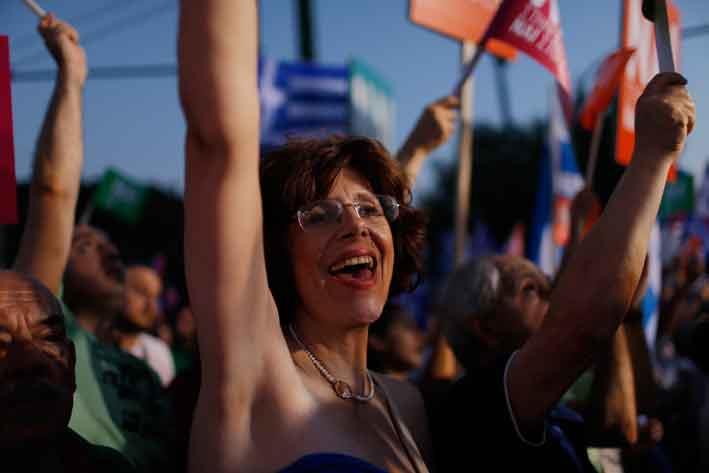
If Tsipras wins the elections, a new mandate will allow him to move away from the rebels in his party, some of whom have openly advocated leaving the euro and returning to the drachma. The hardliners are likely to split from Syriza.
Greek banking is still restricted under capital controls imposed in late June to stem a bank run sparked after Tsipras called a referendum on creditor proposals for reforms following a breakdown in bailout negotiations. There are weekly limits on cash withdrawals and Greeks can only transfer up to 500 euros abroad per month. Companies have faced problems paying suppliers abroad, with all international payments requiring a laborious process of approval by a special finance ministry committee.
Some analysts took the reports of early elections as an indication that Greece would struggle to implement its bailout's terms.
Teneo Intelligence analyst Wolfango Piccoli said that while Tsipras' gamble could pay off politically, it probably will delay the first review of the new bailout program, "especially considering that the caretaker government will not be able to implement any meaningful policy measures."