Judy Falzon (self-employed Ð married to a Maltese): I have lived in Malta since 1989 but last lived in England in 1976 and am no longer on any electoral register there. Although I can't see myself ever living anywhere other than in Malta - I have joint British/Maltese citizenship - my English half is bothered about whether or not the UK stays in the EU.
If I were able to vote, I would vote for leaving. The reasons are myriad but start with the fact that the UK is a net contributor and I am tired of reading about cut-backs in the country of my birth's police forces, the NHS, schools - it's a long list - when membership of the EU costs the UK £8.5 (€10.6) billion a year: the difference between the £13 (€16.3) billion paid and the £4.5 (€5.63) billion received.
Another reason is all the applications the UK makes for exemption from certain pieces of EU legislation - such as being required to allow offenders in prison the right to vote - with something like 30 exemptions being allowed of the 140 applied for.
I also find it quite astonishing that the auditors of the EU's annual accounts have refused to sign off the accounts for, I think, 18 years.
Then there's the Common Agricultural Policy, which I believe is in the process of being changed but which has, over the years, hammered the UK's farmers (I come from a farming county and two of my uncles were farmers).
I think the UK will do very nicely on its own - as it has done in the past - and that the dire warnings about trade, etc., are simply scare-mongering because I believe the rest of the world, including the EU, will continue trading with the United Kingdom of Great Britain and Northern Ireland!
Jill Pisani (former engineering draughtswoman - married to a Maltese): I have been living in Malta since the 1980s and as such it is irrelevant to ask me my opinion on this referendum since I have been denied the right to vote in it. I am one of the many Britons, almost a million, who live in the EU who feel betrayed by the government's failure to reinstate their voting rights ahead of the referendum.
There is something called the '15-year rule' that prevents us from participating in UK elections. The Conservative party had pledged in their 2015 manifesto to get rid of the rule, but the promised bill entitled 'Votes for Life' has yet to materialise. A court case to try and rectify this was instituted in London's High Court recently that objected to the fact that a vote in the referendum was not given to us but was given to members of the House of Lords, as well as to Irish and Commonwealth citizens who are resident in Gibraltar, even though none of these are allowed to vote in UK general elections.
The people it arbitrarily excludes are UK citizens who are among those most likely to be affected by the decision taken by voters in this referendum over things such as health care and pension rights. Unfortunately, it seems that the court has ruled against in this case.
Trudy Kerr (British media producer and director): Until I lived outside the UK I probably shared the opinion of most of the UK's island mentality citizens: the UK is the UK and separate from Europe. Europe was nice to visit, but it was good to get home to England.
I had a stint living in the US before moving to Malta, but it was moving to Malta 10 years ago that changed my thinking. The UK has never felt part of Europe, but I certainly do. I feel more European than I do English to be honest.
Living in a different country and culture keeps me alive and is a great antidote to stagnation. We all have much to learn from taking a chance and living out of our comfort zone. Unfortunately I cannot see a change in the mentality of the British people with regard to this referendum: the media has generated a storm over immigration and fear, and I do believe that most think closing borders will make life safer.
However, I believe that the current situation is above and beyond border controls, and that more strategic media activity and reporting will have a far greater effect. I don't want to leave my home here, and am greatly concerned as to what this referendum holds for the UK, for Europe and for me personally.
Paul Bennett (Half-Maltese former radio engineer): My feelings on EU membership are split, in that on one side I don't like the seemingly unaccountability of the EU, and the lack of democracy that many have witnessed over the years of being a member. Often, the EU is primarily only about business and has a goal of homogenisation of society in a way that may not be good for people.
On the other side I have always preferred a more European association culturally: this reduces the fear we have of other cultures. No one wants another world war with our European cousins. I have felt this association to be a more healthy model as against the insular 'Little Britain' more nationalist idea, which is backward looking and related to a long-dead history!
I would like a close association with Europe as some other countries have, like Norway, not a morphing into a single European monolith. Britain and other European countries should be free to make their own decisions be they political, commercial, and every other way also.
So the answer to your question is: I am really still split on this matter!
Helen Osborne (British doctoral researcher, The Shakespeare Institute): I'm very concerned about the referendum, and I'll be voting for Britain to remain in the EU.
From a purely selfish perspective I (and hundreds of thousands of expats like me) am worried about the effect a Brexit would have on our right to freedom of movement. No one seems to have any idea what would happen to those of us who have chosen to live abroad.
The best-case scenario seems to be that Britain would renegotiate rights for its former citizens with their adoptive countries, which sounds like a tedious exercise in red-tape manufacture that could take a decade to resolve.
Of course, Brexit's a stupid idea for plenty of other reasons. It would weaken the UK economy, put its security at risk and strip British citizens of a vast safety net of human rights protections. You don't need to be a flag-waving fan of every aspect of the EU project to recognise that isolationism is a bad thing and, to be honest, the whole debate makes me profoundly ashamed to be British.
The referendum makes Britain look like the spoilt brat of Europe, stamping its feet and threatening to run away from home every time it's told that it can't stay up all night and eat cake for breakfast. No one likes that kid.
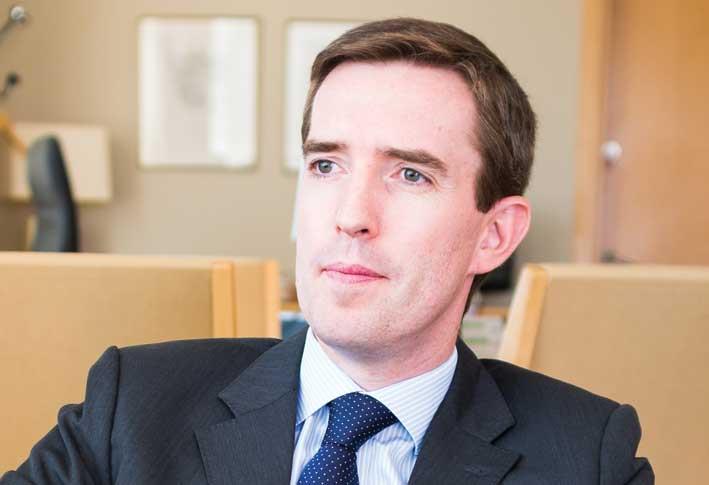
H.E. The British High Commissioner, Rob Luke: The UK Government's position is clear: the UK will be stronger, safer and better off in a reformed Europe than we would be out on our own. We will be better off because British businesses will have full participation in the free trade single market, bringing jobs, investment, lower prices and financial security.
We will be safer because we can work closely with other countries to fight cross-border crime and terrorism, giving us strength in numbers in a dangerous world. We will be stronger because we can play a leading role in one of the world's largest organisations from within, helping make the big decisions that affect us.
This follows months of negotiations, culminating in a deal secured by Prime Minister Cameron at the European Council on 19 February, which agreed a new settlement for the UK in a reformed EU. The deal is good not just for the UK, but the whole of the EU. It will boost EU competitiveness by completing the European Single Market, prioritising international trade agreements, and cutting the burden of EU regulation. This will boost growth and jobs across the EU, benefiting all Member States.
There are still many ways in which Europe needs to improve. The task of reforming the European Union does not end with this agreement. If the British public votes to remain, the UK Government will play a leading role in one of the world's largest organisations, and continue to press hard for further reform which will benefit all EU Member States, to better meet the challenges and opportunities of a competitive global economy.
It is now for the British public to decide on 23 June whether they want to 'Remain' in the European Union or 'Leave' in the first referendum on this in over 40 years.