One of the most talked-about Labour Party electoral pledges has finally become reality as more than a thousand elderly and immobile people are having their medicines delivered right to their doorstep.
Around 80 people had taken part in a pilot project that started in April and was restricted to two localities – Rabat and Paola – but the project is now going nationwide and around 40,000 people could be eligible to apply, according to Health Minister Chris Fearne.
The Health Minister explained that people making use of the service would only have to visit their pharmacy once, to apply, and their medicine would from then on be delivered to their homes. He explained that the scheme has now also been extended to patients who require bulky prescriptions, such as dialysis bags and nutrition supplements.
When the service is introduced to a new locality those eligible will receive a notice by post informing them how to apply, if they wish to do so. “In total, up to 40,000 people could be eligible to benefit from this service although some will always prefer to opt out,” Mr Fearne said.
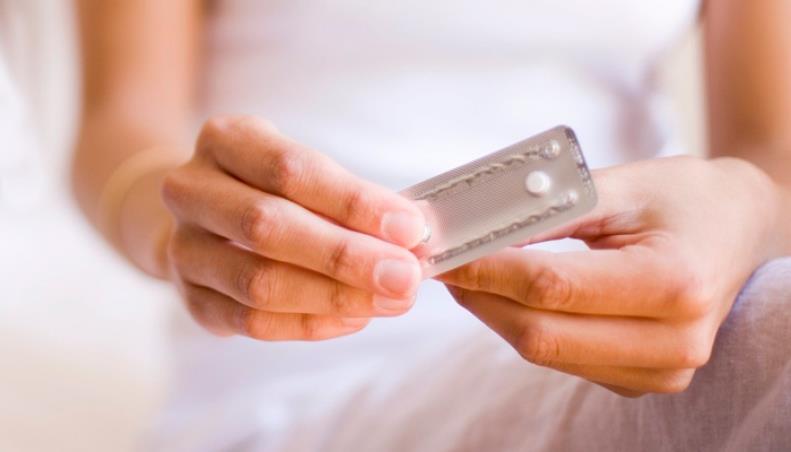
Minister in favour of morning after pill
Turning to other matters, the Health Minister said he was in favour of making the morning after pill available to women since scientific advice showed that, when used properly, the emergency contraceptive pill was not abortive.
“We had a cabinet meeting this week and three experts gave us a detailed presentation showing that, if used within the parameters of how it should be licenced, the morning after pill is not abortive. The issue should now be discussed at Parliamentary Social Affairs Committee stage but once the experts have told us that this is not abortive then there should not be any difficulties.”
Asked to say whether all cabinet members had been convinced by the presentation, Mr Fearne said the meeting was an informative one and the government does not yet have a single position on the matter.
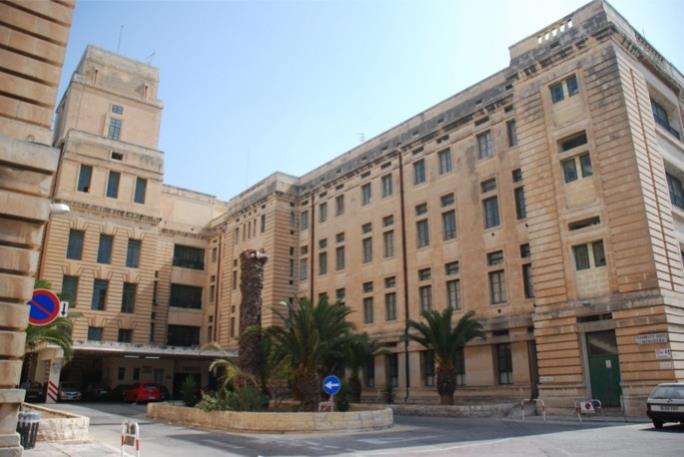
Vitals Group lease agreement ‘makes sense’
The Health Minister was also asked about recent claims, in a section of the media, that the Gozo General Hospital has been privatised for 99 years, instead of 30. Mr Fearne said the claims were incorrect.
“First of all we set off from a situation where the Gozo hospital and Karen Grech were in a sorry state and St Luke’s was abandoned. We also wanted to bring in a medical school and a nursing school. Together, these would cost around €200 million. The options included getting the money from the country’s coffers, doing nothing or attracting an investor. We opted for the last choice and Vitals Global Healthcare was chosen in a competitive process. We will be paying them the same amount we would have spent to run the service ourselves.”
Karen Grech hospital will be run by VGH but used entirely for the NHS while 350 out of 450 beds in Gozo will be used by the public healthcare sector. VGH will have 350 beds at St Luke’s for its own medical tourism operation while the other hundred will be allocated to the NHS. “We want medical tourism to happen. At the end of the day it is good business. In fact we are encouraging other private hospitals to open shop in Malta,” Mr Fearne said.
He explained, however, that the government retained the right to terminate the lease agreement for the Gozo hospital and Karen Grech after 30 years. In the case of St Luke’s, which would be mostly used as a private medical tourism hospital, VGH would have the right to extend the lease by 69 years after the initial 30-year period. “This makes sense because we want them to stay for as long as possible.”
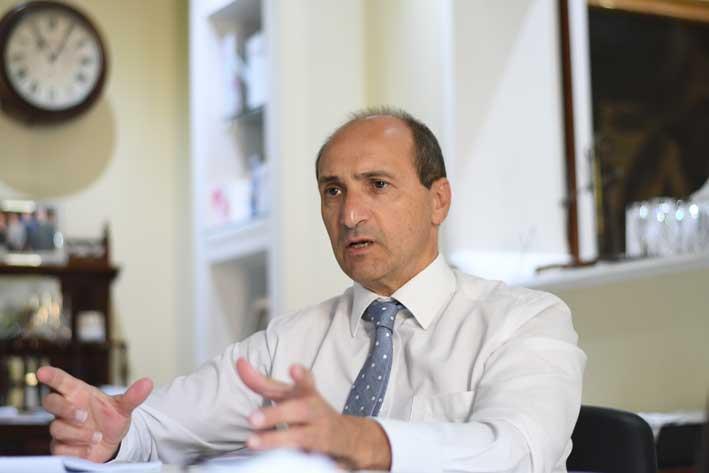
Medical tourism ‘crucial’ for business model
VGH will be upgrading the current services and bringing in new ones, such as an air ambulance and the rehabilitation hospital. Mr Fearne says the group’s business model works for two main reasons: firstly because the private sector is almost always more efficient than the public sector and secondly because of the medical tourism. “This is the crux of it. We are telling them to charge us less on medical treatment and make up for that from its medical tourism operation. They are convinced this can work. They are also working to obtain a certain standard which could see American health insurance companies sending patients to Malta.”
Asked if he was involved in the negotiations with VGH, Mr Fearne said he had been aware of what was going on and had contributed on a technical level. “As a Parliamentary Secretary I was more involved in advising on the required services and standards.” So is he happy with the agreement? “The contracts make sense. They will allow for the redevelopment of these three sites, a medical school a nursing school, a new research and simulation centre. If we had not reached this deal none of these would have been possible. At the end of the day Maltese patients will benefit from all this.

Political pressure claims – no cases forwarded
We also asked the Health Minister about recent claims of political pressure within the health sector. “Several claims have been made by both the Medical Association of Malta (MAM) and the Opposition. Yet to this day the MAM has only referred to a 2014 case without giving us any details while the PN has not referred a single case to us. Nonetheless I reiterate that I will not tolerate any form of political interference and discrimination between patients. We will investigate all allegations.”
The MAM had threatened to resort to industrial action over pending issues, including security at the Floriana Health Centre and a campaign on the better use of the emergency department. It had refused to lift its 20 June deadline after the claims of political interference emerged. “Today is the 30th (of June) and there is no industrial action. We have met with the MAM and talks are progressing.”
Disease Prevention chief ‘qualified’
We also asked Mr Fearne about the appointment of dentist Paula Vassallo as the new head of the Health Promotion and Disease Prevention Unit. The MAM had filed a judicial protest, insisting that the post should be taken up by a medical doctor. The Health Department had subsequently filed a counter protest. Mr Fearne said there had been no new developments but insisted that Dr Vassallo had satisfied all the required criteria in a competitive process. “Like a number of others she responded to a call and was chosen by a board. The call did not require the applicant to be a medical doctor and was in line with the relevant collective agreement.”
The Health Minister noted that not even the Regional Director of the World Health Organisation was a medical doctor. “I do not see why a directorate that forms part of the health ministry should necessarily be led by a medical doctor. In many cases what is needed are managerial skills. Operations at Mater Dei are carried out by doctors but the CEO is not a doctor.”
Brexit: No big changes
Turning the subject of Brexit, Mr Fearne said Britain’s upcoming exit from the EU will not likely bring drastic changes to the health sector, especially in the field of medical treatment.
“There are currently EU agreements, like the Cross Border Directive, which the UK will no longer form part of once it leaves the European bloc. But we also have a bilateral agreement, dating back to 1975, which states that Maltese nationals who are living or visiting the UK are entitled to the same NHS services British people. Above that, the Maltese government can send a number of patients who require complicated treatment. The first 180 do not pay. This agreement will remain in place.”
The Minister says the second issue is related to the mobility of healthcare professionals, especially those studying at undergraduate and specialisation levels. “The Erasmus project interests us the most. We have a lot of nurses and allied healthcare workers who study abroad under the Erasmus project, including many in the UK. Unless there is some specific agreement in the future this will end with regard to the UK. Obviously students would still be able to study in the other EU member states.”
Bilateral agreements will remain
The Minister explained that the Health Department’s Post-graduate Medical Education Centre has, over the past few years, signed a number of agreements with teaching hospitals and universities in the UK. “These bilateral agreements will stay. What we have to see is whether we will return to the situation we had in the 80s where the UK government did not allow foreign doctors to work in the country for more than four years unless they were deemed to be essential. However, with the medical staff shortage the UK has this should not be the case.”
He also explained that the UK Foundation School, to which Malta’s Foundation School is affiliated, has also told the Maltese government that Brexit will not affect their agreement.
Solar farm at Mater Dei
Mr Fearne was also asked whether there had been any developments with regard to the weak concrete at Mater Dei Hospital. “As you know engineers have tested the entire hospital. The building is not in some imminent danger of collapse. The problem is that the concrete is not as durable as it should be after just ten years, that we cannot add additional floors and that the building is seismic-proof to the level required in the contract. We are in contact with Skanska and the Swedish government. We believe that we should not start remedial works, set to cost €150 million, until we have made some progress in the talks with Skanska. It is not easy because they keep quoting the now famous waiver that was included in their contract but we are in talks with them.”
Mr Fearne also spoke of other plans for the Mater Dei area. “We are working on the design for new car parks while the plans for a new children’s hospital have been finalised and we are currently working on the financing.”
The other project is a solar panel farm that will cover the car park that lies parallel to the Birkirkara bypass. “Mater Dei spends some €9 million a year on utility bills. The car park will remain in use but it will be covered with solar panels, which will be affixed to a structure above it. We plan to generate about a third of the energy used at the hospital.”