Jade Pecorella started her journey into the gaming world much like any young teenager, by playing too many games according to her mother. “I was always playing games at home and had the whole ritual where mum would say, ‘Don’t play games! You’re wasting your time, you should be outside!’ But I always had this feeling that this is my escapism.”
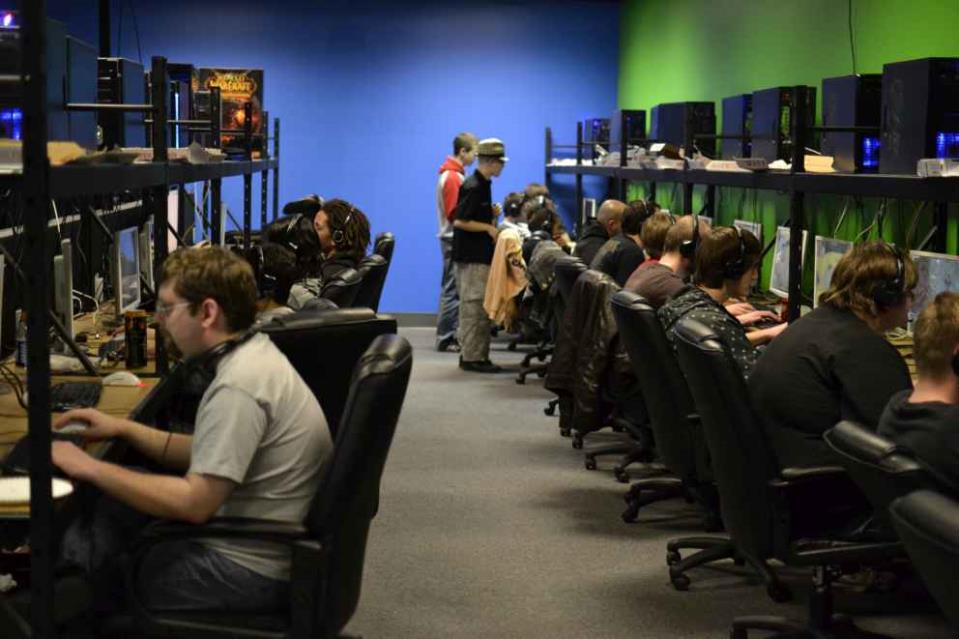
The gamer wasn’t interested in running around or worrying about hair or nails, “I’d sit down and kick your butt in Tony Hawk,” Ms Pecorella joked. Since gaming has always been seen as a very gender-specific hobby, she would always end up playing what she referred to as “boys’ games’ such as God of War, Halo and Call of Duty.” At around 14, a group of friends would meet up at an internet café and have LAN sittings for a few hours.
It was at this point that Ms Pecorella’s penchant for critique and rule-making started to shine through and this eventually led to her chosen career path. “I used to always criticize it like, ‘They should make this type of helmet,’ or ‘They should have done this.’ When I was studying I never thought I’d go into this type of line; I always thought that I’ll do Marine Biology or Psychology.
“However I had a friend of mine who at the time used to create websites working for a firm doing his own web development and I used to criticize his work constantly. ‘These colours don’t go together,’ or ‘You should make the User Interface (UI) better.’ Eventually he said, ‘Listen, I’ve heard you moan and complain, why don’t you try doing it yourself?’”
Personal and professional challenges
This path did however come with a few challenges since, at the time, there was no widespread game development on the island, let alone courses specifically designed for it. “I went into web development and I started studying programming languages. When you learn web development you always have your programming and then you have your visuals and I thought I was too much of a perfectionist to decide on colours and other visual details right then. So I focused more on the programming languages and wanted to learn the back-end and the databases and how servers work and all that.”
Another challenge for Ms Pecorella was that, at 16 years old, she welcomed a son into the world. Where most teenage mothers would be baffled by how to handle the pressure, often giving up, the gamer remarkably used her time-management skills to overcome the obstacles which so much responsibility placed in front of her.
“Being a young mother actually set the direction and the course of my career. You do have to plan these things and sometimes you want to be all work-driven and I have been offered things that I regretfully had to refuse because in certain circumstances you can’t just travel that easily. It has held me back in some things, for example I wouldn’t be here I would be in a different country to further my career.”
Ms Pecorella made it a point that, when her son was at the age when he would start going to school, she would then look for full-time employment in the industry. “Come September I started looking for jobs, and I had handed out a number of CVs and TRC, which nobody had heard of at the time, was the one I ended up working with. It was a new company that had just opened up with a lot of government investment and, after my mother told me to go for it, I said ok.
“At the start I was put in a situation where we were working in a team and we had a feature which was a theatre room and I had to programme the interactions. These were someone kicking the seats and throwing popcorn and I refused to do it because my son was two at the time and I told them that it’s the first thing I teach him not to do in a cinema; and then he’s going to play a game that teaches him how to do it? Then in saying no I proposed 20 other ideas of what could be done which were equally as fun and they offered me to sit for an interview and asked me if I was interested in designing games.
“I think it was the best experience of my life, despite what everyone sees as the effects which TRC have had on the gaming industry in Malta.”
TRC Family Entertainment Limited failure
In 2014, after two years working as a game designer for TRC Family Entertainment Limited, cracks in the company’s financial foundation began to widen. By September 2014, local media was reporting that Malta Enterprise was scrambling to get back the €8 million they had initially invested in the company which promised to make games for children.
“The worst point of TRC was seeing HR walk down every Monday and you expected a tap on the shoulder telling you get out. The choice was either you leave quietly and they give you a month’s wage, or they fire you and they pay you nothing because they didn’t want to have a bad name. It came to a point where I was going in at 7am and leaving at 2am because we had scrapped the entire project we were working on and started off from scratch all over again. New database, employees, managers, infrastructure.
“We were 100 people and they placed me in charge of the whole economy of how the game was going to run so during the day between 7am – 2pm I was learning how to handle it because I had no idea, then I’d have a small lunch break catching up with emails and then from 3pm – 2am I was in charge of a small team to design games to release in 4/5 weeks. There was nothing else in my life. Sometimes I’d have to go on weekends where we had a lot of investment. At least I could bring my son in because he was happy as long as there was a console, table soccer and a stocked fridge.”

The whole episode with TRC even led to Ms Pecorella’s proudest achievement so far being largely unknown. “There was a game when I was with TRC that never got released which I am the most proud of. So think of World of Warcraft, we were building a children’s version of that but the gameplay was similar. You have so many items and depending on which lands, items will spawn in different places with rare items in certain places. And I had built all of it.
“It wasn’t released because TRC was always free-flowing with investors’ money. We had just started releasing the games I was managing but obviously when a company shuts down, then everything’s gone. They spent a total of €14 million and they didn’t have anything on the market gaining anything back so it came to three years ago they asked investors and Malta Enterprise for more money and they said no. Then the CEO came down to say our wages were to be postponed by two weeks. Suddenly everything went shady and we didn’t get paid, running back and forth to tax offices with foreign workers getting deported back to the US or Canada and it was a big mess. We got paid in November/December from May.”
From that point, Ms Pecorella spent a further year and a half as a game designer for the company Exient where she worked on the Angry Birds Go Malta Team. She also worked on a new system to bring the Designers and the Developers together: “I had introduced the same structure as here because we had our own engine so a designer couldn’t do much, it was all programmer work.
“I had insisted that designers can do as much work as a programmer and I had worked as a programmer for like two weeks and we got it down like crazy. We said we will crunch now with 10 – 12 hour days and then we can relax. We ended up with me taking on all the UI, putting it in one engine – Unity, because I’m very familiar – then we exchanged it via Excel sheet and transferred it to the engine which saved us hours, potentially.”
Eventually though, she made the move to her current company as a Game Designer for Yggdrasil Gaming Ltd which decision was also slightly inspired by her son because of the easier hours and relative stability in Malta.

Gender roles, stereotypes and benefits
The Malta Independent asked Ms Pecorella whether she had problems with the glass ceiling effect being a woman in an entirely male-dominated industry: “I‘ve had disadvantages when it came to working with some types of men but they would have been in the industry for quite a while and they wouldn’t be used to having a woman there so when the girl says she has an idea they would say she didn’t understand or she didn’t know what she was talking about.
“Where advantages do come in, I think a girl’s brain works differently. I notice how the male gender will discuss and brainstorm different ideas and men look at things with more structure; from one box to another to another. As a girl it’s a big ice-cream sundae and stuff can slide off and it might look a little messy but it tastes really good. So I think having at least one female mixed around men is beneficial and it has worked in my favour. When I signed up to be a junior programmer I didn’t have any experience but they chose me because they thought it would be good to at least have one female.”
What makes a game successful?
In order to make money off Maltese-developed games, Ms Pecorella explained that there are a few routes one can take. “It depends on whether or not you get a publisher from abroad like maybe one who works with different successful games already and he would take an amount of profits and it would be under their name. Then you’d have your game associated with them and you get their reputation.”
She repeatedly insisted that a lot of it is actually luck and a large marketing budget. “If you create a game right now and submit it to the app store, if it’s not trending and I just make a candy crush clone with no money for marketing then it’s not going to get anywhere. If I have a lot of money for marketing such as one who asked Kate Upton to show up in a bikini because she’s quite prominent.

“Their game is terrible, nothing special at all, but they had around €17 million to make a game and only spent up to €2 million while spending €15 million on marketing, and like that they appeared at number 2 on the charts. Then you find a game like Flappy Bird and everyone scratches their head and asks how.”
Ms Pecorella also couldn’t resist speaking about Pokemon Go, “everyone is obsessed with Facebook and peacocking around to show that they’re better than others. All you have to do is share your progress and hashtag it profusely and suddenly everyone is sharing and trying to compete. Although one success can’t necessarily guarantee another, for instance if you have a Ghostbusters Go or a Dragon Ball Go, it most probably won’t do remotely as well as Pokemon Go did because first of all Pokemon came first, while it is also targeting 20-something year-olds which is the perfect generation for it because we all grew up with it and now we all have our phones and we can drive around and play the game properly.”