EU Competitiveness Commissioner Margethe Vestager said that the European Commission's state aid decision on Apple ltd does not call into question Ireland's tax system or its corporate tax rate (12.5 per cent).
Such comments could be viewed favourably by Maltese policy makers who defend the island's full imputation tax system that has repeatedly come under fire.
While Malta does not offer special taxation arrangements, as is the case with the Irish government and Apple, it offers preferential tax agreements at effectively much more favourable rates than in other EU member states. EU leaders and MEPs argue that multinational companies should be paying taxes where they are generating profits, i.e. where they are economically active.
The Commission, at the end of August, announced its decision to order Ireland to recoup €13 billion, plus interest, from Apple due to unpaid taxes as a result of a special taxation agreement. It declared that Commissioner Vestager said that by 2014, Apple was effectively paying a tax rate of 0.005 per cent, which she says works out to €50 for every €1 million in revenue earned.
The time-frame of the Commission's investigation on Apple's revenue and taxation was between 2003 and 2014. It declared that under state aid rules, the agreement between the two sides is illegal in view of the unfair advantage it provides for the company in question. A large number of MEPs feel that such taxation agreement ultimately place the largest burden on European SMEs, once thought to be a fundamental part of the European economy.
Commissioner Vestager said that: "They (Irish government) gave a selective treatment to two Irish companies in the entire apple group. The ruling endorsed an internal allocation of profits between its head office and branches. The vast majority of profits were transferred to the head office".

"There was no economic activity which justified such little tax on the profits. The effective tax rate of Apple sales international was as little as 0.005 per cent in 2014.To restore fair competition, the commission is asking Ireland to recoup taxable profits lost. Apple and Ireland will appeal as is their right. We have a robust decision and will defend it in court. Once settled we will publish our full decision. This information would be useful for other member states as profits were shifted to Ireland."
A select few MEPs, most notably Deirder Clune for the European People's Party (EPP) raised the point that it should have been up to other member states to see that multinationals such as Apple are paying taxes on profits earned within their borders.
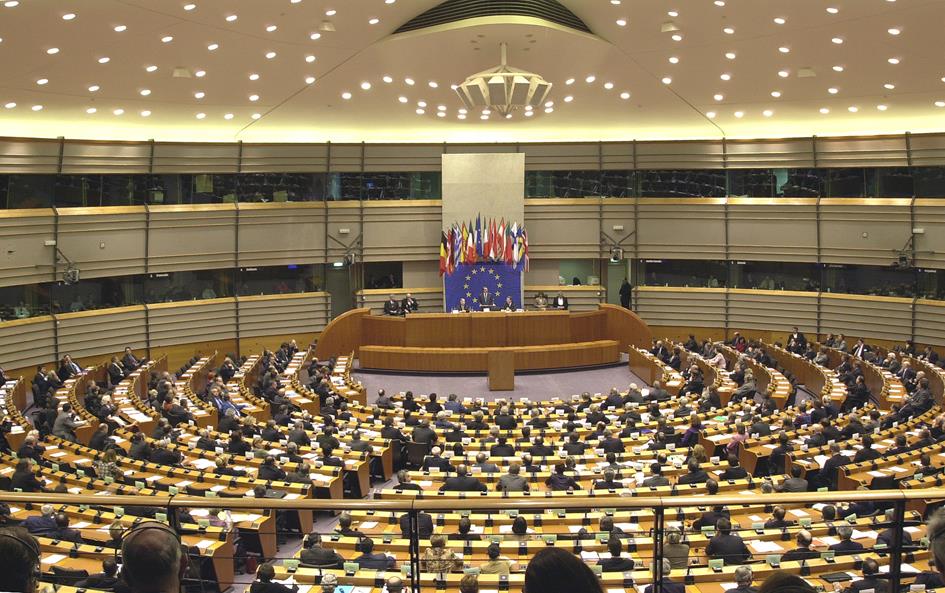
The overwhelming majority of MEPs from across the political divide, such as the EPP, the Socialist and Democrats, the Alliance of Liberals and Democrats for Europe and more showed their support for the Commission's decision. The main arguments in favour related to the fact that 'consumer is king,' and that government should not be deciding which companies succeed, through the granting of unfair advantages.
A number of MEPs criticised Ireland and Apple for choosing to appeal the decision when the money spent on appealing the decision could go towards improving Ireland's deteriorating public services.