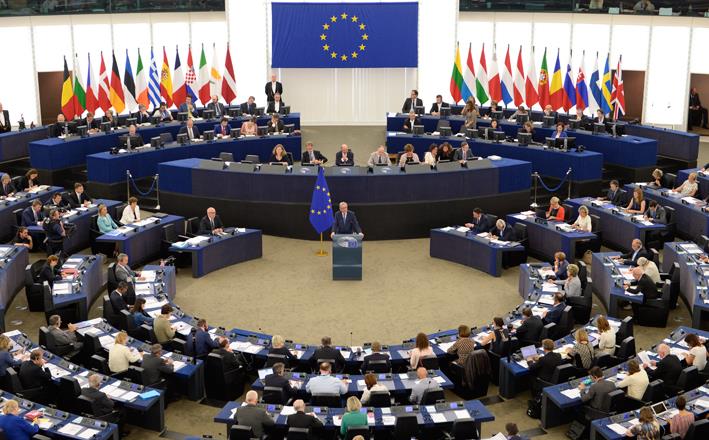
EU Commissioner President Jean-Claude Juncker today stressed the need for unity between member states in view of the increasing security threats both outside and inside the EU. This was said against a backdrop of violent attacks in France and Germany by violent extremists.
“It is no coincidence that the longest spell of peace coincided with the launch of the EU. Of course we have differences, but we settle conflict at the table and not in trenches. European values of freedom, democracy and independence must always be respected. I will not tolerate Polish workers being beaten on the streets of Athens."
His comments come during the 2016 state of the European Union speech before the European Parliament.
"Europe cannot become a melting pot without colour - Europe does not want to get rid of the nation state."
In his address, President Juncker immediately spoke of the need to mitigate unemployment levels in Europe - noting progress in this regard however conceding that the figures are still too high.
Moving onto the topic of Brexit, he said: "We respect and regret the UK decision but the EU as such is not at risk. We expect the UK to initiate proceedings as quickly as possible. There can be no a la carte access to the single market."
He spoke favourably about the free trade agreement entered into with Canada, in view of the potential for growth and stimulation.
President Juncker said that one cannot compare the US state of the Union speech with the EU one, based on the vast diversity found in Europe. He also emphasized Europe's troubled and violence-stricken history - making Europe even more distinct from the US.
"We want a better Europe that takes responsibility. I am convinced the European way of life is worth preserving."
"It is no coincidence that the longest spell of peace coincided with the launch of the EU. Of course we have differences, but we settle conflict at the table and not in trenches. European values of freedom, democracy and independence must always be respected. I will not tolerate Polish workers being beaten on the streets of Athens."
He spoke of the importance of safeguarding personal data: "that is why the Council has launched the European data protection regulation. Europe respects privacy and citizens don't accept drones flying overhead and companies observing each online click a private user makes."
On a controversial issue for Malta, having been accused of unfair tax practices, President Juncker firmly said that multinational companies must pay taxes where they are warning profits - a practice which would see Malta lose much taxation revenue.
This was met with jeering by the EP, in view of the fact that President Juncker was Prime Minister of Luxembourg when it was found that the country was offering secret special tax rulings to multinational companies - effectively siphoning off taxation revenue from other member states.
Turning to one of the Commission's priority areas, President Juncker revealed plans to improve connectivity.
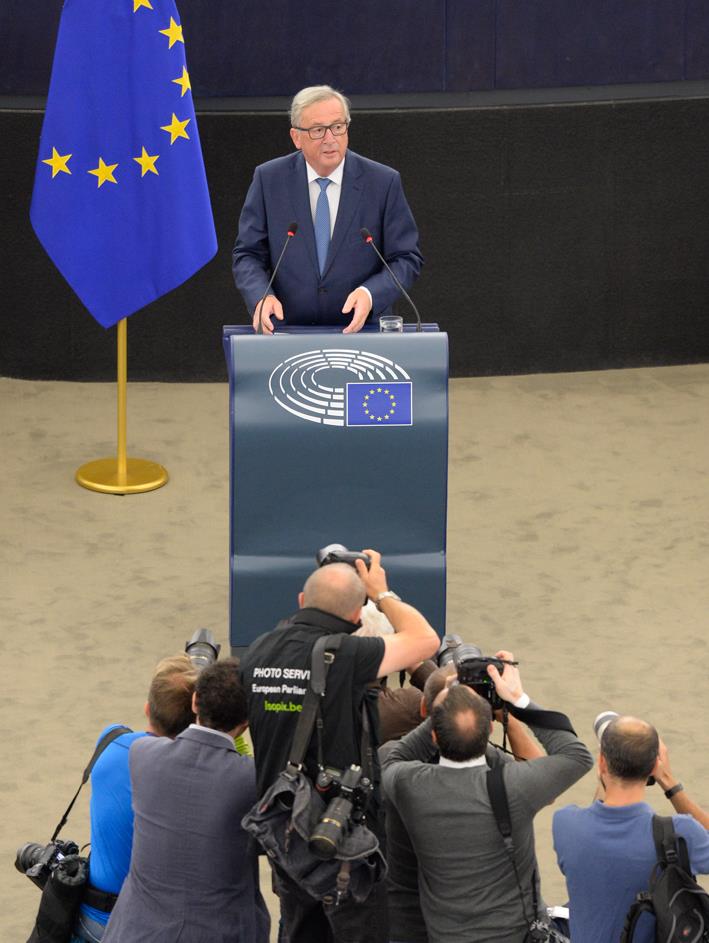
"The EU is proposing reform on the digital communications market - allowing for citizens and businesses to plan there digital investments over the next 20 years.
"The commission is proposing a fully deployed 5G network by 2025 - creating a further 2 million jobs within the EU.
"The goal is to provide every European capital with free wifi connectivity. This empowers European citizens.
"The €350 billion investment plan has already generated a further €150 billion investment.
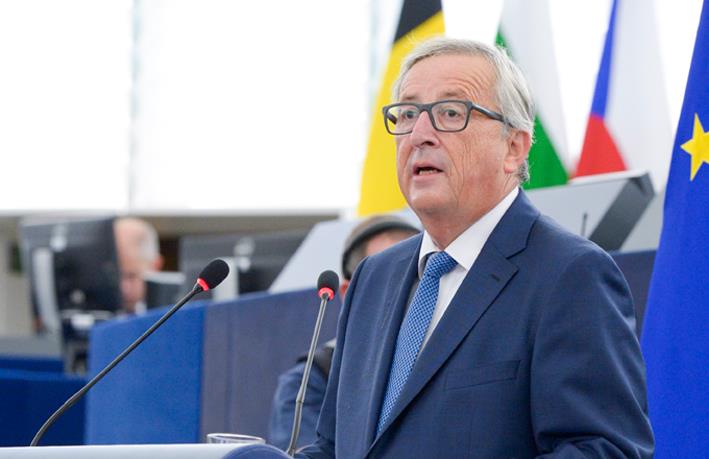
"We propose to double the duration and capacity - working to reach €620 billion investment by 2022 - and we can get their faster with member states contributing.
Addressing the issue of migration, he said that "today we are launching an ambitious investment plan in Africa and the neighborhood - which could generate €44 billion in investment for the region, and even more if member states pitch in.
"This will provide opportunities for people who would otherwise be pushed into taking dangerous journeys at sea to get to Europe."
Turning to youth unemployment, he said that it is unacceptable that he upcoming generation will be poorer then there parents - something that has not happened for 70 years.
He conceded that this is mainly up to national governments, but spoke of stimulation measures to help mitigate the high youth unemployment rates found in the EU.
President Juncker announced the setting up of a European solidarity core which would seek to involve EU youths to help foster the principle of solidarity in Europe.
He spoke harshly about terrorist attacks in the EU and current security risks.
"We have set up special systems for the return of fighters. We are combating the financing of terrorism. We are using the internet to combat terrorist propaganda. We have a lot of work to do and we need to know who is crossing our borders. We are protecting our borders and this is why we need Frontex who are monitoring borders in Greece and the Baltics. As of October I would like to see the deployment of 200 guards and a number of vehicles on the Bulgarian border. Anyone coming or leaving the EU will be registered, with the date, place and reason as to why the person is coming or going.
"By November we will have an automated system dictating who has the right to enter the EU. We need to give priority to the exchange of information and intelligence gathering, which is why Europol has been given more powers."
He said that the EU has to work together to overcome external conflicts. "Europe is a soft power and proud of it, however this is insufficient in an increasingly violent world. Where is the EU and member states in negotiating conflict resolution in Syria?
"We absolutely need a European minister for foreign affairs. I have asked for a report by Frederica Mogherini on the situation in Syria and possible ways forward."
Federica Mogherini is an Italian politician and the current High Representative of the European Union for Foreign Affairs and Security Policy and Vice-President of the European Commission in the Juncker Commission since 1 November 2014.
"By the end of the year we are also proposing a European defense fund to help with research and development in this area."
He stressed the need for collective responsibility: "we cannot survive without working together. We need to get rid of our spats. I have asked commissioners to visit national parliaments to discuss the current situation and get a proper understanding on what is happening behind the scenes in the member states. The eu must be built together with the member states and not against.
"The commission needs to listen to our citizens, the European Parliaments and national parliaments in order to move forward. Every single day I talk to European citizens, I do not isolate myself because this is my duty," he said to loud applause.
MEP interventions
Controversial British MEP Nigel Farage, in his intervention, said that the EU has learnt “nothing” from the Brexit vote.
He continued to say that if EU leaders continue to tie the internal market with the free movement of persons, the EU climate will continue to deteriorate.
Following President Juncker's speech, a debate is taking place where MEPs are outlining their views on the topics discussed by the Commission leader, as well as areas they feel merit more importance.
The Alliance of Liberals and Democrats (ALDE) political group leader Guy Verhostadt slammed President Juncker for his comments on populism and the implication that the MEPs are the source of populism in the EU.
On the Brexit issue, he said:
“Brexit is not a liability, it is an opportunity. The British government wants to make Brexit a success and that is there duty. Our duty and our responsibility is to make Brexit a success for Europe and the European citizens. For me, Brexit is not a matter of punishment or revenge – I never did politics like that. It is in my opinion a question of the relationship between the UK and Europe. My message today is stop the politics of division, which will kill Europe as some of you want.”