Stanley Debono, Chief Executive Officer FITA
It was at the turn of the century, when the millennium bug was on everybody's mind that Mr Joseph Camilleri, voiced the concerns of the National Commission for Persons with Disability, during the annual conference of the Malta Information Technology & Training Services (MITTS ), as MITA was known then. At the time, he observed that despite the huge difference, technology can bring to the lives of persons with disability, it was ironically this pervasive social aspect which presented the greatest risk of disabled people falling victim to the so-called Digital Divide.
MITA and the Ministry for Information Technology and Investment (MITI) took on the challenge, and over the years never looked back. Following on Mr Camilleri's speech, MITTS set up the Foundation for Information Technology Accessibility, known as FITA, providing it with the support necessary to bring about the breakthroughs and innovation which characterise the ICT sector.
It has been fifteen years now and FITA can face new challenges in the knowledge that it has invested in the human resources and partner network which can help address them successfully.
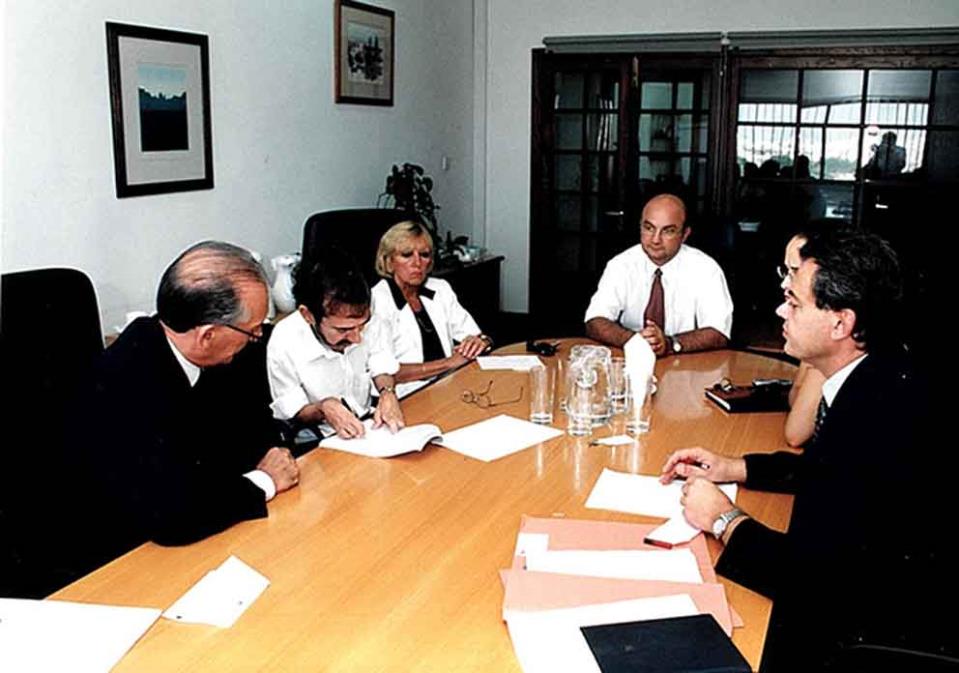
While still lacking adequate office space, in early 2002 FITA consolidated its training facilities by obtaining trainer certification from the Royal National Institute for the Blind (RNIB) and the British Computer Association of the Blind (BCAB). This was quickly followed by FITA's first involvement in an EU funded project; a Leonardo project called GetResults, which featured accessible entrepreneurship training material for all participants, irrespective of impairment.
Seeking to facilitate access to Broadband Internet for persons with disability, FITA partnered with GO plc and Melita plc in 2004, in order to negotiate favourable telephony and Internet rates for disabled people. These offers were made available principally to visually impaired and deaf clients, who, because of their impairment, made above average use of such communication media. Eventually Melita plc extended an offer to all persons with disability, irrespective of impairment.
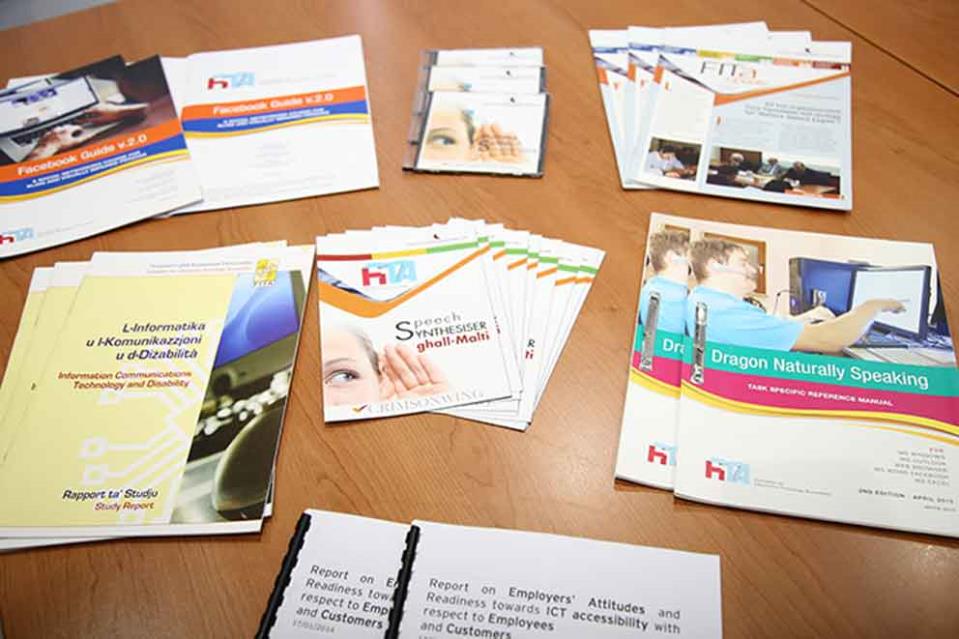
In 2005, FITA expanded its services into the development of accessible software. FITA's software was unique in that it promoted the use of a Maltese language interface and high customisability. At about the same time, collaboration with the Physically Handicapped Rehabilitation Fund (PHRF) provided premises for the setting up of a computer refurbishment workshop. Both these services are still ongoing, although, understandably, supply and demand of refurbished computers has dwindled over the past years.
FITA has also collaborated with Microsoft (MS) on a number of occasions, on the distribution of MS software to persons with disability. FITA combined these initiatives with research exercises and, thanks to the support of MITA, over the years we have been able to continue with this trend. We now have a set of research documents accurately tracing the use and expectations of persons with disability in relation to ICT. The last of these, carried out by Ernst & Young, was published in 2014. These, and more information, are all publicly available on the FITA website.
2007 was characterised by close collaboration with the then Employment and Training Corporation (ETC). Together, ETC and FITA provided a number of work experiences for persons with disability. These exercises enabled us to find job placements for suitable individuals, some of them also within FITA itself. Giving an opportunity for persons with disability to experience employment and, conversely, for employers to understand what dealing with people who have different impairments entail is something FITA has always actively encouraged. We still do this through collaboration with JobsPlus, the Malta College of Arts, Science and Technology (MCAST) and MITA whenever the opportunity arises.
In 2008, FITA joined an international research consortium called TACMON. The overall objective was researching different technologies linked to refreshable Braille and tactile displays. This was an interesting project. FITA contributed to the project through the design and user testing process. During the same year, MITA sponsored the creation of an educational video which compiled the life experiences of persons with different impairments together with their use of ICT and enabling technology. This resulted in one of the first local awareness videos that incorporated sign language interpretation and captions at the outset. All these media sources are available on the FITA Facebook page and FITA Youtube Channel.
In Malta it is almost impossible for disabled people to 'try before they buy' when ordering specialised ICT equipment. That is why, in 2009, FITA identified sponsorship from local enterprises in order to create a pool of ICT equipment which people could try out and also borrow, prior to any decision on their part to purchase the equipment. Besides additional equipment bought by FITA, this service has continued to expand in 2015 thanks to FITA's collaboration with a recently set up NGO for visually impaired people. Known as ADVICE, the Assistive Devices for Visually Impaired organisation added many Humanware products, to the range of equipment we can make available for trial.
Also in 2009, a number of persons with disability spurred by FITA, helped compile and publish a Career Path document, which helped trace and match the different ICT qualifications, training institutions and ICT jobs applicable to the local industry. This information has now been superseded by the EU-funded European e-Competence Framework 3.0. However, FITA continues to support disabled individuals who seek access to these educational resources, via ICT.
In 2010, FITA signed the first Memorandum of Understanding (MOU) with the Ministry for Investment Industry and Information Technology (MIIIT), MITA and the National Commission Persons with Disability (KNPD), whereby funds are allocated to FITA initiatives which help address objectives listed under the national ICT strategy. Some of these goals, included the creation of new accessibility focused training materials, and the set-up of the 121 Mentoring platform.
2011 saw us starting work on a new revamped website which coincided with work on the Maltese Speech Engine (MSE). The development of the MSE was made possible through 85% European Regional Development Funds (ERDF) funds and 15% national funds. The MSE continues to be maintained and updated by FITA and KPMG Crimsonwing plc, and is now at its third release.
Starting in 2012, FITA has embarked on a number of initiatives with the Vodafone Foundation. In 2012 we published a set of awareness raising videos which were posted to the Vodafone Youtube Channel. These outline how technology and ICT in particular, benefit persons with different impairments. IT shows people from different strands of life leading a more independent life, thanks to the combined and effective use of different technology products.
Also in 2012 and 2013, FITA and the Vodafone Foundation ran a grant scheme which enabled 33 individuals to purchase a smartphone which enhanced their access to communication and information services.
Over time, and in order to consolidate its range of ICT related services, FITA has dedicated more human resources to the organisation of regular information sessions. These information sessions now span a range of ICT topics and are adapted to meet the requirements of different audiences and interest groups. Past attendees include disability NGOs, the NGO Nanniet Malta (Grandparents Malta), occupational therapists and education professionals. In some instances, we also held sessions for specific business organisations who sought greater ICT accessibility awareness for their employees. We hope to see further growth in this regard, following the signing of a new agreement with the Malta Employers' Association in September 2016.
Another item we addressed in 2013 was the organisation of a specialised training course and the revision of our Braille Embossing services, whereby these were upgraded along the International Standards which were published the same year.
In late 2015 we organised a widely praised seminar which brought together Disability NGOs as service users, health professionals, education institutions, and local industry. The seminar focused on the various aspects of accessibility, from the design stage to the delivery of products and services.
In 2016, FITA has chosen to invest principally in raising awareness about its range of services. As a result, the influx of work for many of our consultancy and research-based services has increased exponentially. Another activity for 2016 was the organisation of a Digital Photography course for persons with an intellectual impairment. This course evolved through feedback received from our clients and as such reflects their interpretation of digital photography as a means of individual expression.
FITA has many other projects currently under consideration and we are pushing strongly to have them launched over the coming months. We aim to continue to strive in the direction of that disabled people enjoy maximum individual choice and independence, while ensuring the client-focused approach that characterises our services portfolio.