Written by the MITA Facilities Management Department
As part of its green commitment towards the environment, MITA has embarked on a holistic approach to align its procedures and practices to quantify, monitor and control the impact of MITA's operation on the environment. The scope of this assignment is to encourage better environmental performance of the Agency as a tangible proof of our corporate social responsibility.
To attain this objective, MITA has formally introduced an Environment Management System (EMS) based on ISO14001:2015 requirements across the Agency. ISO14001:2015 is amongst ISO's well known standards which is directly related to the requirements for the formulation and maintenance of an Environmental Management Systems.
There are three fundamental commitments required, namely the prevention of pollution, compliance with legislation and continuous improvement of the EMS.
Benefits of EMS based on ISO14001:2015
The benefits of having an Environment Management System are primarily based on improved environmental performance that is led by top management commitment and the support of employees. Cost savings is an important influential parameter attained through improved efficiencies in energy and water usage and through waste minimisation. Other benefits include compliance with legislation and regulations, improved corporate image, reduced risk of non-compliance with legislation and subsequent costs/prosecution and improved communication of environmental issues.
MITA and the environment
Over the past years, MITA has implemented a number of initiatives aimed at safeguarding its environmental impact. An Environment Policy was drafted and an Intranet Portal that houses all relevant procedures and documentation was implemented. A comprehensive energy monitoring system was also installed to monitor and log power consumption across MITA sites in macro detail.
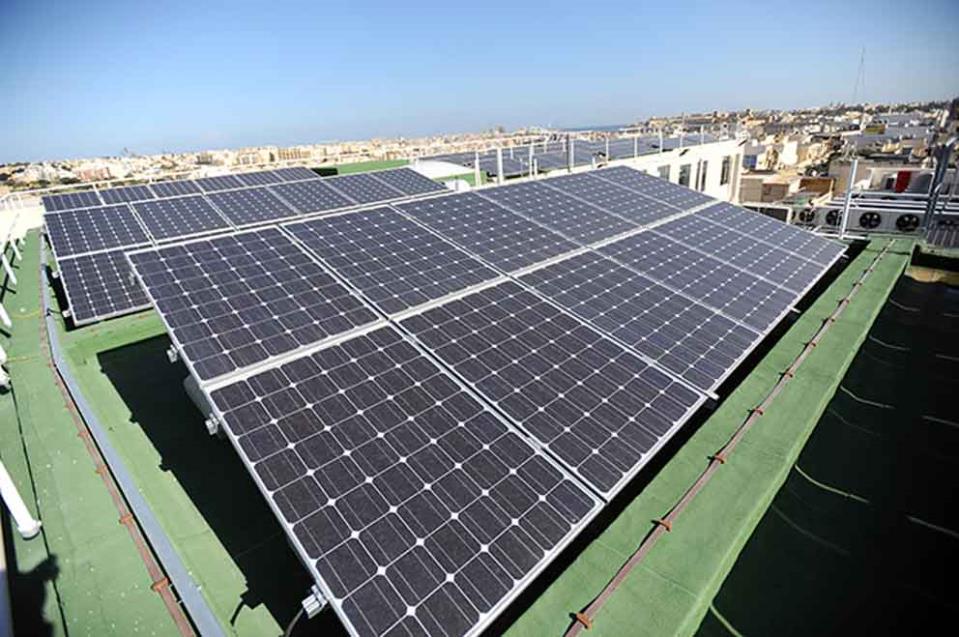
The Agency also installed a number of photovoltaic plants and implemented several energy conservation measures such as elevated efficiency air conditioning systems, LED lighting, motion sensors and dual flushing systems. MITA also installed solar power water heaters and introduced an electric vehicle to its transport fleet. Together with these measures, MITA also embarked on awareness sessions amongst its employees by organising 'Green Campaigns'.
Other tangible measures were in the Waste Management stream - the collection of electronic waste, substantial reduction of disposable cups through the provision of mugs and the installation of cardboard waste compactors.
To consolidate its effort and demonstrate further its environmental commitment, MITA undertook the formal accreditation of ISO14001:2015 and the inherited disciplines that such standard mandates.
Following an extensive two stage audit exercise by the Malta Competition and Consumer Affairs Authority (MCCAA), MITA has successfully managed to attain the ISO14001:2015 certification.
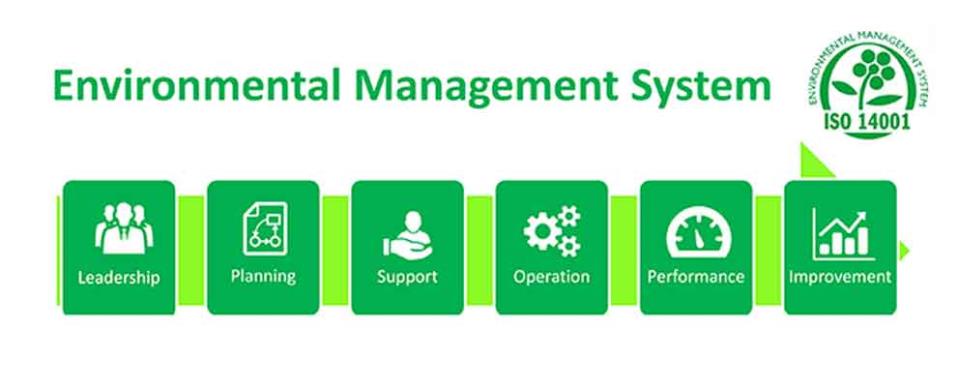
Staged model adopted by MITA for the Environmental Management System in line with ISO140001:2015 standard
MITA's Head of the Facilities Management Department, Mr Wayne Lee Valentine, commented about this important milestone and said that "this achievement and certification against the ISO14001:2015 international standard consolidates MITA's effort carried out over the past 12 months. Thanks to the support of top management and tangible contribution of its employees, MITA has managed to demonstrate its positive contribution towards a greener environment for the benefit of our society. Undoubtedly, this has been a challenging journey which has positioned MITA as a committed agency towards a better environmental performing organization."