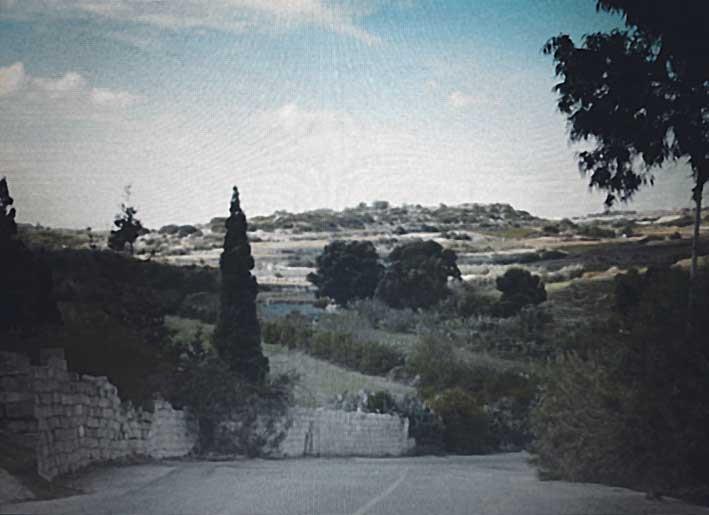
Residents of Bidnija are up in arms over a development application that they fear will open the door to the creation of an industrial zone in the picturesque countryside village and leave a devastating and irreversible effect on the environment.
The development being proposed in an Outside Development Zone on what was once a chicken farm is an outline application to construct 18 large garages. It has been lodged by storage and recycling company U-Store.
Residents, however, claim that while the application refers to storage and distribution operations, appearances can be deceiving.
The application to construct storage garages, residents are say, is misleading because in reality the proposed developers are already marketing, by word of mouth, the 18 garages for industrial use, and not for storage purposes. According to information which reached this newsroom, each warehouse commands a price tag of €600,000, making the whole lot a €10 million turnover venture with millions of euros in profits for the developers.
Sources who spoke to The Malta Independent on Sunday fear that a class 6A use permit that would be granted for a storage facility could be freely converted to a class 6B permit for boat storage and boat building. After that, the class of use could eventually be changed to class 5B for general industry use — such as mechanics, carpentry manufacturing, panel beaters and sprayers — as the applicant allegedly is promoting the units for resale.
Nearby residents are objecting and claim the applicant is speculating to make a quick profit and, in the process, creating an industrial zone at the expense of the countryside. Although a permit notification was fixed on site by the Planning Authority, residents say it was instantly removed and that notifications were not posted to the adjacent households as required by law.
Such actions, they say, indicate that the intent behind the application is highly questionable.
ERA objects to proposed development
In the meantime, the Environment Resources Authority has objected to the outline application, stating that, “There is no justification for this proposal since such use can be easily located within areas identified for such uses and not at the expense of sacrificing agricultural uses to introduce commercial activities.”
The site in question is an ODZ area surrounded by farmhouses and residents claim that the intention is to attempt to override planning procedures required by law to change the zoning of an ODZ site to that of an industrial zone, a move that would require ministerial approval.
And sources speaking with this newspaper claim the planning application is already being fast-tracked through the Planning Authority.
Fearing the proposed development will in actual fact eventually turn out to be an industrial zone — such as in Hal Far, Handaq, Mriehel or Burmarrad — residents of the area are calling on the authorities to dismiss the application, lest the Planning Authority is to condone the creation of a ‘Bidnija Industrial Zone’ without the necessary legal processes having been undertaken.
They say that such a development would create a significant adverse effect on both the environment and residents’ quality of life. While residents are used to the comparatively light odours emanating from a poultry farm, which are nowadays controlled by tough sanitary laws, the negative impact and noise intrusion created by the businesses they believe will infiltrate the tranquil area of countryside would be devastating due to the sounds and smells of carpentry machinery, toxic spray paint used by sprayers, resin odours used to build boats, VRT operations, maintenance and noise made by mechanics.

Such disturbances, they argue, are over and above the noise that would be created by storage operations through the use of forklifts and the loading and unloading of containers.
In its comments on the application, the Agricultural Advisory Committee (AAC) has made clear that the poultry farm has been in disuse since 2011. It is a Rural Policy and Design Guidance policy requisite [RDPG 6.2C (5) – C] that to consider any redevelopment, “a disused farm must seize its operations at least 10 years prior to the issue of the RPDG policy in 2014”. Even so, the clause would be applicable when considering a dwelling with a footprint of no more than 200 square metres, and not for the introduction of industrial workshops, which residents claim is the end goal.
To add insult to injury, according to residents, a cardinal clause within the policy RPDG 14 should prohibit the application even being considered is that the “replacement building is to be of high quality design and shall fully respect the wider context in which it is located.”
Detractors also point out that the total footprint in the proposed application is much larger than the approved permits on site, and that the applicant included additional areas that were built up without permits and which are under enforcement notice.