After being elected to Parliament at your first attempt, Prime Minister Joseph Muscat has entrusted you with an important portfolio within the OPM. How does that feel?
It's flattering, but the fact that we are here means something. It means that we have to work hard to deliver, to act, and make sure that pledges made in the election manifesto have been delivered by the end of this legislature.
The legalisation of the recreational use of marijuana could become a reality in the next five years; where do you stand on this issue?
The manifesto per se, does not say that we should go for this option or avoid that scenario. We are looking to kick-start a discussion on this important issue and proceed from there.
As to my personal opinion, if I had to say yes or no at this stage it would defeat the purpose of the debate. I never used drugs, but by no means am I saying that we shouldn't look into the question of legalising cannabis as a recreational tool. I am all in favour of a full educational campaign on the subject and the same applies to any other type of illegal drug.
How do you plan to approach the issue?
My approach would be to engage with everyone involved. It is a fact that we have many cannabis users and that drugs are all around us, and will continue to stay there, like many other issues. The main difference is how we intend to tackle this issue. We can either have an informed discussion or try tackling the subject in a different way, or just close our eyes to the whole issue and let it continue thus now allowing other victims to receive any help.
This government has already achieved a lot in the last four years by decriminalising marijuana. Currently, anyone found in possession of marijuana, is required to attend a Drugs Court and pay a fine of €75. A person found in possession of the substance twice in a two-year period, will be referred to a drug reform and rehabilitation programme.
OASI and Caritas have already spoken out against legalisation, with the former even saying that the current legislation is too weak. Have you met any of the stakeholders?
Informally, yes, we have met various stakeholders - either through emails or face-to-face meetings - who are able to share their views. They appreciate the fact that the PL was courageous enough to sit down and discuss the subject on a national platform.
On the one hand, I am hearing the views of former drug addicts who believe we should not go down this road, but on the other I have also met people who are in favour of the reform and do understand that there needs to be a legal framework on the issue.
I really took note of what OASI said, particularly the issue surrounding people caught with a marijuana plant. The current limit is one plant to be classified as being for personal use, but that is not enough. There are also other changes we need to introduce.

What time frame are we looking at?
I have other reforms in my portfolio, so it does not mean that if I start with topic 1 and not topic 2, then topic 1 is more important. As election pledges, they are all equal in my eyes.
I cannot say that we will be starting in two months, but I can assure you that we will be using this period to have a healthy discussion with important stakeholders. For example, last week I met with the GRTU and other stakeholders that have an important direct or indirect role in the discussion, like the medical field. There are investors who may be interested in legalisation, and could see Malta as providing a platform for exporting their products, which will use cannabis for medicinal purposes.
It is our intention to get the discussion going within the next 12 to 24 months, and not in the fourth year of the legislature.

There is no denying that Malta has a deeply-rooted Catholic identity. Do you think it will be possible to change mentalities when it comes to the regulation of prostitution - and marijuana for that matter?
I suppose resistance happens when someone just comes forward and says that, as from tomorrow, we are going to be doing this or that. We are saying that we want to discuss these issues, especially when it comes to the involvement of human trafficking in prostitution.
It is a fact that prostitution exists in a variety of different ways. We are saying that we want to engage in a discussion - not that we want to legalise prostitution tomorrow.
We have to look at the various models. We could either follow the Scandinavian model, and introduce a total ban, or approach it like other countries have done and accept that prostitution is legal and introduce certain obligations. There is the French model, which was introduced last year, which gives a new dimension to prostitution. They have decriminalised prostitution in cases of human trafficking, which allows the government to work hands on and help victims to get back on to their feet and, through new labour training, find new employment.
Gender quotas in parliament are another hot topic in your portfolio. Female MPs have previously criticised the concept, comparing it to tuna quotas. As a woman, where do you stand on the issue?
Personally I am not in favour of gender quotas. I would not have contested the general election if I knew I would get through on a quota that favoured me. When I achieve something, I want to achieve it on my own merits.
However, I do understand that if, as a country, we do not introduce the proper mechanisms, we will probably only achieve equal numbers in a hundred years' time, so we really do need to act.
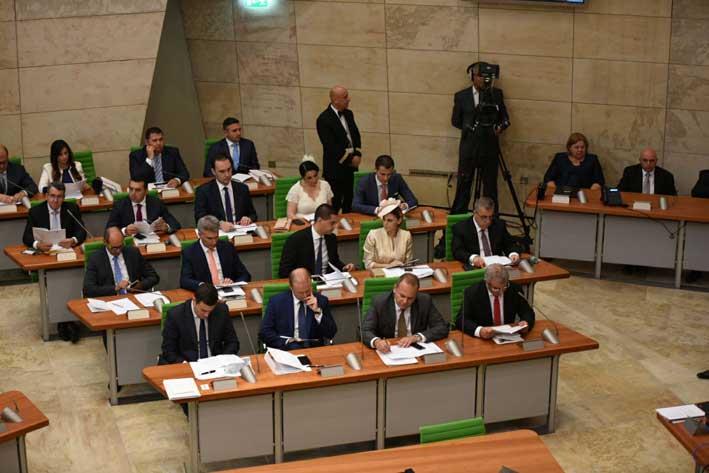
Quotas can work if they go hand-in-hand with new measures and fight certain mentalities. We do not have any child-care at Parliament, so it does limit female involvement in politics. A month ago we had the swearing-in ceremony, and I was asked not to bring my four-year-old with me. I told them that, if my child could not be present, I would not go to the event, even if it meant not being a Parliamentary Secretary: I did not give a damn.
I wanted to send a clear message about what I had campaigned for during the previous six weeks. I meant every single word of what I said and it got the attention of the Speaker. He told me that he admired my position and he wanted to discuss other parliamentary reforms. My child was allowed to be at the swearing-in ceremony and I am happy to note that we are looking into introducing child-care facilities for this purpose. It is not much, but it is already a bonus that we are starting to discuss these basic things.
I think quotas can be introduced immediately, by adding females and balancing figures through an amount of PN and PL MPs. We may have some trouble finding seats in the chamber, but it is less damning than the other option. Imagine if a person gets 5,000 votes, and I get 1,000 votes, and I get elected. That just does not sound fair to me.
You were elected as an MP the first time you stood for Parliament and have been appointed a Parliamentary Secretary; what are your ambitions for the future?
I contested the election to be able to somehow help the man on the street. I was shocked when I was elected and then again when I was offered a portfolio; everything happened so quickly, especially because I had refused to run so many times.
I just hope to give something back. I am taking this journey day by day, to face the challenges in front of me, to act and to deliver, and then it is up to others as to where I could go.
As you've mentioned, you've declined to run a number of times. What was the final push that made you put your name on the ballot sheet?
I had missed the hands-on experience with the man on the street. I always wanted to help people; journalism does offer you the same platform as a politician, but with the latter you have the luxury of having the tools to help people. Even though it has been 10 years since I left journalism, the instincts are still there: I mean, I'm constantly writing lists, but I guess that factor to help people was not the only factor.
Identity Malta is also part of your portfolio. What sort of reforms are you planning to implement?
As we speak, we are assessing the situation through meeting the heads of units and taking stock of the current situation and legislation in order to evolve and provide a better service. We definitely need to be more transparent per se in our priorities. For example, when someone applies for a visa or a particular service, we need to make sure that all the charters, all the dos and don'ts have to be readily available online.
Identity Malta is a living department, and we need to make sure that the law reflects our current reality.
Identity Malta has featured quite prominently in the media over the last couple of years, resulting in some public distrust in the unit. What do you plan to do to win back public opinion?
I do not agree with you 100 per cent, and I'll explain why. As a private citizen, in the last few months I had to change my ID card and I was proud to see that an efficient service is being provided. That unit had massive issues before reform was made four years ago: I remember the ID section being one of the worst nightmares ever. I think we should applaud the fact that improvement has been made: remember we had a situation where ID cards had expired and there was a lot of abuse.
The IIP section is also something to be proud of, and I'm glad that the PN has accepted the fact that it is here to stay. And the general public understands it better, especially now that the money will be directed into public infrastructure.
There are other units that need attention, that need to improve on timing. When I arrived, I discovered that one particular unit had hundreds of files pending. We have out-sourced work in order to reach nil and now just keep up with the normal intake. I held an internal meeting and while we all acknowledge that the lack of human resources is an issue, we need to find a solution.
Nexia BT has been appointed as Official Concessionaire to promote a residency programme in the Middle East. Given the Prime Minister's alleged connection with the company - and especially with Brian Tonna - do you believe that it presents a conflict of interest?
I have not seen Brian Tonna walking around these halls [Castille], which is what the PN said.
Brian Tonna's connection with the panama papers scandal does mean that the public is distrustful when these sort of deals emerge, would you not agree?
The public also voted during the general election, and if people had to assess their vote on that argument, then we would be under a PN government.
That is true, but the fact remains that a significant portion of the population are extremely wary of Nexia BT.
I would have been really concerned if things had been contrary to the facts that we presented. There was a public call for that post, and Nexia BT - along with other companies - applied for the contract. It was a transparent process, to the extent that none of the other tenderers appealed against the decision.
If the companies that submitted a tender had been hand-picked, I would understand, but there was a request for tenders and Nexia BT is not a blacklisted company or anything. I cannot just say that anything related to Nexia BT will not come close to the government.
I want people to know the facts. For example, it was argued in a TMID editorial that we caught the small fry and not the big fish (in reference to a police investigation instigated by Identity Malta after it emerged that an employee in the Passports Unit had misappropriated some €25,000). I really want to send a clear message that it was below the belt to say that I should close my eyes to someone who stole €25000. I have a zero-tolerance for this sort of thing. I worked in a bank for five years and I would not even let people leave one cent on the counter, and would insist that they either took it or put it in the Community Chest Fund piggy-bank.
I believe in honesty, integrity, and transparency, and even if it was €20 I would have acted in the same way. I have a zero-tolerance policy regardless of whoever the person is. If you are a civil servant, you are here to serve.