The Nationalist Party internal structure building process seems to be geared towards the next general election, rather than the 2019 MEP and local council elections.
PN Secretary General Clyde Puli, during an interview with The Malta Independent, stressed that the PN will do its best in the 2019 test, but also said that the party's main expectations and plans are for the next general election.
He also indicated that the PN leadership intends to stay on even if the PN suffers a major loss in 2019.
Asked what the current PN administration, including party leader Adrian Delia, would do should the PN lose the 2019 elections by a wide margin, and whether there will be resignations or if they will remain on, Puli said: "we came here with a plan for five years, and we intend to remain there to implement that plan."
"For the good of the Nationalist Party, instead of looking at the reputations and egos of people, leaders and officials, we need look at what will happen to the party, not just in the coming five years, but for the years following. If we do not build a strong enough structure which will lead us to challenge general elections, then this party will have big problems. If you ask me, if the leader and leadership resign halfway down the road, I think that there will be consequences for the party that will be felt for years."
PN Internal reforms being enacted will bear fruit in general election
Ongoing internal reforms within the Nationalist Party will bear fruit in the next general election, PN Secretary General Clyde Puli has said.
Puli, during an interview with The Malta Independent, was asked about his expectations for the upcoming MEP and local council elections in 2019. Analysing the current situation, he said: "we suffered a major loss in the last general election, larger than the one before it, despite all the issues of corruption that were there. There was a long, democratic PN leadership campaign, and so the party is now passing through a number of reforms."
Comparing it to a car race, he said that the PN is not currently on the race track, but in the garage fixing a number of things. "We are going through a phase where we are building a new machine for the party. As such our expectations and plans are for the general election. The reforms we are undergoing now are to bear fruit in the general election, not to be fully implemented - as it would be impossible even though we wish it - for the MEP elections. While an election is always a challenge, it would not be wise to be that short-sighted to work solely for next year."
"This does not mean that we will not do our best. We will do our best and ensure we have good candidates and that we present a strong focused message." He stressed that the PN is not giving up on the MEP and local council elections.
He said that the PN is implementing organisational structure reforms, "and hopefully they would have started bearing some fruit, but our main target, main objective, is the 2022 general elections."
Told that a chance of a PN victory in the 2019 elections is slim, and asked what he would consider to be a success in the 2019 MEP and local council elections, and what he would consider to be a result good enough to be considered a starting point for the next general election, he said: "I do not exclude anything in the upcoming year and a half. A week is a long time in politics. There could be issues so big that they win the result. What is important is that the party be in a position to fight on those issues. I am trying to build a machine where, using racing cars as an example, if the opportunity arises and you put your foot on the gas, the car rushes forward, and does not stop in the middle of the road."
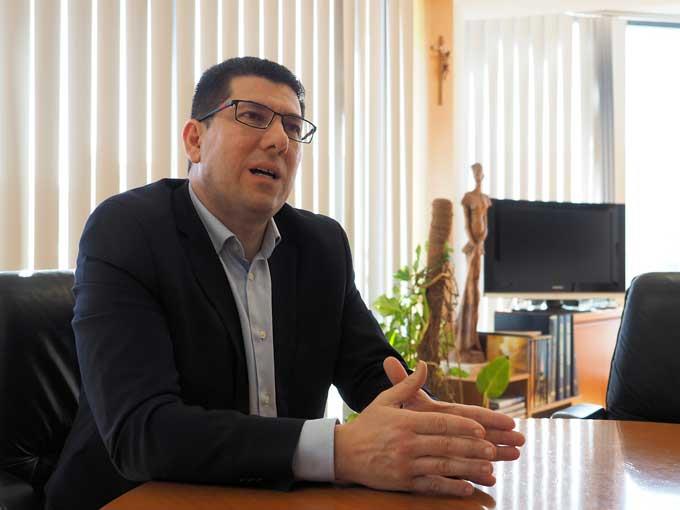
"So I will not judge based on electoral results. I will judge based on how well my engine runs or doesn't run. If it is working enough to prepare us for the general elections, I think that will be the success we need. If I focus on the elections in a year and a half's time, and build something that will only last me till then, then we will have problems in 2022, and I don't want that."
Asked whether he is concerned with the possibility of losing an MEP seat, he explained that such a concern always exists. "You must also look at how that third seat was won last time. The alphabet played a role when it came to the election, and so did the inheritance of votes. Every now and again you would have a candidate who receives a lot of votes, and not many votes pass to others and the other candidates fall. That is the numbers game in our electoral system, which is good as it is very democratic, but that game could end up being played. The concern was always there, It was a very tight race with Labour."
Pressed and asked whether he believes the PN can retain the three seats, he said: "The fact that it is a tight race means one cannot say. You have a situation where you can get more votes than last time but still not hold on to that seat. So it is hard to say as it depends on who our candidates will be and on their political stature... that makes a difference."
The politically orphaned
Told that there is a section of society who feel politically orphaned, not willing to vote Labour but who do not trust the current PN administration, he was asked how he plans to remedy this situation, whether he believes the PN can win without those votes and whether the PN will try and appeal to a different section of society to make up for the situation if the party cannot with these votes back.
Puli said that the PN is doing everything it can in order to convince every voter, "including those who never voted for us and those who occasionally vote for us but are not yet convinced. Without a doubt we must do that. Persuasion is the name of the game."
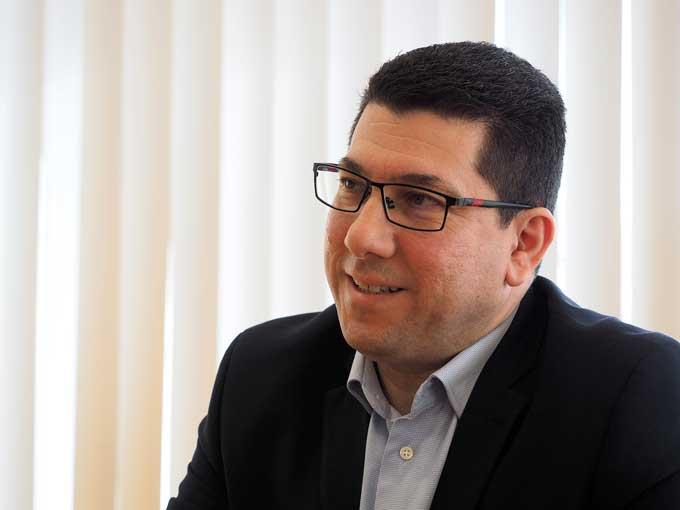
He said that some argue the fight against corruption is not being fought with the same zeal present before. "I say the conviction against corruption is as big as it ever was, did not die and is still there in the party. The only difference is that strategically, we lost when we fought the way we did. We have to understand that in 2017, the party suffered the largest loss since Independence when we fought in that way. It's a fact. If we don't recognise that, then we have a problem. Does that mean the PN will stop fighting corruption? Of course not. Does it mean that corruption is now good? Of course not. Does it mean the PN will continue fighting it, but in a more intelligent way? Yes."
"I would tell these people that their party still believes in the same things, but give it the chance to fight differently, and give it a chance to win the election so that this abuse stops."
"We will be the voice of reason. We lost the way we did in 2017 as we would wake up speaking about corruption, and go to bed speaking about corruption." He said the PN still has the same view on corruption, but is also interested in, for example, people struggling to make ends meet. "I want to show these people that while I am still concerned about corruption, I am also concerned about them and their families. I am concerned, for example, that while there are people building towers, as the economy is growing, there are others living in garages." He stressed that the fight against corruption is still a main pillar within the party
He mentioned however, that without that group of people, the improvements the party will make could be neutralised. He said that since Adrian Delia was elected leader, 1000 new people have become PN paid members, and that for the first time this is reflective of society and are not made up just of the elderly. He said that the chunk representing youths in society is there reflected in that membership. These, he said, are people who never considered becoming members. "There were people who had refused to pay for membership for a long time but started again when Delia was elected. Why? Because before they were disenchanted, alienated by the party. To those who are still not persuaded, I would say that if there is no kind of coalition behind an ideal, as to how we want the country, then there will be this kind of problem (neutralisation of improvements). We need to find a balance and offer a vision of how we want Malta to move forward that would work for everyone, and not just the few."
The internal structures
There are three main challenges facing the party, he said. The first, is the existential problem. "What is the party, what are its values and who does it represent? How do you interpret our values in a modern society? In this context we are trying to revamp AZAD, which is an independent think-tank. There, we have a number of thinkers who can help us interpret our mission in today's Malta. It is becoming hard to speak of a single Maltese society, as it is made up of many different sections, each with their own aspirations, and we need to see how to move forward together. What gel will meld us together as one party? We are working on that as we speak."
The second challenge is the party's finances. "It is what it is, we inherited it, and we are trying to fix it. We established a financial strategy team led by PN Leader Adrian Delia himself, with the help of people like Robert Arrigo, and must ensure that there is a sense of sustainability. Fundraising is good, and we will keep on doing it, but we must use the resources we have in the best way possible."
"We are cash poor but asset rich. Are we using our assets in the best way? Could they be used in a better way? Do we still need a party club in its traditional form?"
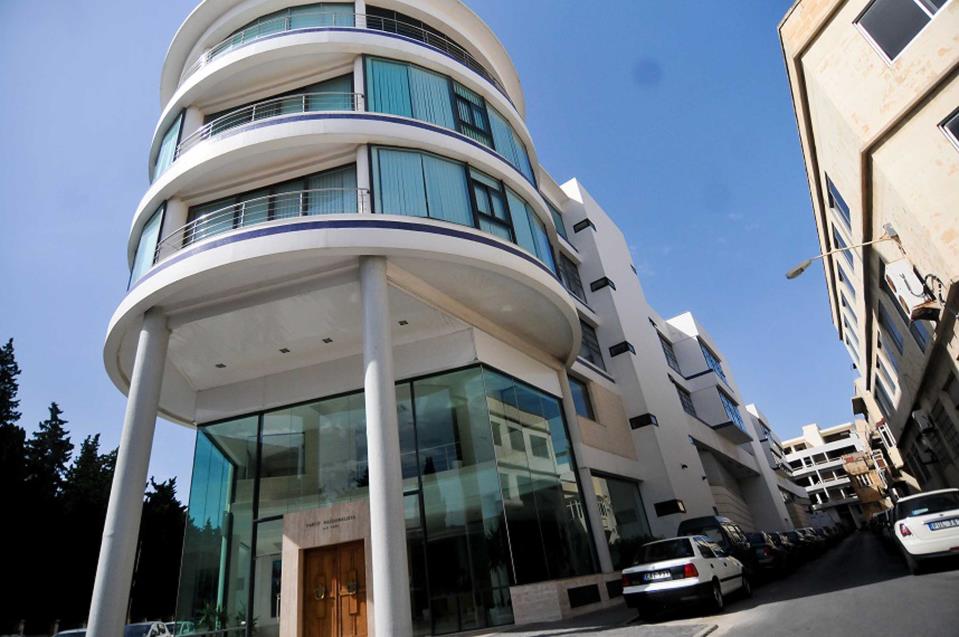
"In Siggiewi we had demolished and rebuilt a property. Today part of it is leased to a commercial bank, part is a restaurant, and then the top floor has all the facilities, a large hall, able to host meeting and the sort. That is one model."
As for employees, he said the PN does not envisage any mass layoffs or anything of the sort, but did speak of maximising the use of their current resources, and certain reorganisation.
Thirdly is the political organisation. "The party needs to again become the party that thinks. But not just that, the party must understand that society does not have patience. How many thick books do you see released nowadays? The number is reducing, as people don't have the patience for it... So we face the challenge where we need a structure to consider and think profoundly about issues at length, but we also need a structure that communicates in the most simple and expeditious way. Currently, these structures do not exist."
"I have just re-established the local council directorate in the party, and I will soon re-establish the directorate for committees and activists. While there are many people ready to help, the problem is that there is no structure where these people can speak, or to say how they can help and to identify their expertise. I am setting up a series of directorates who respond to the Secretary General in order to bring a sense of organisation and discipline to all structures. It is all about strategic thinking."
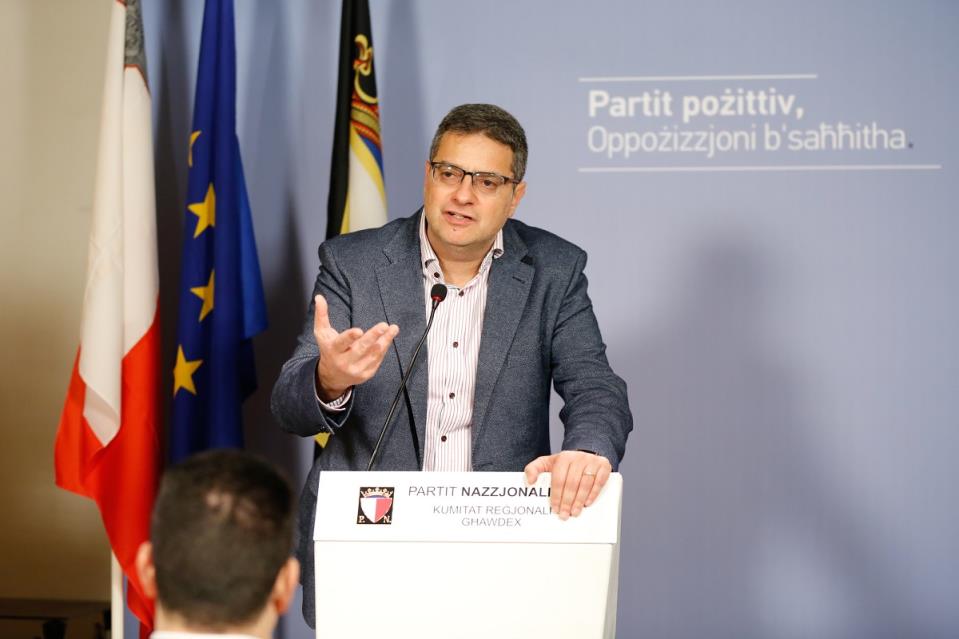
PN Leader Adrian Delia has not started taking a salary from the party
Asked whether PN Leader Adrian Delia has started taking a salary from the PN, Puli said no.
Pressed and asked when he intends to start taking a salary, Puli said: "We are not discussing him taking a salary, I don't think the idea is that he will take a salary. When he made that comment, he said that by right, the head of the party can take a salary, but that he is not going to take it."