The Masters of the game finally had their say. After snubbing the first three editions, and enduring the humiliation inflicted by the USA in their first participation, the time was ripe for England to lift the trophy after beating West Germany in the final.
The 1966 World Cup had a rather unusual hero off the field, a dog called Pickles. In the build-up to the tournament, the Jules Rimet trophy was stolen from an exhibition display. A nationwide hunt for the icon ensued. It was later discovered wrapped in newspaper as the dog sniffed under some bushes in London. The FA commissioned a replica cup in case the original cup was not found in time. This replica is held at the English National Football Museum in Manchester, where it is on display.
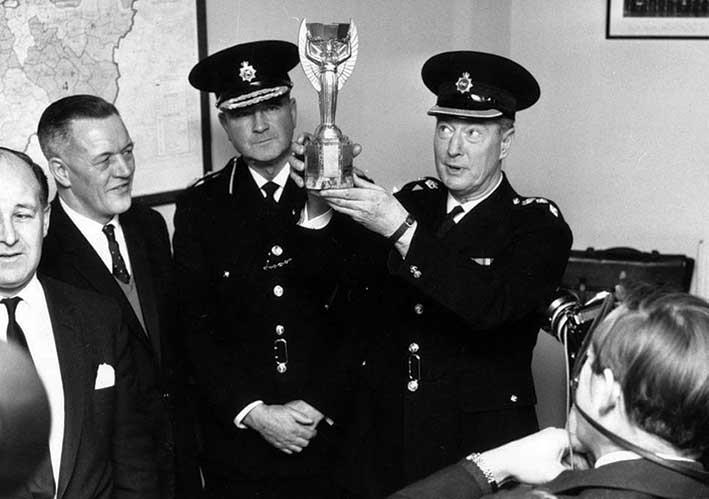
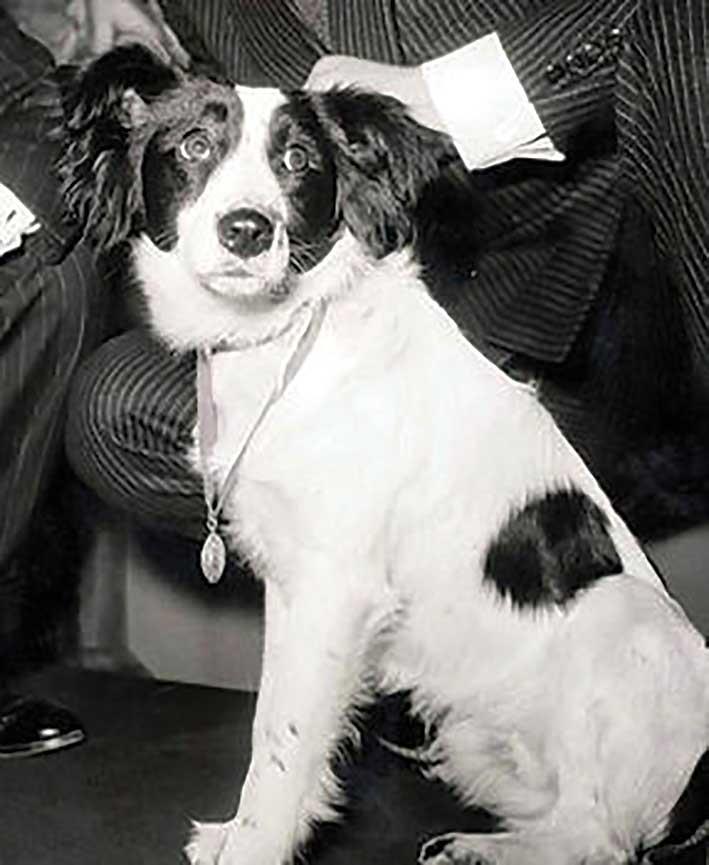
London police with the Jules Rimet trophy (top) after it was found by Pickles the dog following its initial disappearance while it was on public exhibition at the Methodist Central Hall in Westminster.
Thirty-one African nations boycotted the tournament to protest a 1964 FIFA ruling that required the three second-round winners from the African zone to enter a play-off round against the winners of the Asian zone.
The shock of the group stages came from Ayresome Park, Middlesbrough when North Korea defeated Italy 1-0 and finished above them, thus earning qualification to the next round along with the Soviet Union. This was the first time that a nation from outside Europe or the Americas had progressed from the first stage of a World Cup: the next would be Morocco in 1986.
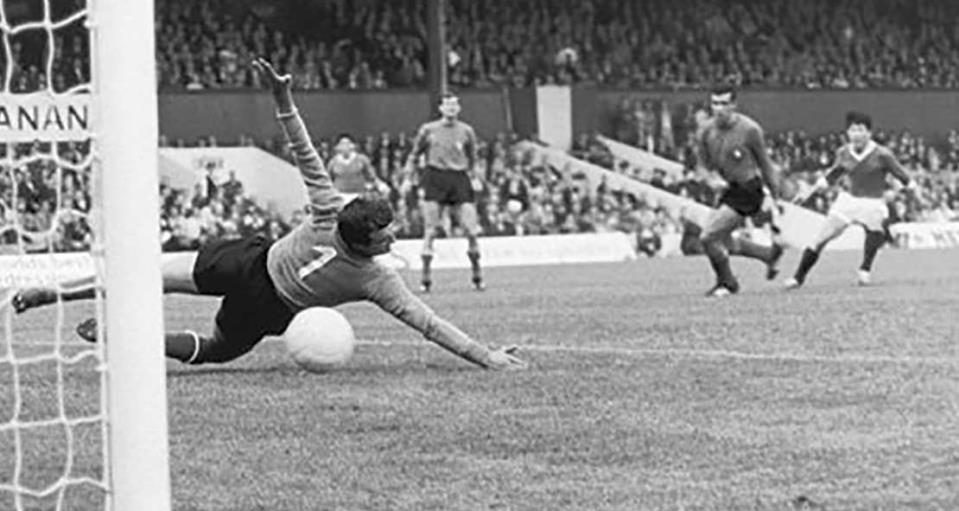
North Korea’s Pak Doo-Ik, a dentist by profession, scores the winning goal against Italy at Ayresome Park, Middlesbrough, to send the Italians back home in one of the biggest upsets of the World Cup.
The quarter-finals provided a controversial victory for West Germany as they cruised past Uruguay 4–0 with the South Americans claiming that this occurred only after the referee (England’s Jim Finney) had not recognised a handball by Schnellinger on the goal line and then had sent off two players from Uruguay.
In another quarter final it seemed that the surprise package North Korea would claim another major upset in their match against Portugal at Goodison Park, when after 22 minutes they led 3–0. It fell to one of the greatest stars of the tournament, Eusébio, to change that. He scored four goals in the game and José Augusto added a fifth in the 78th minute to earn Portugal a 5–3 win.
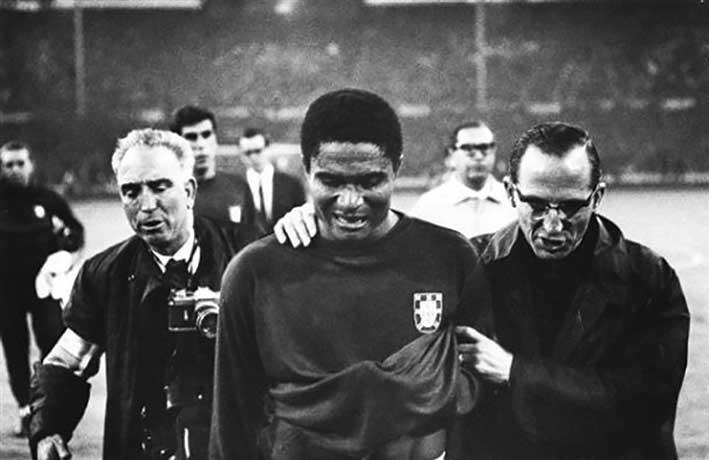
The 1966 World Cup top scorer Eusebio leaving Wembley Stadium in tears after Portugal were beaten by England in the semi-final. Photo: FIFA
In another controversial quarter final England defeated Argentina 1-0 with a Geoff Hurst goal. Argentina's Antonio Rattín became the first player to be sent off in a senior international football match at Wembley. Rattín at first refused to leave the field and eventually had to be escorted by several policemen. In Argentina this game is still called as the “Robbery of the century”.
In the Wembley final Helmut Haller put West Germany ahead on 12 minutes, but the score was levelled by Geoff Hurst four minutes later. Martin Peters put England in the lead in the 78th minute; England looked set to claim the title when the referee awarded a free kick to West Germany with one minute left. The ball was launched goalward and Wolfgang Weber scored.
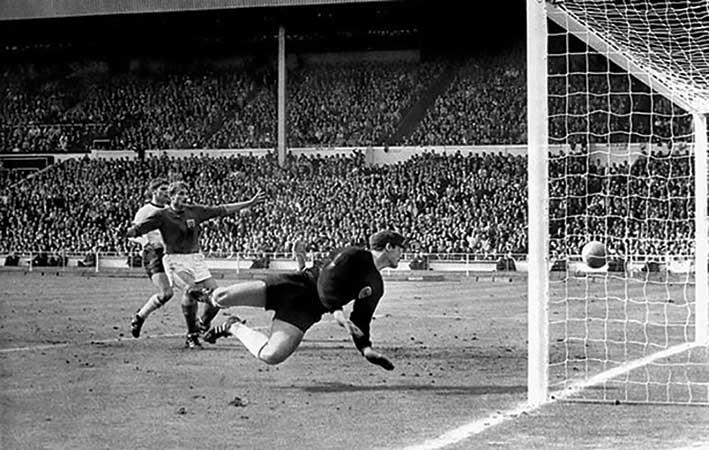
The legendary Wembley Goal scored by Geoff Hurst at minute 101. Photo: FIFA
In extra time in the 98th minute, Hurst found himself on the scoresheet again; his shot hit the crossbar, bounced down onto the goal line, and was awarded as a goal. Debate has long raged over whether the ball crossed the line, with the goal becoming part of World Cup history. England's final goal was scored by Hurst again, with captain Bobby Moore receiving the Trophy from Queen Elizabeth II.