An in-depth interview with the new St Patrick's starlet Paula Grech, 25 years of age, who just started competitive racing in the 800m, an Architect with Masters by profession, graduated 2 years ago, engaged to Ciskje Zarb: a doctor, house still under construction and soon to be married in 2020. Amazing Paula!
1. In view of witnessing your overwhelming performances throughout your first competitive season in the strenuous 800m race, I can vouch that success does indeed come through a proper mindset. Paula, you are a determined and ambitious individual who works hard and pursues till the end! Let's first focus a little on this outstanding season; your race-times were improving in every race and you were getting closer to reach the Minimum Qualifying Standards (MQS) for the GSSE 2019 which will be held in Montenegro next year. At times the qualifying time was missed by a few hundredths of a second! How did you deal with these situations knowing that the chances to race and eventually qualify were limited? What went through your mind during your races? Did you predict that you were up to the MQS or have you started believing in it once you started to come closer?
This is my third consecutive year of training athletics at the track, however for the first two years, I was still testing the waters to see how I performed in different running events. In the beginning I started off with sprints but my coach Zeljko Aras soon started realising that my potential lied in longer distance running events, in particular the 800m. This is partly due to having a good level of endurance and strength which are two very important aspects of the 800m race as this event is a profound mix of speed and endurance. Like in many other events the tactical and mental approach and attitude towards it play a very important role.
So really, this was my first season of training for the 800m race and I still was not sure how I would perform in the races. However, with each and every race my coach and I were able to dissect the parts of the event that required improvement and these little tweaks might justify my piecemeal progressions throughout the races. In view of this, these were clear indications that qualifying for the 800m was achievable. Believing that I was capable of reaching the qualifying standard for the GSSE Games, all that I could think about was that of fulfilling my lifelong dream of representing Malta abroad. With that clear target in mind, I fully committed myself to it and simply worked hard. As you said, I narrowly missed the target by milliseconds time and time again which was extremely disappointing and frustrating. Last May I even went to compete in a track-meet in Belgium in hopes of taking advantage of foreign competition and environment as a boost. However, despite coming first in my heat, the time achieved was not good enough for the GSSE qualification.
In all of these upsetting situations I believe that maintaining positive attitude and mental fortitude were key to keep on pushing forward until the end where I managed to obtain the long sought-after qualification time later at a track-meet in Malta in July.
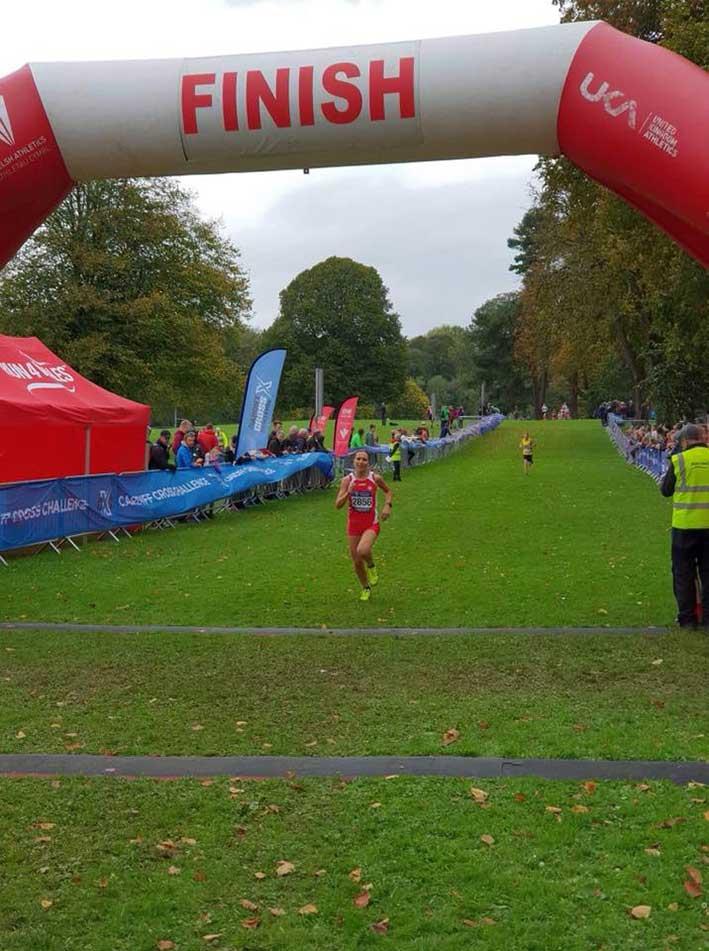
2. Now that you will be representing Team Malta in the GSSE games thanks to your hard-earned qualification, how do you feel being part of the national team and representing Malta abroad? However, this will not be your first time on Team Malta as you have already experienced for your first time a similar event a few weeks ago in the 6.4 km Cross-country challenge in Cardiff. This is not the distance (nor terrain!) you normally train for, so how did you qualify for it and what was the experience like?
It was such an exciting experience to represent Malta abroad in athletics and the 6.4km Cross Country race in Cardiff this October was incredible! The qualifying race happened to be at the 5km mark of one of the 10km series of the House of Sport (Burmarrad Edition). As you said, the 5km race is not what I specifically train for but in view of the need to maintain a particular level of stamina I do these runs as part of my training.
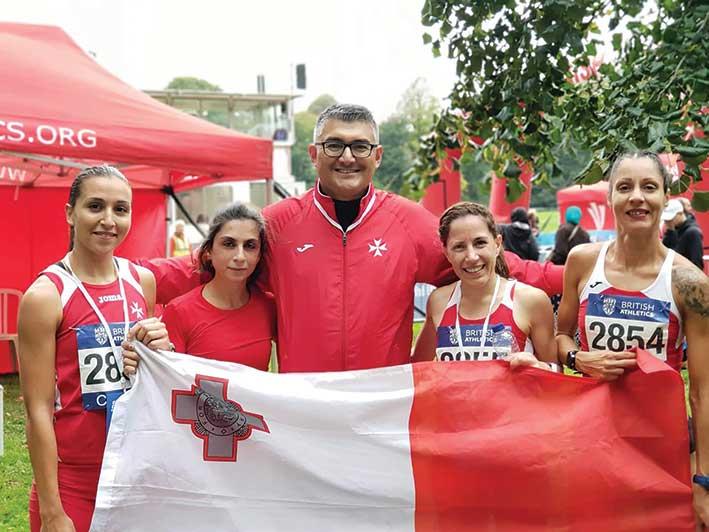
In Cardiff, I was privileged to race alongside some of Malta's top and extremely talented athletes; Lisa Marie-Bezzina, Roberta Schembri and Monalisa Camilleri. A cross-country race event is an open-air course set up in the countryside and it entails running on grassy terrain and woodlands. Running up hills, though mud and jumping over fallen trees are all part of it. Cross-country racing was a first for all of us and we did not know what to expect out of the race or how we would perform among the other more experienced competitors. With that said we just went for it and gave it our best! In the end I placed 26th out of more than 300 participants and as Team Malta we placed as the first team overall! I would like to thank the MAAA President Edwin Attard and the rest of the committee members of MAAA for giving us such great opportunity.
Competing in this event helped me discover and develop a great liking to cross-country and trail running. Unfortunately, this is a type of course we can never fully experience in Malta due to our dry climate and densely populated areas. However, I hope I get to experience this again as well as discovering other similar sports events. Surely this has become one of my goals to fulfil in the future.
This experience, in a way, helped me to focus more on my 800m event. It fuelled my ambitions and will to train harder and continue aiming for better results in future competitions, especially for the GSSE Games. I am looking forward to what the upcoming season holds!
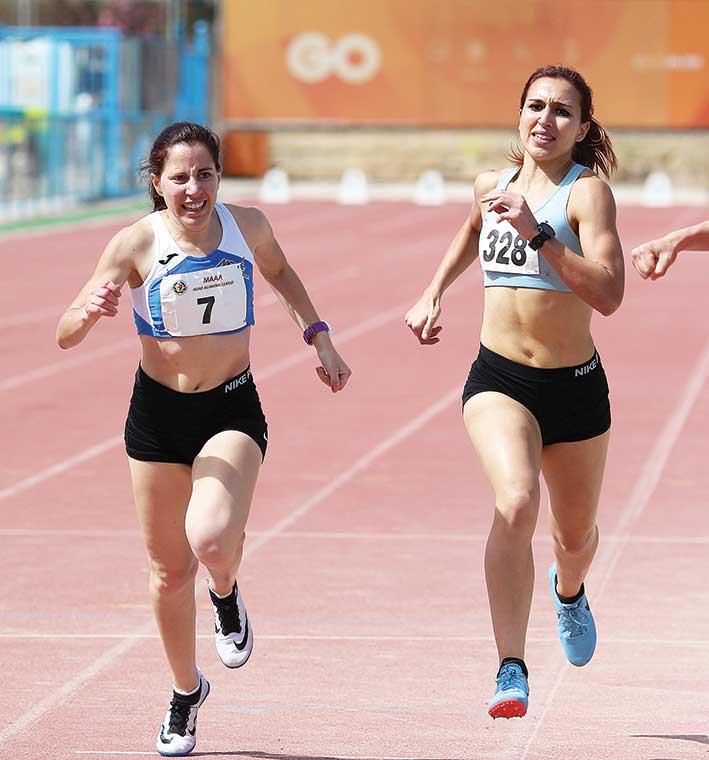
3. Paula, surely not many believe that you started training athletics consistently on a daily basis at the age of 24 and reaching such impressive levels a year after to be able to compete among the elite and producing such encouraging results in a very relative short time. Surely there is more than meets the eye. Have you practiced other sports before that served you as a basis for today's type of training?
Even though obtaining a time of 2.14.01 in the 800m is considered as a good time in Malta, although it is very flattering, I do not consider myself as an elite athlete as I believe that this title is reserved to the women who devote their lives to training to get times of sub- - or close to - the 2-minute mark in the 800m. However, this being said, achieving this time in a year and I still working my 9-to-5 job as an architect is very promising and I will do my best to keep on improving.
Ever since I was younger, I was always sports-oriented; I loved running around and exploring new routes and setting-up obstacle courses in the yard with whatever I find. Also, I was engaged in various sports disciplines, such as swimming, cycling, gymnastics, handball and HIIT workouts (high-intensity interval training) thus having a diverse sports background. Road fun-runs were also part of the list. I think that having a diverse sports background from a young age helped me associate that sports isfun and may be regarded as deliberate play.
At seventeen years of age, I met Zeljko for the first time at the gym. He observed me running and approached me to see if I were interested in training athletics and I accepted. However, like many people that age, my insecurities at the time made me believe that I could not devote the dedication that athletics requires. I hadn't figured out my goals in training were, I simply had no target.
Throughout the following years, I grew as a person and got to know myself better. Exercise, fitness and a healthy lifestyle were always present throughout. They had also helped me conquer my insecurities and gain confidence. Many times, I found myself reading articles about nutrition, workout exercises and documentaries about successful athletes I looked up to. It became such an intrinsic part of me that my bedroom floor and the streets became my training grounds. The floor, some weights, a mat and the roads were all I needed; I had no need for gym or special equipment. I followed some intense workouts off from Youtube and I was determined to get them done every day. I never opted for an easy way out and I never found excuses because I was doing this for myself and for nobody else.
The more time passed, the more I fell in love with a good workout; catching your breath, sore muscles, fighting yourself and every fibre of your body not to quit. I kept on discovering that any sport discipline can help you explore your limits, challenge them and surpass them. This 'self-disciplined' routine helped me become consistent in my training, build-up physical and mental stamina while learning to prioritise and be flexible with my daily routine.
Regardless of being in my first year of my Masters' Degree in 2014, I decided to get back to athletics after my father had brought up the topic many times before to start practicing the sport again. I knew that starting athletics as a senior is not the ideal thing to do especially knowing that I will be competing with many experienced athletes. Nevertheless, I did have a few hurdles and criticism from some people but I decided to ignore them and go for it because it was either now or never. This is when I became ready to give athletics and running the dedication they require and deserve.
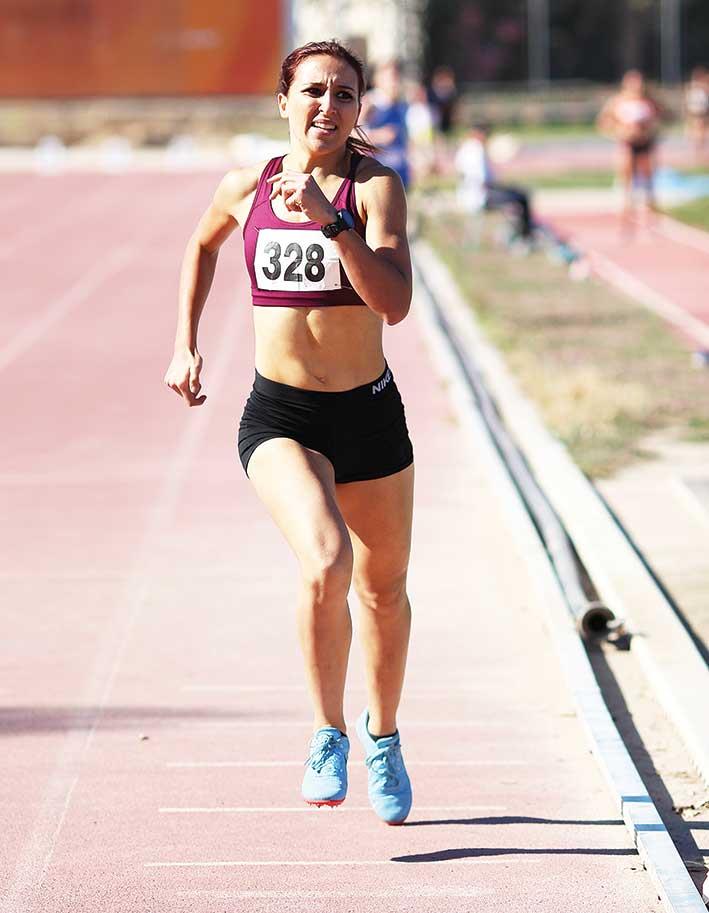
4. I know that you are surrounded by an entire family who are into sports; your father George competed in road races and marathons, your mum Christine enjoys her daily morning runs, your sister architect-to-be: Joanna also trains athletics and for your brother Edward, who is a doctor, goes for his occasional runs, which is a superb way to unwind. It is evident that your family embraces both Sports and Academics! In my opinion, this balance of sport and work-life balance, is the way forward. Your parents led by example and you followed suit almost by default. What are your views on this?
I always remember my parents waking up early before work and going out for their run while everyone was still hugging the sheets. I remember them saying that it was the time of the day that gave them a sense of accomplishment and satisfaction before their day had even started. Like you said, my siblings especially myself, looked up to them and may have followed in their footsteps by default. My parents taught us that in life, everything is achievable but we need to work hard to get the results we want.
They believed that good education was key to our future selves to help us prosper and gives us the tools to tackle any difficulties and hardships we had to face. However, sports too was given the importance it deserved; apart from keeping us fit it, sports teaches us important life values of social and emotional health that school curriculum does not provide. Among these values include learning to trust yourself and others, taking advice, self-evaluate, accepting defeat and victory, understand the power of repetition and working to reach goals. Practicing a sport too gives us the mental rest to help us freshen our minds for another day's work. Education and sports complement each other in such a perfect way that they helped us become the individuals we are today.
5. Paula, the life of an athlete, especially the one of the amateur athlete who does all this against no remunerations or perks but simply for the love of sports, is a feat by itself. Doing it for a day, a week or two may be thrilling but becoming a routine is highly demanding both physically and mentally. How is a week in your life juggling between Athletics, your profession and your relationship?
During training season my weekday routine consists of waking up at around 5.00am to go for my morning run, I make breakfast and prepare my lunch for later, then off to work (be it on site or at the office till 5pm), after which I head off to my second training session of the day at the track. I would usually try to fit in an errand right before training if it's on the way. Then, usually by 8.30-9pm I am at home tired from a long day and hopefully by 10-10.30pm I hit the sheets!
I must say that I am very lucky and grateful that I still find a healthy and nutritious dinner ready when I get home which my mum prepares. My sister and I both try to follow a diet that reflects and supports our training schedule and at times my mum tried her best to prepare a meal for all the family that can be easily adapted to suit all of us. Knowing that this blessing of having freshly-prepared food and clean laundry at home will soon change when I move in to my new place, I am appreciating it so much more!
Most of my daily decisions and weekly planning I do revolve around my training and at times, this lifestyle does get to me physically and mentally as many sacrifices are constantly being made in my personal life in order to benefit fully from the training.
In order to train well and hard we need to be fully focused in our training and I try my best to omit any thoughts that might hinder the training session. Some days I would be more tired than others and would not be in the mood to train at all but I know that it's the mental attitude that needs convincing. Sometimes, I am so absorbed in my own world of training and working that Ciskje and my family are involuntary given a sideline, when in reality they are the cornerstone and support system of my life.
However, I often discuss my on-goings and feelings with Zeljko, my coach. He is very understanding of our other life's aspirations apart from athletics and does not want to disparage anything at the expense of the other.
But what keeps me training? When I ask this question to myself I reflect and remind myself why I do it - I want to be the best version of myself so I push myself hard and the main foundation of it all is that I love running! The gift and freedom of running is such an intrinsic part of my life that without it I feel lost.
6. As we discussed before, you practised different sports since you were young but always at a non-competitive level. Competitive training is totally different from training for leisure. It is like reading a book to enjoy it or reading the same book as part of your syllabus at school for exams. The scenario differs by large. One is just an overview of a story or a plot, the other goes into depth. The same applies to competitive training. The type of training needs to be specific and time-framed in every little detail. You need to be consistent, perseverant, knowledgeable on the matter, attentive to the coach's advice, rigorous on healthy diets, listening to your body and much more. By now you seem to have adopted well in your system. Was it difficult to embark on such a highly demanding task and what were the hurdles that you had to overcome?
As you said, doing a sport for leisure and doing the same sport competitively are two completely different ball games; training for leisure omits the competitive pressure, specific and hard training, adequate rest and other commitments such as proper dieting (fuel for performance and recovery). Also in order to improve in a sport, consistency in training is a must - irrelevant if it's hot or cold weather, dark outside or raining heavily. It sounds hard, and it is, but it becomes easier as time goes by. Repetition makes something challenging become the norm.
But it is the satisfaction in the end and the results of months of hard work and sacrifices that make it all worth it, and each race is an opportunity to give mental fuel for the consecutive training days to prepare for another race day.
You are 25 years of age and have just started reaping what you sow long time ago! Let's keep this success coming. I would like to thank you for the trust and for being so open to me. Highly appreciated. Am confident that the readers now know what it took Paula to become an Architect and an Elite Athlete.
Thank you Ray for this opportunity. I hope that my story encourages other people and helps them realise that there is always time and fulfilment in doing something you truly desire, all you need is to start your journey.