At the beginning of this crisis, just as COVID-19 had impacted Italy with a bang, a Facebook group opened and quickly gained traction to share news and information about the new virus. Unfortunately, it quickly became a hotbed of misinformation and induced panic.
Shortly after, a website was set up selling overpriced masks, despite the fact that their protective benefits are not what the general public on average perceive them to be. To many, this rang of opportunism at a sensitive time, and there was an understandable pushback against any sort of alarmism.
In times of crisis, panic is one of the most insidious and counterproductive elements which break down functioning systems and turns neighbour against neighbour. In the face of this, I and many others urged for calm, and not to over-dramatise the crisis. However, in having to do so, and in having to battle fake information, a great deal of energy was nonetheless taken away from preparing for the crisis and thinking ahead. Such are the unintended consequences of battling one problem in such a fast changing environment.
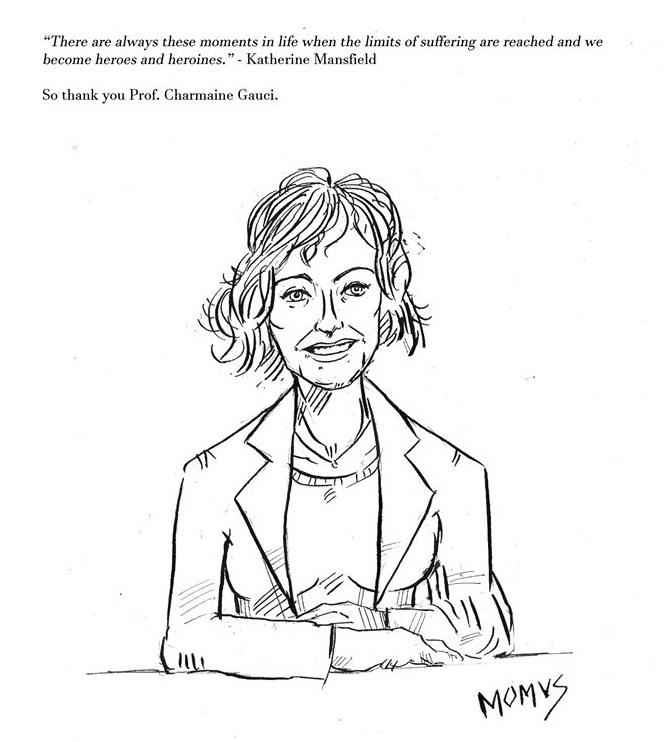
For further context, the person who created this alarmist group is today still attempting to seed panic, urging people to distrust Superintendent of Public Health, Dr Charmaine Gauci. In an age of information overload and fake news, trust in institutions and the media has plummeted, but not in favour of more reliable sources of information. Instead, today, disinformation is a weapon wielded by those with an agenda.
The European External Action Service, which acts as the diplomatic core of the European Union, has just come out with a report stating that Russia is, as usual, attempting to use fake news to undermine the west. At the moment, it is waging a propaganda campaign built on lies to make the impact of the coronavirus on our society even worse, by generating panic and distrust. Russia has long deployed an army of online trolls and fake accounts to spin and manipulate the narrative in the West, attempting to distort reality. In doing so it creates favourable outcomes for itself, and since the 2016 Presidential campaign in the United States, has been recognised as actively trying to interfere in democratic elections in the West.
It is the style of autocratic regimes and corrupt corporations to pervert the truth in favour of caged minds who can only interpret reality according to the designs of the powerful. Fossil fuel companies managed to trick the world into thinking that there was no public health risk in putting tetraethyl lead into fuel, despite the overwhelming damage it causes. Between the 1920s until the 1970s, these companies made enormous profits by putting lead into fuel as it made the fuel more efficient, but at an enormous cost to the well-being of the average citizen and the environment.
Eventually, the world grew wise to the scam of leaded fuel, despite the best attempts of these companies to distort the science. However, just as the industry was losing one battle, it had started an entirely new war against the general public by beginning to deny climate change, despite the fact that it was fossil fuel companies who were realising the full extent of the danger of climate change which they were causing many decades ago. Today, fossil fuel companies do not deny climate change, but they still invest in massively expensive disinformation and propaganda campaigns to protect their profits and distort the science.
Two typical dystopian novels, 1984 and A Brave New World by George Orwell and Aldous Huxley respectively, both portray the world suffering from two very different kinds of problems. In 1984, information is restricted by brute force. In A Brave New World, there is no such tyranny, but instead the information and lifestyle available to the average citizen makes them dull, dumb and distracted. In an age of information overload, people have become unable to tell fact apart from fiction. The creation of the Internet has led to autocratic regimes and corrupt corporations to have enormous power which they never had before. People will pass on any information without fact checking it so long as it ticks the right boxes. This leads to pandemics of disinformation. Such is the situation today that even the facts around the Coronavirus may be put into question by fraudsters seeking to take advantage of the situation, or even by governments like Russia, who wish us harm.
It has become more essential than ever before to be think twice about anything we hear or see on television or the Internet. It is another reason why I have long campaigned for the shutdown of party controlled media such as television stations, which peddle obscenely biased interpretations of reality. Let us put our trust in experts such as Superintendent of Health, Dr Charmaine Gauci, and not listen to quacks and nutjobs who want to take advantage of us. Keep calm and carry on as instructed by the authorities - do not panic; but be wise and cautious instead.