As one of a handful of spatial planners in the private sector, I may have a different perspective from the great majority who work within the public sector, as the parameters in which I operate are different.
This does not mean that I am, in anyway, better than others, rather I may feel stronger about the urgency of change, given that I am exposed to the many facets of spatial planning, participating in discussions with worldwide experts in the field of planning, having trained as a planner, worked as a regulator and through private practice assisting applicants and representees.
I must say that I am pleased with what emerged from the podcast led by the brilliant Jon Mallia, who discussed several aspects of the construction industry with the equally insightful Kamra tal-Periti president, Perit André Pizzuto, which shows that there might be light at the end of the tunnel and it is not an oncoming train!
It is self-evident that not all professionals and “players” within the very wide spectrum of the urban development industry share or foster the same degree of ethics and empathy. While, thankfully, a very small minority choose to exploit shortcomings and the fluidity of situations within the system exclusively for personal pecuniary gain, milking their own clients at every juncture, others are motivated by the pursuit of justice, common good or profoundly impacted by the difficulties experienced by others. This compels them to seek redress, influence and highlight the need to change. We have to admit that this is one of the industries that epitomises aspects which according to Niccolò Machiavelli, born 553 years ago, are the essence of mankind who are generally fickle, hypocritical and greedy of gain.
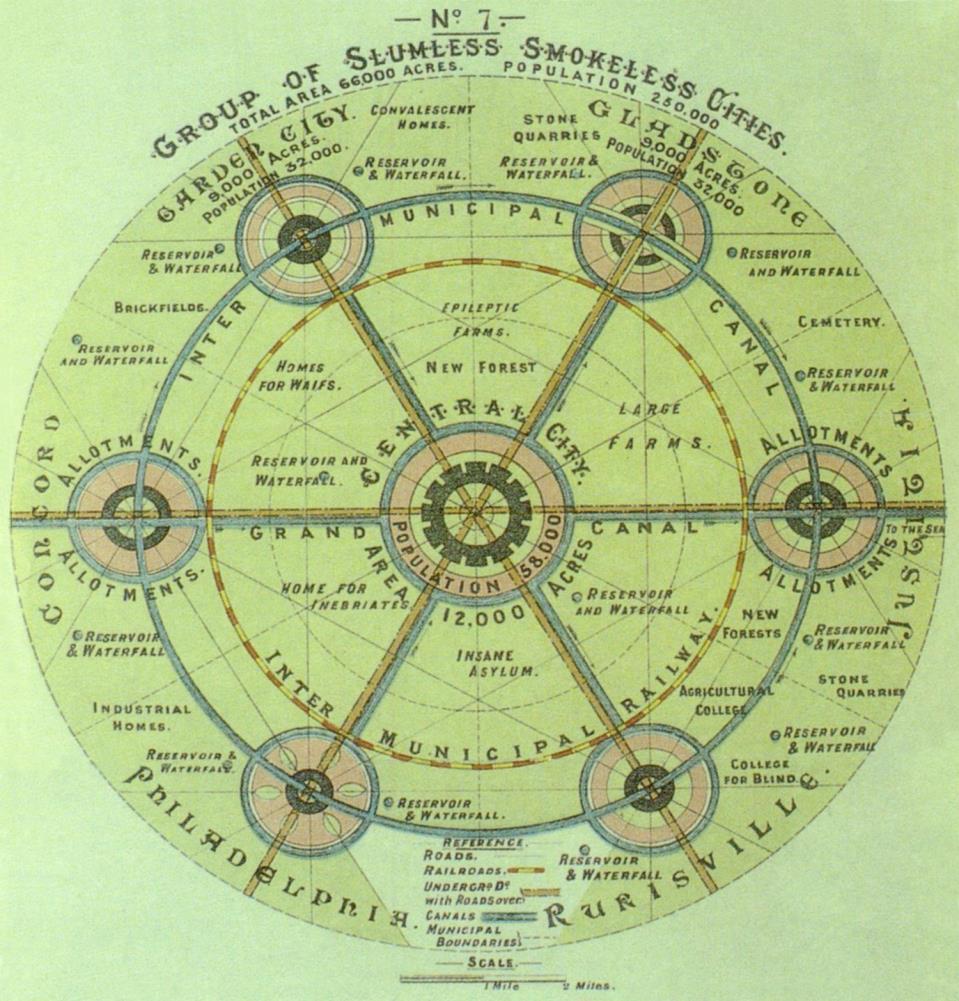
Ebenezer Howard’s vision for a ‘Group of Slumless, Smokeless Cities’. GARDEN CITY MOVEMENT early 1900s Image: SPUR
It is baffling that the multimillion construction industry continues to procrastinate in regulating the professionals and tradespersons within its different strata, through a warranting/licensing process. Several professions, including the more traditional roles within the industry such as periti, engineers and lawyers, are already required to obtain a warrant to practice. This is based on academic qualifications, work experience and suitability criteria. For these professionals, the warrant is not only a matter of privilege and esteem; but it guarantees a level of service, a code of ethics, integrity and professionalism that is regulated and against which it may be judged. It also curbs the increasing number of fraudsters, middleman and brokers, who only seek to prey on, and swindle individuals with the promise of securing difficult permits, additional floors and/or other favourable planning decisions. In many cases, these fraudsters don’t care about the collateral damage they cause to the reputation of civil servants, politicians and other professionals, who are often unwittingly involved in the web of lies and ruses these individuals devise.
The Malta Chamber of Planners’ Annual General Meeting coincided with another general election cycle. On these occasions, we often find ourselves filled with doubt, reflecting on the progress or lack thereof, seemingly lost in a place in which we do not recognise, very much like Dante’s renowned opening of the Inferno, in the Divina Commedia.
Again, politicians seem reluctant to recognise spatial planning as a profession and, as a consequence, the pursuit of a professional warrant and accreditation remains a fleeting promise that is renewed at every election. While remaining enthusiastic and undeterred in our resolve to be an agent for positive change, we cannot ignore that most lobbyists, brokers and developers, often motivated by an almost unhealthy obsession of accumulation of wealth that would also make Adam Smith shiver, seem to enjoy several opportunities to push forth their interests with politicians. In contrast, independent bodies with technical expertise need to supplicate for meetings and are often met with unwillingness, verging on contempt, particularly, if such technical advice does not fit a particular narrative.
Planners must be aware of the politicians’ time horizon, provide objective advice and understand that it is the politicians who are the elected decision takers. Indeed, successful initiatives that deliver long-term benefits are usually those supported by ambitious politicians, who are surrounded by technically competent and farsighted consultants, even though the time taken to prepare studies and roll out initiatives, may take longer than one legislative term.
Often through social media, some feel emboldened to share their often-uninformed opinions deeply seated in anecdotal experiences, with little care of their relevance or veracity, reinforcing “echo chambers” that politicians may be comfortable with. Spatial planners do not trade in opinion and adopt an almost Platonist stance, where one’s opinion, although interesting, is ultimately irrelevant.
We subscribe to Plato’s suggestion that the effort to understand the needs of others, supressing our own egos and pursuing a profound purpose which is larger than the self, is the highest form of human knowledge. So much so, that spatial planning is a multidisciplinary science, as it embraces a variety of professional and academic experts, who seek to reconcile environmental concerns with the need for sustainable development and progress. Successful planners, strive for wisdom, which goes beyond their own expertise, and sum of the individual pieces of information.
This is why studies that are riddled with confirmation bias, favours, gain commissions or secure higher positions within particular organisation structures, are very damaging to the profession. The profession requires to critically assess quantitative and qualitative information to draw out dynamic policy documents and plans that withstand the test of time. We have to be able to communicate the spirit and letter of the policies effectively and unequivocally to benefit the common good. It’s as much about the big picture as it is about the attention to detail.
Detractors criticise spatial planners as being elitist, discounting their expertise as a matter of opinion or impractical utopian vision. As has been eloquently reported by Tracey Brown (2016), the Brexit aftermath has manifested a “post-truth” society, where objective truth is relative and populist anti-establishment politicians regurgitate slogans abhorrent towards experts. Yet, the study of history gives some benefit of hindsight and this confirms that populist politics can often talk the talk but rarely walk the walk. For instance, if the Covid-19 pandemic is any measure to go by, the denial of science has resulted in the tragic, needless deaths of thousands, even though one must admit that sometimes the delivery of messages left a lot to be desired. Plato did warn us that while in politics, we presume that anyone who is successful in obtaining votes is equally able to administer a city or a state when we are ill, we ask for the best trained physician and not the handsomest or the most eloquent one.
This does not mean that spatial planners have no faith in the democratic process and/or elected officials, but that they must fulfil their role and obligation to inform the politician and to help take decisions on the basis of technical information.
Spatial planners cannot turn back time. The profession has suffered some reputational damage by association to the Planning Authority, yet we look to the future with renewed hope. No spatial planner worth his/her salt would have come up with Annex 2 of Development Control Design Policy Guidance and Standards 2015 commonly referred to as DC15, which can only be described as the Trojan horse, which devastated many urban areas.
It is very important that all decision-takers are well prepared and versed in spatial planning, as it is apparent that there are aspects of the institutionalised planning process that are not working as intended. The success of the PA is not measured by the number of applications determined, but by the quality of our urban and natural environments. The PA is one of the nation’s most important institutions, in a country with extraordinary limited land resources and no room for experiments. The Authority is not some medieval vassal nor is it a conduit for securing the fortunes and legacy of particular individuals or political party.
Relentless, negative articles in the press are a matter of concern, which directly or indirectly have progressively eroded the morale of the PA’s employees and the credibility of its management, studies, policies and outcomes.
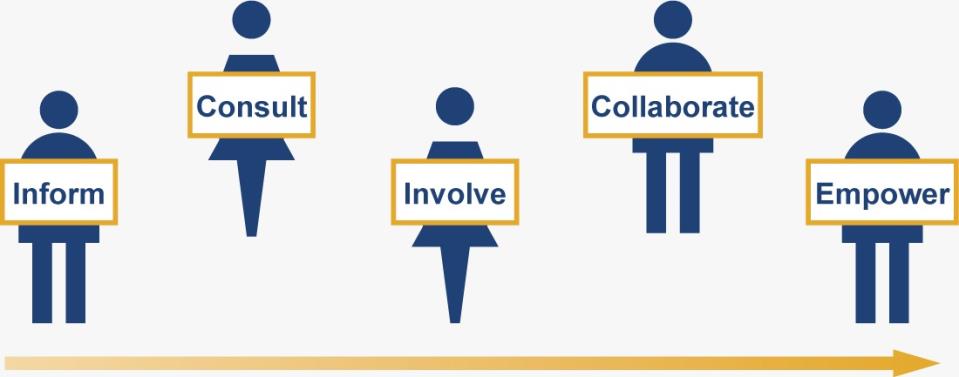
Spatial planning is much wider than development control. It is about community involvement, forward looking plans and facilitating initiatives that bring about positive outcomes, to create resilient communities and functioning urban centres. Regrettably, in many public hearings, the climate is not conducive to such objectives. On the contrary, even to the uneducated eye, development application reports and public hearings seem to be taking an exceedingly negative, irrational, defensive stance; are more concerned about finding ways to subjugate legitimate representations, forcing people through unnecessary hardship, anxiety and lengthy litigation.
This only propagates the view, that permits are issued ad personam, through some kind of psychological subjection. The planning process should result in meaningful interactions with the Authority, whereby communities feel involved and their views are valued.
Compounding the current problematic situation is a chronic mismanagement of its own resources. The PA has been progressively haemorrhaging trained, experienced professionals, who cannot be adequately replaced. Time is indeed the wisest counsellor and through the years, the Chamber being vindicated several times over. Our suggestions stem from an intimate understanding of the organisation’s systematic problems, that have never been tackled, and our inherent fondness for an Authority which gave most of us the opportunity to study and work. The Chamber has always insisted on the importance of continued investment in academic training, continued professional development and an appreciation and involvement of all employees. These suggestions seem to have been ignored, creating a vacuum that now cannot be filled easily.
It is evident that, moving forward, the recognition of planners is becoming more pressing. The Malta Chamber of Planners is well respected at a European and Commonwealth level, despite our many resource limitations. Exposure to foreign experience is invaluable for spatial planners, particularly those who want to succeed. Understanding different cultures and experiences broadens the appreciation of young, eager professionals particularly with regards to pressing issues such as changing demographic patterns and trends, life after Covid-19, affordable housing, rising sea level and transport. Spatial planners must have the humility to engage in meaningful community involvement, allowing for small sensitive interventions to create vibrant places which are able to significantly improve the quality of life of our communities without adversely impacting on their surroundings. We are at a crossroad and we must not “waste” the devastating impacts caused by the pandemic.
Spatial planning can ensure that well-thought plans serve as a catalyst for a muchneeded revival in our urban areas, better air quality, an improvement in mobility and general wellbeing of our localities, through better management of our urban and natural resources, in the pursuit of the common good.
Bjorn Bonello has a B.S.c Hons. Environmental Planning (Birmingham, UK). He is also the President Malta Chamber of Planners and Spatial Planning Consultant.