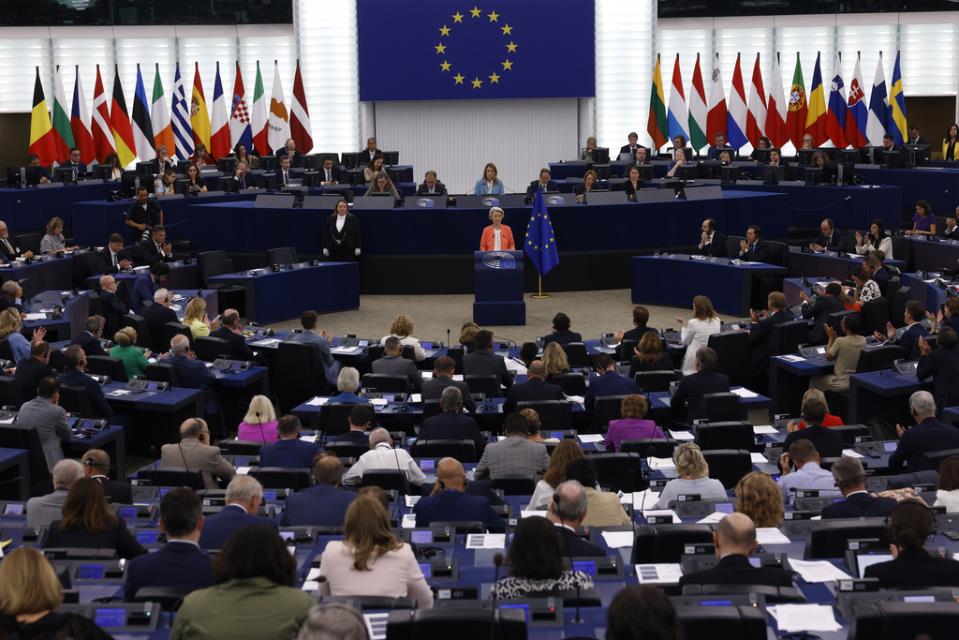
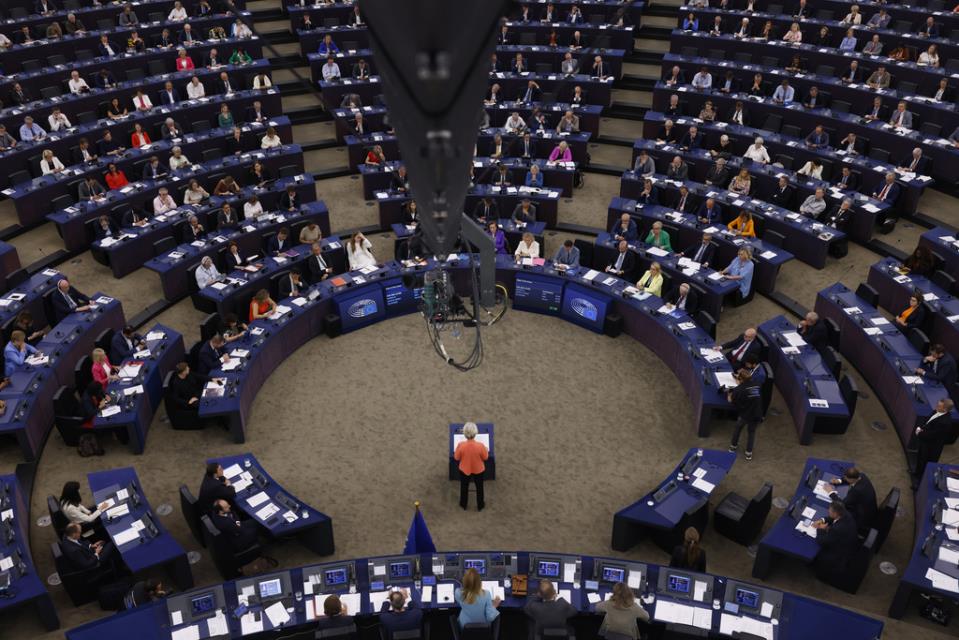
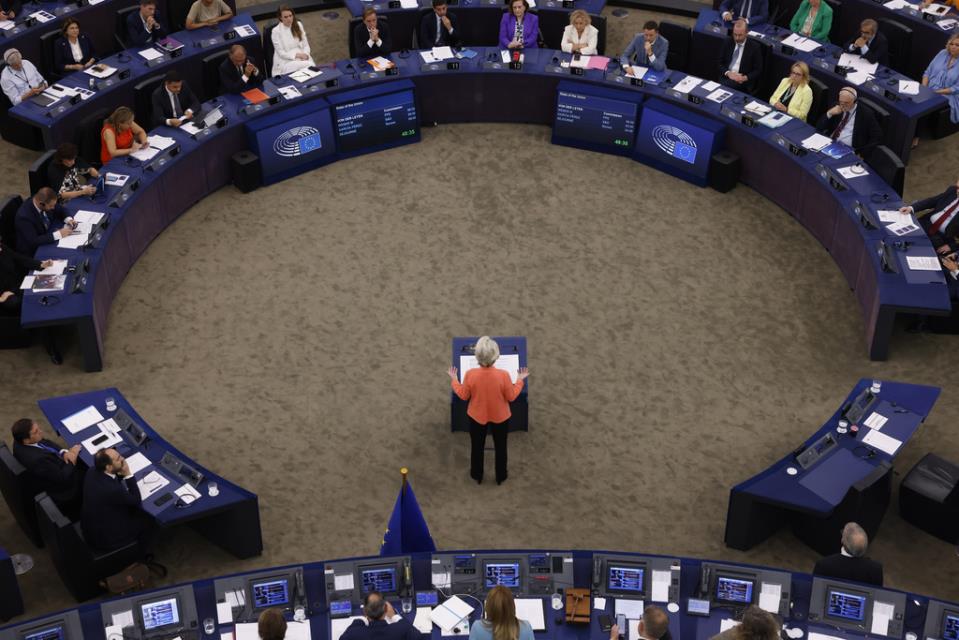
The world is changing and Europe must adapt and change with it too, EU Parliament President Roberta Metsola said in her brief introduction to the State of the Union.
"Over the last years we have overcome a financial crisis, a pandemic. We have gone through Brexit and found new ways forward. We have stood up and stood firm against Russia's illegal and brutal invasion of Ukraine. We are addressing the climate emergency, we have disengaged from toxic Russian energy and we have set the foundations for years to come. The European Union today is stronger, and more united than ever before. The world is changing and Europe must adapt and change with it too. We must keep striving to make our Europe a place of equality of opportunity, of access, of prosperity - where everyone can reach their potential. We must keep reforming," she said.
We have come a long way, Metsola said, "but even so, too many people across our Union are still struggling, too many women still face unfair barriers, too many of our young people still face an uncertain future. We need to keep our people's concerns at the centre of all our actions." She then welcomed European Commission President Ursula Von der Leyen to take the stage and deliver the State of the Union address.
Elections
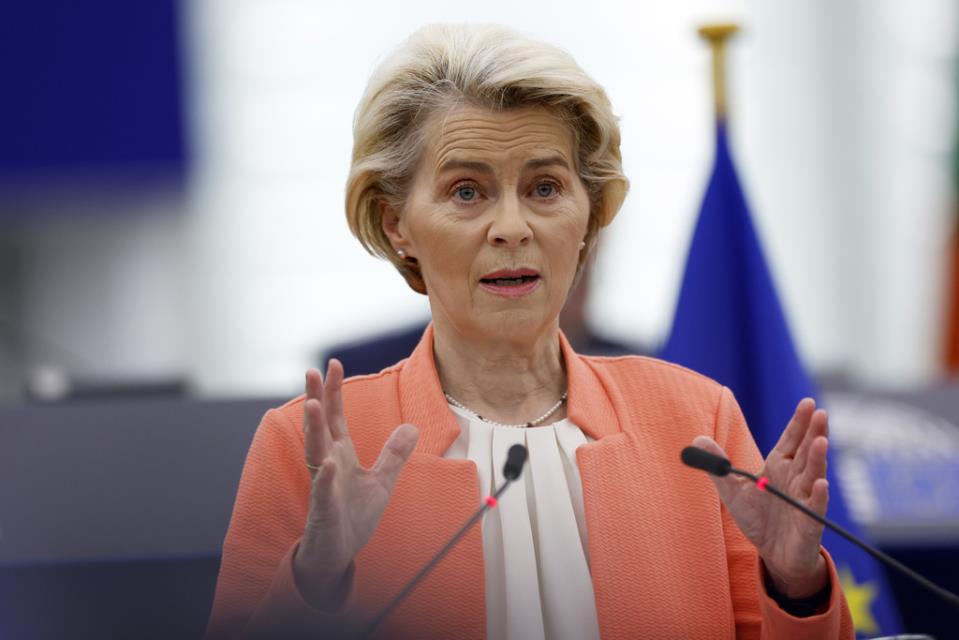
Von der Leyen said that in just under 300 days, Europeans will take to the polls. "As with any election, it will be a time for people to reflect on the State of our Union and the work done by those that represent them. But it will also be a time to decide on what kind of future and what kind of Europe they want."
Among them will be millions of first-time voters, the youngest of them were born in 2008, she said. "As they stand in that polling booth, they will think about what matters to them. They will think about the war that rages at our borders. Or the impact of destructive climate change. About how artificial intelligence will influence their lives. Or their chances of getting a house or a job in the years ahead. Our Union today reflects the vision of those who dreamt of a better future after World War II. A future in which a Union of nations, democracies and people work together to share peace and prosperity. They believed that Europe was the answer to the call of history. When I speak to the new generation of young people today, I see that same vision for a better future. That same burning desire to build something better. That same belief that in a world of uncertainty, Europe once again must answer the call of history."
She reflected on the work the EU has done. "We have seen the birth of a geopolitical Union - supporting Ukraine, standing up to Russia's aggression, responding to an assertive China and investing in partnerships. We now have a European Green Deal as the centrepiece of our economy and unmatched in ambition. We have set the path for the digital transition to become global pioneers in online rights. We have the historic NextGenerationEU - combining €800 billion of investment and reform - and creating decent jobs for today and tomorrow. We have set the building blocks for a Health Union, helping to vaccinate an entire continent - and large parts of the world. We have started making ourselves more independent in critical sectors, like energy, chips and raw materials."
"I would also like to thank you for the ground-breaking and pioneering work we did on gender equality. As a woman, this means a lot to me. We have concluded files that many thought would be blocked forever, like the Women on Boards Directive and the historic accession of the EU to the Istanbul Convention. With the Directive on pay transparency we have cast into law the basic principle that equal work deserves equal pay. There is not a single argument why - for the same type of work - a woman should be paid less than a man. But our work is far from over and we must continue pushing for progress together. I know this house supports our proposal on combating violence against women. Here too, I would like that we cast into law another basic principle: No, means no. There can be no true equality without freedom from violence."
Green Deal
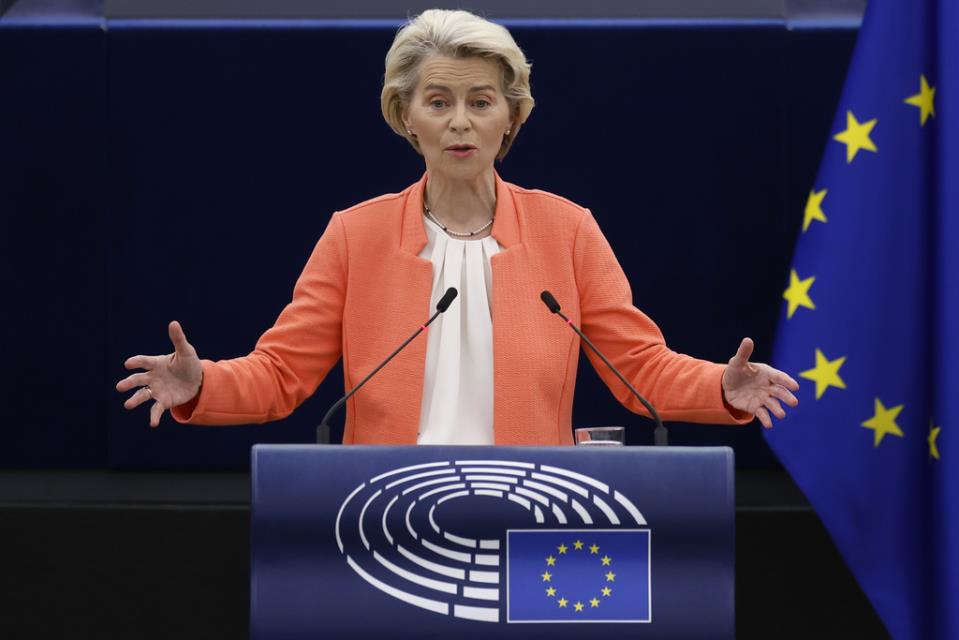
Von der Leyen referred to the European Green Deal, calling it "our answer to the call of history."
She noted that this summer was the hottest on record in Europe. "Greece and Spain were struck by ravaging wildfires - and were hit again only a few weeks later by devastating floods. And we saw the chaos and carnage of extreme weather - from Slovenia to Bulgaria and right across our Union. This is the reality of a boiling planet." She said that the European Green Deal was born out of this necessity to protect our planet, but it was also designed as an opportunity to preserve future prosperity.
She noted that the EU started its mandate by setting a long-term perspective with the climate law and the 2050 target. "We shifted the climate agenda to being an economic one. This has given a clear sense of direction for investment and innovation."
She pledged that the EU will keep supporting European industry throughout this transition. "Starting from this month, we will hold a series of Clean Transition Dialogues with industry. The core aim will be to support every sector in building its business model for the decarbonisation of industry."
Referring to competition, she said that too often EU companies are excluded from foreign markets or are victims of predatory practices. "They are often undercut by competitors benefitting from huge state subsidies."
She said that fairness in the global economy is so important - because it affects lives and livelihoods. "Entire industries and communities depend on it. So, we have be to be clear-eyed about the risks we face."
Referring to the electric vehicle sector, she described it as a crucial industry for the clean economy, with a huge potential for Europe. "But global markets are now flooded with cheaper Chinese electric cars. And their price is kept artificially low by huge state subsidies. This is distorting our market. And as we do not accept this distortion from the inside in our market, we do not accept this from the outside. So I can announce today that the Commission is launching an anti-subsidy investigation into electric vehicles coming from China. Europe is open for competition. Not for a race to the bottom"
"We must defend ourselves against unfair practices. But equally, it is vital to keep open lines of communication and dialogue with China. Because there also are topics where we can and have to cooperate. De-risk, not decouple - this will be my approach with the Chinese leadership at the EU-China Summit later this year."
Economy
Turning to the EU economy, she sees three major economic challenges for industry in the year ahead: labour and skills shortages, inflation, and making business easier for companies.
"The first has to do with our labour market. We have not forgotten the early days of the global pandemic. When everyone predicted a new wave of 1930-style mass unemployment. But we defied this prediction." She said that 40 million jobs were saved. "We then immediately restarted our economic engine thanks to NextGenerationEU." Europe, she said, is close to full employment. "Instead of millions of people looking for jobs, millions of jobs are looking for people."
"Labour and skills shortages are reaching record levels - both here and across all major economies. 74% of SMEs are saying they are facing skill shortages. In the peak of the tourist season, restaurants and bars in Europe are reducing their hours because they cannot find staff. Hospitals are postponing treatment because of lack of nurses and doctors. And two thirds of European companies are looking for IT specialists."
She noted, however, that 8 million young people are neither in employment, education or training.
"We need to improve access to the labour market. Most importantly for young people, for women. And we need qualified migration. In addition, we need to respond to the deep-rooted shifts in technology, society and demography. And for that, we should rely on the expertise of businesses and trade unions, our collective bargaining partners."
The second major economic challenge: persistent high inflation
"The good news is that Europe has started bringing energy prices down. We have not forgotten, Putin's deliberate use of gas as a weapon and how it triggered fears of blackout and an energy crisis like in the 70s. Many thought we would not make it through the winter because of lack of energy. But we made it. Because we stayed united - pooling our demand and buying energy together. And at the same time, different to the 70s, we used the crisis to massively invest in renewables and fast-track the clean transition."
"The price for gas in Europe was over 300 euros per MWh one year ago. It is now around 35. So we need to look at how we can replicate this model of success in other fields like critical raw materials or clean hydrogen."
The third challenge, making it easier to do business
"Small companies do not have the capacity to cope with complex administration. Or they are held back by lengthy processes. This often means they do less with the time they have - and that they miss out on opportunities to grow. This is why - before the end of the year - we will appoint an EU SME envoy reporting directly to me. We want to hear directly from small and medium enterprises, about their everyday challenges. For every new piece of legislation we conduct a competitiveness check by an independent board. And next month, we will make the first legislative proposals towards reducing reporting obligations at the European level by 25%."
Digital & AI
"When it comes to making business and life easier, we have seen how important digital technology is. It is telling that we have far overshot the 20% investment target in digital projects of NextGenerationEU. Member States have used that investment to digitise their healthcare, justice system or transport network. At the same time, Europe has led on managing the risks of the digital world."
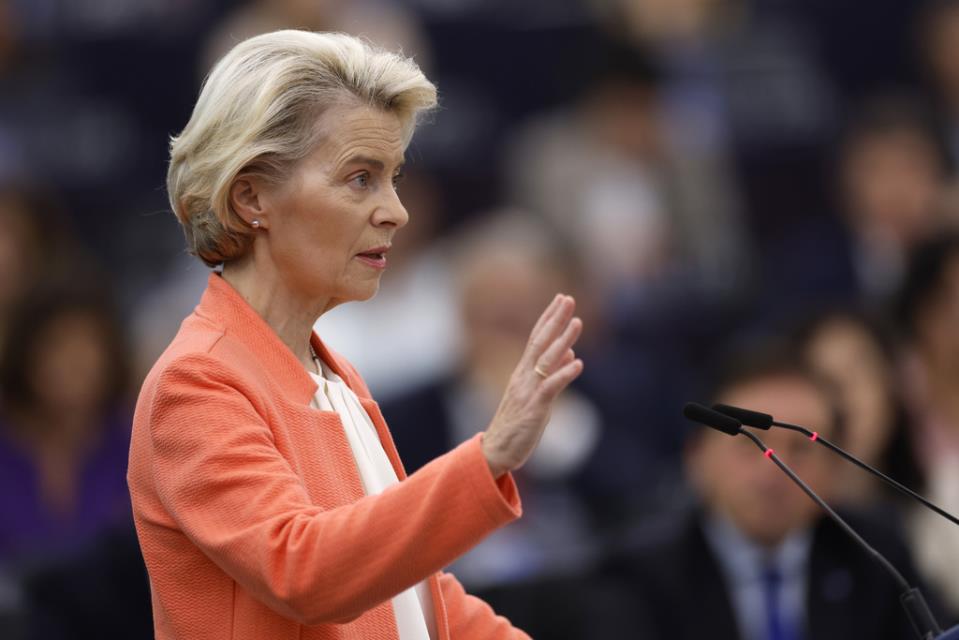
On AI, she said that it will improve healthcare, boost productivity, address climate change. "But we also should not underestimate the real threats coming from AI. Hundreds of leading AI developers, academics and experts warned recently with the following words: 'Mitigating the risk of extinction from AI should be a global priority alongside other societal-scale risks such as pandemics and nuclear war.' AI is a general technology that is accessible, powerful and adaptable for a vast range of uses - both civilian and military. And it is moving faster than even its developers anticipated. So we have a narrowing window of opportunity to guide this technology responsibly. I believe Europe, together with partners, should lead the way on a new global framework for AI, built on three pillars: guardrails, governance and guiding innovation."
Migration
She said that everyday conflict, climate change and instability are pushing people to seek refuge elsewhere. "I have always had a steadfast conviction that migration needs to be managed. It needs endurance and patient work with key partners. And it needs unity within our Union. This is the spirit of the New Pact on Migration and Asylum. When I took office, there seemed to be no possible compromise in sight. But with the Pact, we are striking a new balance. Between protecting borders and protecting people. Between sovereignty and solidarity. Between security and humanity. We listened to all Member States and focused on all migratory routes. And we have translated the spirit of the Pact into practical solutions. We were fast and resolute in responding to the hybrid attack that Belarus launched against us. We worked closely with our Western Balkan partners and reduced irregular flows. We have signed a partnership with Tunisia that brings mutual benefits beyond migration - from energy and education, to skills and security. And we now want to work on similar agreements with other countries. We bolstered border protection. European Agencies deepened their cooperation with Member States. Allow me to thank in particular Bulgaria and Romania for showing the way - showcasing best practices on both asylum and returns. They have proved it: Bulgaria and Romania are part of our Schengen area. So let us finally bring them in - without any further delay."
Migration requires constant work, she said. "And nowhere is that more vital than in the fight against human smugglers. They attract desperate people with their lies. And put them on deadly routes across the desert, or on boats that are unfit for the sea. The way these smugglers operate is continuously evolving. But our legislation is over twenty years old and needs an urgent update. So we need new legislation and a new governance structure. We need stronger law enforcement, prosecution and a more prominent role for our agencies - Europol, Eurojust and Frontex. And we need to work with our partners to tackle this global plague of human trafficking. This is why the Commission will organise an International Conference on fighting people smuggling. It is time to put an end to this callous and criminal business."
Ukraine
Turning to Ukraine, the European Commission President said: "We will be at Ukraine's side every step of the way. For as long as it takes."
She said that the Commission will propose to extend temporary protection to Ukrainians in the EU.
"Our support to Ukraine will endure. We have provided €12 billion this year alone to help pay wages and pensions. To help keep hospitals, schools and other services running. And through our ASAP proposal we are ramping up ammunition production to help match Ukraine's immediate needs. But we are also looking further ahead. This is why we have proposed an additional €50 billion over four years for investment and reforms. This will help build Ukraine's future to rebuild a modern and prosperous country. And that future is clear to see. This House has said it out loud: The future of Ukraine is in our Union. The future of the Western Balkans is in our Union. The future of Moldova is in our Union. And I know just how important the EU perspective is for so many people in Georgia."
Enlargement
She also spoke about EU enlargement.
"In a world where some are trying to pick off countries one by one, we cannot afford to leave our fellow Europeans behind. In a world where size and weight matters, it is clearly in Europe's strategic interests to complete our Union. But beyond the politics and geopolitics of it, we need to picture what is at stake. We need to set out a vision for a successful enlargement. A Union complete with over 500 million people living in a free, democratic and prosperous Union. (...) A Union complete with vibrant democracies in which judiciaries are independent, oppositions are respected, and journalists are protected. Because the rule of law and fundamental rights will always be the foundation of our Union - in current and in future Member States. This is why the Commission has made the Rule of Law Reports a key priority. We now work closely with Member States to identify progress and concerns - and make recommendations for the year ahead."
She announced that the EU Commission will open the Rule of Law Reports to those accession countries who get up to speed even faster. "This will place them on an equal footing with Member States. And support them in their reform efforts. And it will help ensure that our future is a Union of freedom, rights and values for all."
Speaking about accession to the EU, she said that accession is merit-based - "and the Commission will always defend this principle. It takes hard work and leadership."
"I believe that the next enlargement must also be a catalyst for progress."