Health Minister Jo Etienne Abela admitted that Malta would be "almost definitely in a better place' had the Vitals public-private partnership succeeded, but just because it soured, it does not mean that the country should do away with all public-private partnerships.
Abela was interviewed by The Malta Independent on Sunday to discuss several pressing issues with regards to the country's healthcare system, including staffing challenges, operational inefficiencies, and the government's approach towards public-private partnerships.
The president of the Medical Association of Malta (MAM) Martin Balzan had criticised the loss of a decade's worth of time and investment due to the Vitals concession deal involving three Maltese hospitals. The deal was eventually rescinded by the Maltese courts, and criminal proceedings have been instituted against former Prime Minister Joseph Muscat and three former ministers, among others.
While declining to discuss the specifics of ongoing court proceedings, Abela noted that one failed partnership should not taint the entire public-private collaboration landscape.
"It does not mean that because there was a public-private partnership which soured and did not work, every other public-private partnership in the country, and in the world, is bad," he said.
To enhance safeguards in future collaborations, Abela advocated the involvement of local stakeholders with proven track records.
"One of the most important safeguards if we want a system that works is: go with the people you know, go with Maltese faces," he insisted.
"We should not try to compete with the private sector. We should be fair, and if the private sector is delivering a service, I do not expect government to short-change the private sector for it. Equally, I do not expect the private sector to over-trust the government simply because it is the government," Abela said.
That is why there are financial controllers and a procurement setup that is as transparent as it can possibly be, Abela said.
"We can have safe public-private partnerships that offer an excellent service to the patient. That is a fundamental truth for me, and whoever challenges it has to provide evidence," Abela said, adding that government has not challenged court rulings on Vitals, which are "irrefutable".
50 patients per day to be treated privately
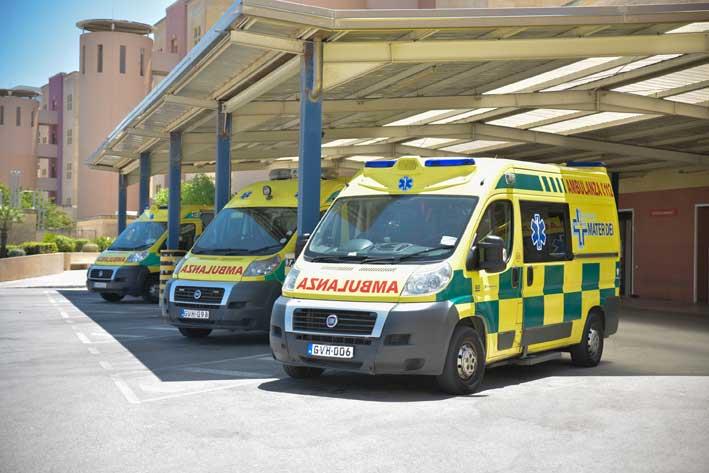
Asked for details about government's outsourcing process of Mater Dei's emergency department to the private sector, Abela confirmed that the request for participation process has concluded, and he has recently met with the bidders to ensure alignment with government objectives.
The process will be rolled out in the coming days and weeks, he said.
Abela said that the initiative aims to ensure a safe and functional system, estimating that around 50 patients per day with lower-priority emergencies could be treated in private hospitals.
"For example, a young person with appendicitis could receive care in the private sector, funded by the government," he explained, noting that high-intensity emergencies would remain exclusively within the public healthcare system.
He clarified that the outsourcing focuses on Categories 3 (Urgent but not life-threatening), 4 (Semi-urgent), and 5 (Non-urgent) cases. "This will help ease the flow into Mater Dei's emergency department, allowing for better care of critical emergencies," Abela added.
Out of four bidders, three were selected based on criteria ensuring adequate staffing, laboratory, and radiology services, including a CT scanner. "We want to ensure patients are treated where necessary services are available, minimising the need for transfers," he noted.
Abela assured the public and professionals that the process will prioritise safety and highlighted the need for an information campaign to educate both healthcare workers and the public on the new system.
Abela stressed that private hospitals play a crucial role in alleviating pressure on Mater Dei.
"If there were no private clinics, imagine the extra number of patients that Mater Dei's outpatients would need to see," he said.
Government plans to increase number of 24/7 polyclinics from 3 to 5
When asked how the government plans to tackle the staffing crisis, Abela detailed the complexity of the issue, noting that it extends beyond Malta, affecting the entirety of Europe.
"There are currently about 60,000 jobs available in the health sector across Europe," he said, highlighting the competition Malta faces from countries with well-established healthcare systems, including Germany, the Nordic nations, Switzerland, and the UK.
In Malta, there are two medical schools: the University of Malta and Barts Medical School in Gozo. "The scale of both is quite different," Abela said, adding that the University produces approximately 120 to 150 doctors annually, while Barts' first cohort is set to graduate soon. He revealed that 16 Barts graduates expressed interest in working in the National Health Services (NHS).
However, Abela acknowledged the ongoing need for international recruitment, saying that even with the robust number of local doctors, "we will still need more to meet the government's plans."
Specifically, he mentioned aspirations to expand the number of 24/7 polyclinics from three to five, necessitating an additional 75 doctors.
This year, the Ministry plans to employ 26 new local doctors in the primary care system, but Abela cautioned that it would take at least three years to fully establish five 24/7 polyclinics under current output levels.
"Rather than wait for our own 'doctor-factories' to produce our doctors, we need to look further ahead," he said, revealing that discussions are ongoing with embassies, private contractors, and recruitment agencies from abroad.
"We are casting our net wide, but I reiterate that there is intensive competition," Abela stressed, highlighting the urgency of finding specialists, including general practitioners, emergency and orthopaedic specialists, and anaesthetists.
Abela also discussed the shortage of radiographers, noting the government's commitment to enhance radiology services.
"It's useless to have the MRI scanner without radiographers," he said, explaining that the ministry is revising eligibility criteria to attract more professionals into the field while ensuring patient safety.
2024 started with a deficit of 350 nurses, now at a 'more manageable' 77
On nurses, Abela said that Mater Dei started the year with a deficit of 350 nurses, which was reduced to a more manageable 77 through a combination of new graduates and external recruitment efforts.
He expressed concerns about competitive pressures from other countries, particularly the UK, which has been aggressively recruiting nurses.
"There is an 'exodus' of specialists and professionals from the UK to Australia and New Zealand," he explained, acknowledging the challenge of retaining local talent. "I cannot tell our doctors not to go abroad," Abela admitted, having experienced life abroad himself.
To retain healthcare professionals, Abela emphasised the importance of fostering conditions conducive to career progression and a good work-life balance.
"You cannot retain a proper workforce without opportunities for research and advancement," he stated. This year, the ministry has advertised a significant number of consultant positions to enhance career development opportunities.
However, he pointed out that having a high number of consultants requires appropriate facilities, which necessitates coordinated recruitment and retention strategies. "We must work with the private sector to ensure that our recruitment efforts do not inadvertently lead to poaching," he said, advocating for a unified approach between the NHS and private providers.
When asked about the quality of health services, particularly in light of tragic incidents like the death of Stephen Mangion in the emergency department of Mater Dei a few weeks ago, Abela expressed confidence in the system.
"I do strongly believe the Maltese healthcare system is good because the professionals make it so," he asserted.
Despite acknowledging the staffing shortages affecting healthcare quality, he pointed out that such challenges are widespread.
He cited a conversation with Cyprus's Health Minister, who confirmed that even Cyprus faces recruitment challenges despite its reliance on a local workforce. Abela noted that Greece is experiencing significant staff shortages, prompting the Cypriot government to consider bringing in third-country nationals.
"Greece is the powerhouse of the workforce," he explained, adding that the conditions in Cyprus are much more attractive, leading to a net influx of Greek-trained specialists.
He pointed out that Germany has gone so far as to waive language requirements for foreign specialists, indicating the severity of their staffing crisis.
Regarding the circumstances surrounding Mangion's death, Abela noted that the condition he suffered from unfortunately results in high mortality rates. He emphasized the complexity of healthcare, stating, "There are many factors at play, and everything comes together in a melting pot."
While acknowledging the system is not perfect, he remarked. "If it were, my job would be much easier."
He expressed his commitment to addressing the need for more healthcare professionals. "I wouldn't have invited ambassadors from other countries to see how they can help if I didn't recognize the issue," he said.
Abela highlighted the need for reform in procurement processes within the healthcare system.
"We have to address procurement processes to better meet patients' needs," he stated, clarifying that while these processes are meant to ensure patient safety, they should not impede timely service delivery.
The Minister of Health should not be constrained by a hundred procurement rules, he said, advocating for changes that would better serve the patient population. He emphasised the importance of involving end-users, such as specialists, in the procurement process to ensure that their needs are considered.
Mater Dei, Gozo General Hospital, take up 60%-70% of procurement processes, he said, adding that these processes need reform, and government is confident in ensuring this will be part and parcel with the patients and the specialists.
Mater Dei operates at 820 bed occupancy, below full capacity of 1,200
Abela was also asked about the pressing issue of space in Malta's healthcare facilities. He noted that the government has already taken steps to shift non-emergency cases out of the main hospital. Regarding St Luke's Hospital, he acknowledged a need for substantial redevelopment.
"Even when it comes to space, the first and foremost move is a shift in mentality," he said. While expressing his appreciation for Mater Dei, Abela pointed out that the hospital's design is not optimized for patient care, saying that "there are huge tracts of empty space that are not being utilized properly."
He elaborated that the logistics within Mater Dei are not ideal, with specialists needing to navigate large distances to see patients.
"Healthcare should operate efficiently, ideally with a compact design, and a small footprint, with many floors," he said, contrasting modern hospitals with Mater Dei's sprawling layout.
That is why the space which is not entirely devoted to patient care has to change, Abela said.
"The administration block should be re-evaluated," he said, indicating that the physical presence of administrative staff should not come at the expense of patient care resources.
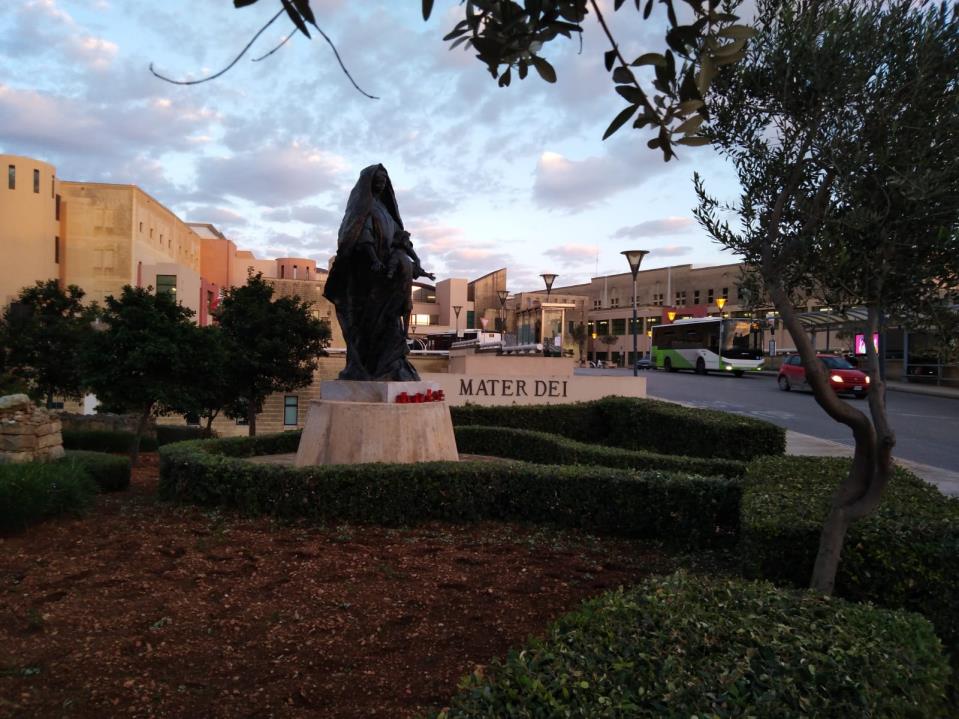
Currently, Mater Dei operates at roughly 820 beds, below its full capacity of 1,200. Abela noted the historical challenges of "bed blockage" but expressed optimism that recent reforms in patient assessment and care have reduced the number of bed-blocking cases.
"We are comfortable, with an excess of around 300 beds," he affirmed. However, he reiterated that the government plans to create more space, as Mater Dei is Malta's only acute hospital and should serve as a tertiary care centre for complex cases.
Looking ahead, Abela said that day-services requiring short stays should be relocated away from Mater Dei. He discussed plans for an ambulatory care hospital on the St. Luke's campus to help alleviate traffic congestion at Mater Dei.
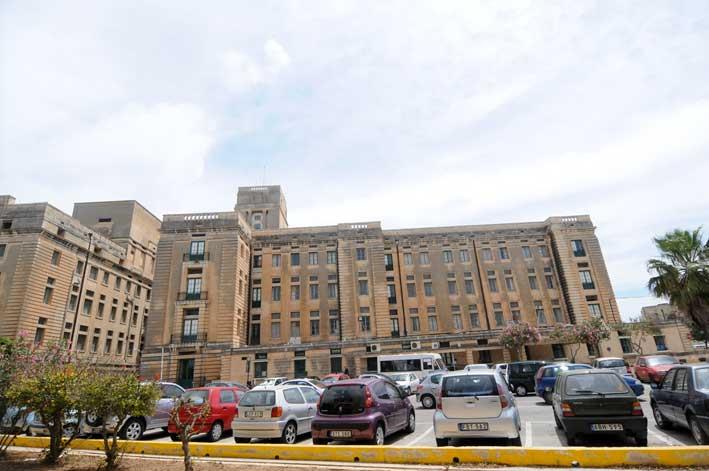
Redevelopment of St Luke's a 'long-term' plan
When pressed about the redevelopment of St Luke's, Abela confirmed that the government is working on a comprehensive, long-term plan.
"It has to be a big package," he stated, noting the need for traffic management and efficient communication between the two hospitals.
Abela affirmed the necessity for a dedicated obstetric and paediatric unit at Mater Dei.
He outlined plans for a ground-floor emergency area specifically for children and expectant mothers, separate from the main emergency department, but still close by to radiology services, and the main operating theatres. This redesign aims to create a more suitable environment for sensitive care.
Abela said that government wants Level -1 to be devoid of outpatient and day services, and for the floor to be solely an area where high-dependency care is given. Abela added that all specialists know that this is happening in this level.
Asked for a time frame of when all this would be successfully moved, Abela said that the Ministry is already working on a temporary solution with regards to the St Luke's campus.
"There will be some announcements soon," Abela said on this, adding that one cannot rejuvenate St Luke's without clearing its current services, and these processes will take time, confirming that the overall regeneration of St Luke's is a long-term plan.
Abela had also said that the country needed a second national hospital. Asked about this, Abela said that the St Luke's campus is what government is talking about. This would concentrate on outpatient and day services, as well as short-term hospital stays.
When discussing the potential for a second national hospital, Abela reiterated that the St. Luke's campus would be it, and would focus on outpatient and day services.
"That would be the game-changer, because then Mater Dei can gear up for proper emergency and trauma care, reducing waiting times. This is the long-term vision we have, that would suit Malta for the next 30 years," Abela said.