It is evident that Malta is running out of space, Professor George Cassar, an Associate Professor at the University of Malta's Institute for Tourism, Travel and Culture, told The Malta Independent on Sunday, as he discussed the tourism industry and accommodation in the Maltese islands. "Dare I say we have run out of it already?"
The Malta Independent on Sunday spoke with Professor Cassar for his thoughts regarding sentiments of tourism frustration and concerns about overtourism expressed by local residents. Among other things, Prof. Cassar said that it is not tourism per se that is the problem, but rather how a destination treats tourism.
The Tourism Institute professor was asked for his views about calls for a moratorium on short lets and for local councils to be given the ability to veto short let permits. This newsroom also made mention of a statement made by a mayor, who had said that he would rather see hotels and guest houses be constructed rather than short let apartments.
He said that tourism requires various options based on affordability and preference, and that having short lets, hotels and other housing structures makes tourism more attractive as each visitor knows that they can find accommodation which suits them. He said that it is not a question of what structures are best, but rather how many Malta already has and how many more would be considered necessary to add to the already substantial supply.
"Tourism is a knife with two blades, and both cut," he remarked.
Prof. Cassar said that the harder one tries to attract tourists, the more necessary it is to supply them with decent accommodation as they come, and the more numerous the accommodation options built and provided, the higher the numbers required to keep such structures profitable and sustainable. He said that this makes the situation complex and difficult to control, and added that it does not make for rational thinking due to Malta's size "which dictates the amount of people we can accommodate before the islands are overtaken by sheer numbers".
"The space is what it is, and having short lets or big hotels makes little real difference in the sense of numbers."
Cassar said that tourists do not stay inside, but roam around the streets and visit open spaces and significant sites, go to the beach and to bars and restaurants. Continuing on that note, he said that this therefore requires outlets to serve these tourists, along with further space to contain them.
"It is evident that we are running out of space, dare I say we have run out of it already?"
Cassar remarked that tourism is undoubtedly a very important industry for the Maltese islands, as he said that it provides revenue, employment opportunities and cultural contacts. With that said, he continued that it must also be underlined that the tourism industry has its negative sides, in the sense that too many tourists can create overtourism, and that there is variable quality of tourists, "with some highly irresponsible if not outright rude and destructive". He also said that tourism can invoke a feeling of being constrained to adapt to others' ways of life, and that tourism can encroach on the tranquillity and daily routines of locals.
With all that said, Cassar stated that this all gradually builds a sense of aversion towards tourists among the local population, as the situation becomes ever more pressing on locals who sense that their lives and neighbourhoods are "being taken over by outsiders who pretend that being guests gives them pretty much the right to do whatever they like". Cassar said that this feeling is already with locals and has been developing over the last few years, especially as numbers continue to grow with no capping in sight. He made mention of how residents in localities such as Sliema, St Julian's, Mdina and Valletta are among those who have expressed such a sentiment. He added that signs of anger in international tourist hotspots such as the Canary Islands, Venice, Barcelona, Bali and the Balearic Islands have also been noted.
Prof. Cassar was asked if he believes whether social media has played a part in people becoming more opposed to tourism, as well as whether he thinks social media has made the issue seem more prominent than it is.
He replied that social media makes the situation more apparent while underlining the matter more emphatically, "which is surely not a perception but a concrete reality". He remarked that the buildings which continue to "sprout everywhere", such as hotels of all types, more floors on existing hotels, blocks of flats, and various other accommodation units, are documented and commented upon day by day through social media.
He said that this "extensive and little-controlled development that some may intentionally wish to keep unannounced, is however exposed through social media by the common citizens who have had enough and are now disillusioned by an industry that has been consistently described by entrepreneurs and those in authority as the goose that lays the golden egg". Cassar remarked that the issue and its consequences are real and are now being given a face and voice through social media. He said that the frustration is registered through the thousands of comments and negative reactions, which he said are too many to be considered insignificant, and too numerous to be described as a "mere reaction of a few 'extremists' among the population".
Professor Cassar stated that overpopulation is an issue, and added that the environment is suffering and that the amenities are struggling to keep up with basic demand. He continued that the Maltese islands have become "one big construction site" and questioned where "picturesque Malta" has gone, as well as whether it still exists. "Is there anything attractive that can still be offered? Are we living our lives or being conditioned to live a life of (in)convenience?" He expressed that questions such as these, and many others, are being asked by those who have realised or are realising that the tourism sector has a life of its own. "It takes what it needs without bothering too much about the locals, who should be considered the hosts that represent the destination and the residents who give life to an authentic Malta."
Having said that, Prof. Cassar stated that one needs to clarify that it is not tourism per se that is the problem, but rather how a destination treats tourism. He said that tourists go wherever is available, though they only go where it is affordable to them. He said that not every visitor prefers the same services, and that some tourists seek quality and are ready to pay for it, while others seek an inexpensive break.
"Here lies the dilemma, not for the tourist, however, but for the destination. Do we want crowds of visitors who take more than they spend and who leave destruction in their wake? Or do we prefer a tourist who is morally responsible, prepared to pay well for a high-class, dedicated service?" Cassar questioned. "Is it not time to decide what tourism Malta really needs, even deserves?"
He said that bringing fewer tourists who spend more is arguably a better choice than bringing over tourists who seek to spend the least possible while also making the most of their stay by taking all the advantages at hand and leaving the bill to be paid by their hosts. He added that Malta is in need of an honest carrying capacity exercise, "to call a spade a spade and to take decisions which safeguard our present and future as a tourism destination".
"What is lost today may possibly be lost forever," he said.
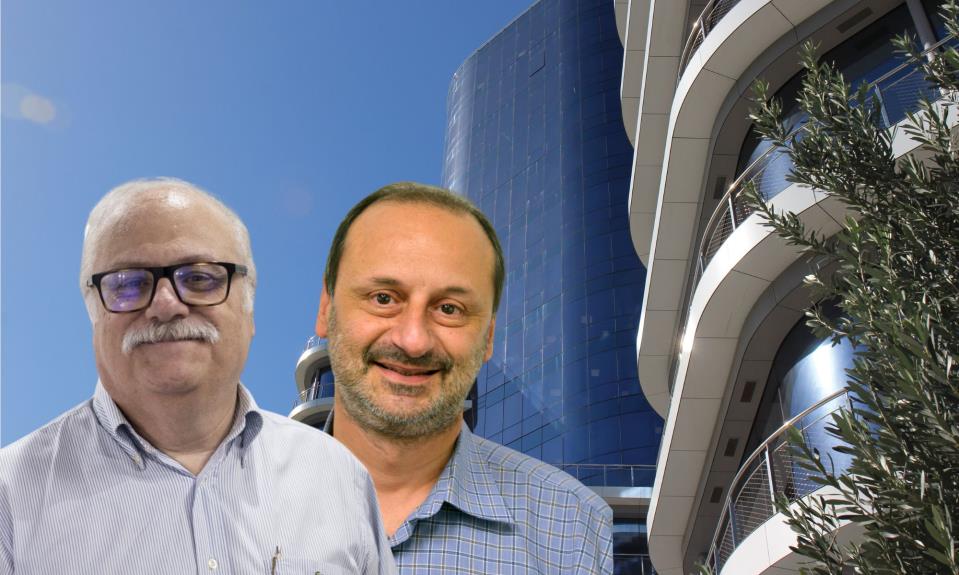
Professor George Cassar (left) and Professor Godfrey Baldacchino (right)
The Malta Independent on Sunday also spoke with Professor Godfrey Baldacchino, a Sociology Professor at the University of Malta.
Professor Baldacchino said that as the temperature gets hotter during the summer months, the experience of high population density in Malta is enhanced. "Bottlenecks appear all over," he said, such as in traffic jams, electricity consumption, beach and promenade overcrowding, and overloaded public buses. "The one thing in dire short supply is patience and respect," Prof. Baldacchino said.
He remarked that tourism is not the problem, but that it compounds the issue "by simply delivering more bodies into the melee called the Maltese islands". He said that Malta is the 10th smallest country in the world by land area, but not by population, and continued that tourists are not only more visible, but also more suitable scapegoats as "they don't stay long, they are not neighbours that we must live with, and they don't vote".
He said that overtourism does not exist; rather, it is the mismanagement of tourism that makes it appear that there are too many tourists in the Maltese islands. He added that with regard to people speaking about overtourism, the disdain emerges when services are strained or outright collapse due to sheer demand. He continued that the arrival of thousands of migrants to work in Malta in recent decades has kick-started a "frenetic rentier economy". He said that the market for short-, medium- to long-term lets, previously used to be dominated by students coming to Malta to learn English, has now expanded to cover many other reasons for temporarily living in Malta. "For a society obsessed with home ownership and investing in real estate, this has been a bonanza," he commented.
Baldacchino stated that many households have a regular income, such as either through their salary from a job or through self-employment, along with also having a steady stream of rental income on the side. He added that the country is flush with liquid cash and secure assets in real estate, and commented that the Maltese are so busy making money that they are no longer interested in having children.
"3.5 million tourists per year spending an average of just over six nights in Malta translates into 62,000 tourists in Malta per day. Their 'weight' and 'footprint' are therefore around half that of the migrant workforce," Baldacchino said.
He spoke of tourism as an important industry, and said that its net contribution to the gross national product, when excluding the costs of tourism-related imports, is just around 13%, which he said makes it just about equal to manufacturing as well as to housing and real estate.