A non-native snake species previously thought to have a more limited presence in the Maltese Islands has now been documented in 34 locations across Malta, Gozo and Comino, with researchers recording 65 specimens over nearly a decade.
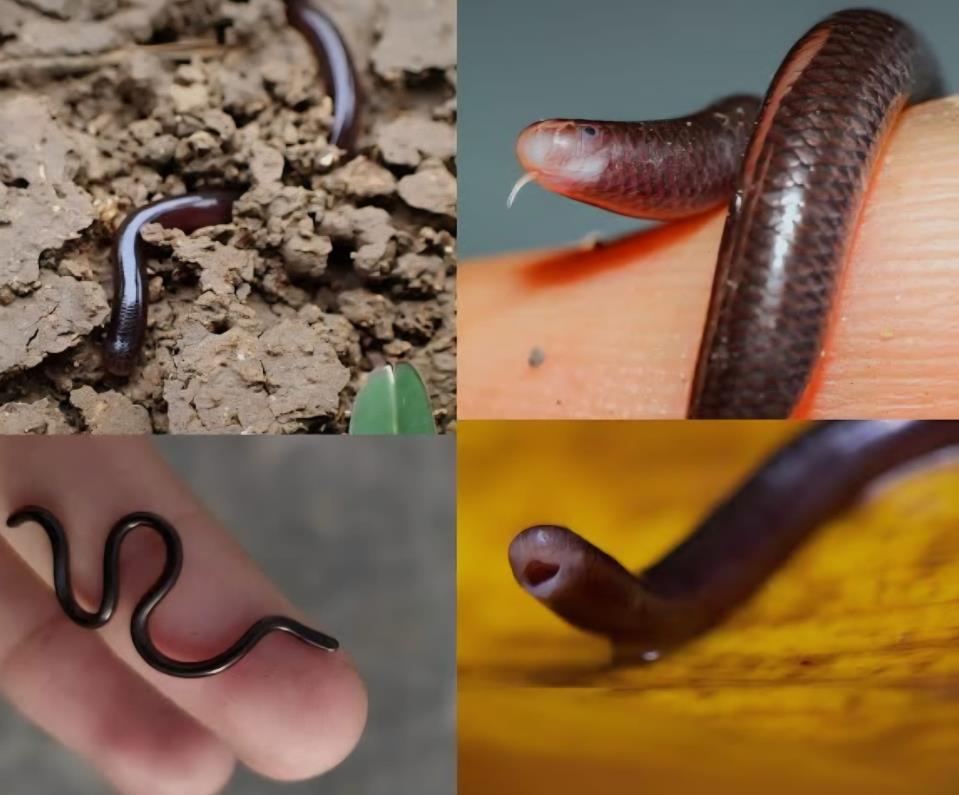
A newly published scientific contribution has revealed that the non-native Brahminy blind snake (Indotyphlopsbraminus), locally known as the Serp Ħanex, is considerably more widespread across the Maltese archipelago than previously believed.
The research, conducted by Arnold Sciberras, Alan Deidun, Mario Lo Valvo and Francesco Paolo Faraone, was presented at the XVI Congresso Nazionale della Societas Herpetologica Italica (SHI), held in L'Aquila, Italy, between 15 and 18 September 2026.
The study brings together nearly a decade of observations, field investigations and citizen-science contributions, providing new insights into the distribution, habitat preferences and possible dispersal mechanisms of this unusual reptile.
Native to the Indo-Malayan region, the Brahminy blind snake is a small, fossorial species that spends much of its life concealed beneath soil, stones and decaying vegetation.
Its secretive lifestyle means that it can easily escape detection, even in areas where it may already be established.
The species has spread internationally, largely through the transportation of ornamental plants, nursery stock and soil.
Its ability to reproduce through parthenogenesis, whereby females can produce offspring without fertilisation by males, makes it particularly capable of establishing new populations following accidental introductions.
Although the species was first officially reported from Malta in 2020, the latest investigation incorporates observations dating back to 2017 and demonstrates that its distribution has expanded considerably.
Between 2017 and 2026, researchers documented 47 records involving 65 individuals from 34 different locations, including 31 sites in Malta, two in Gozo and one in Comino.
Most observations originated from environments heavily influenced by human activity, including plant nurseries, garden centres, greenhouses, agricultural land, public gardens, private properties and urbanised areas.
However, the researchers also recorded specimens in less disturbed environments, including eucalyptus plantations and garrigue habitats.
Some individuals were encountered in relatively moist microhabitats within otherwise dry landscapes.
These findings are particularly significant because they raise questions about whether the species is beginning to establish populations beyond environments directly associated with human activity, the researchers said.
Human activity appears to be driving its spread
According to the research, the geographical distribution of the Brahminy blind snake strongly suggests that human-assisted transportation, particularly the movement of plants and soil, has played a central role in its dispersal throughout the Maltese Islands.
The researchers consider multiple introductions a likely explanation for its present distribution, rather than the species having reached all recorded localities through natural movement alone.
Nevertheless, further investigations will be necessary to distinguish between isolated accidental introductions and the establishment of stable, reproducing populations.
The discovery of individuals in seminatural environments also highlights the importance of monitoring introduced species and understanding their potential interactions with native biodiversity, the researchers said.
Although the ecological consequences of the Brahminy blind snake's presence in Malta remain insufficiently understood, documenting its distribution represents an important first step towards evaluating its long-term establishment and possible ecological implications, they said.
For naturalist and researcher Arnold Sciberras, the latest publication represents another stage in a broader scientific investigation into the species.
The research team has confirmed that three additional projects involving the Brahminy blind snake are already underway, with further observations and specimens expected to contribute to a more comprehensive understanding of its biology and distribution in the Maltese Islands.
Members of the public who encounter specimens are encouraged to report their observations, ideally accompanied by photographs and precise locality information.
Sightings can be reported by contacting 9988 7950 or 9911 3445, or through private messages to the researchers.
The study also highlights the importance of cooperation between scientific institutions, professional fieldworkers and members of the public.
Acknowledgements were extended to the Societas Herpetologica Italica, the organisers of its XVI National Congress in L'Aquila, the Oceanography Malta Research Group at the University of Malta, the Department of Biological, Chemical and Pharmaceutical Sciences and Technologies (STEBICEF) at the University of Palermo, and The Exterminator - Pest Control Services.
Special recognition was also given to the clients and technicians of The Exterminator, whose observations and assistance contributed valuable records to the investigation.
The public's involvement demonstrates how professionals working in close contact with buildings, gardens, agricultural environments and soil can play an important role in detecting and documenting species that might otherwise remain overlooked.