Earlier this year, just before the opening of the autumn hunting season, The Malta Independent on Sunday published photographs showing how trappers had taken over large portions of the west of Gozo.
The story dealt with the area called Ras il-Wardija, where a Punic/Roman temple is located. One of the photos showed great areas of land that had been burnt. At the time we had speculated that this was probably done in preparation for trapping activities.
Two weeks ago we returned to the area and found dozens of trappers all operating in earnest. Some trappers were spraying herbicides on the ground to destroy wild plants in order to prevent their nets from becoming entangled when they lift them to catch wild birds. Two trappers were seen placing imitation birds near ponds to lure live birds down into the traps. Illegal bird lures, electronic recordings of bird song that trick birds into thinking their friends are nesting in the trapping areas, were heard very frequently.

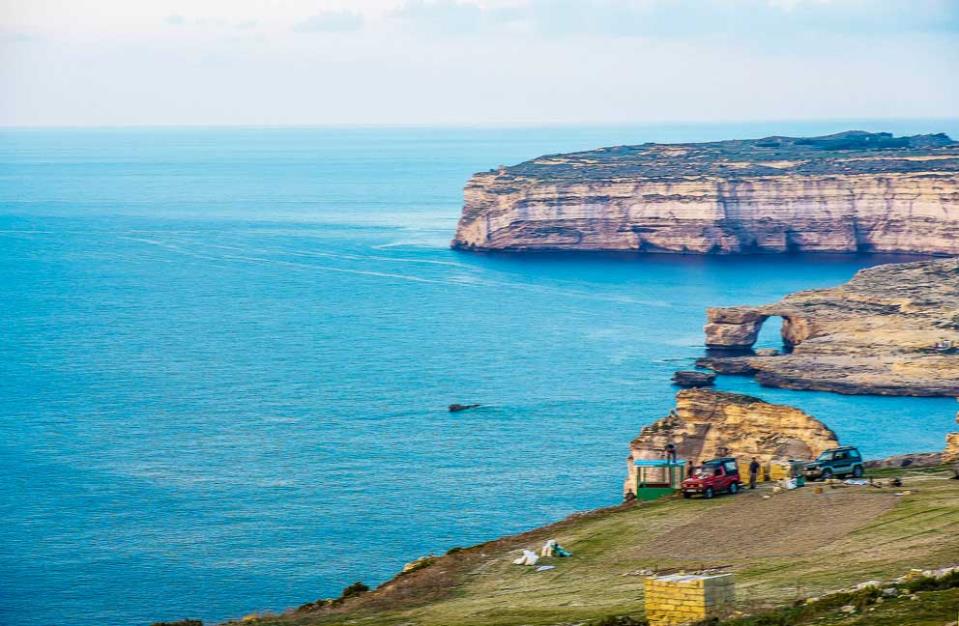
The most disturbing development, however, was a group of half a dozen trappers and hunters levelling the ground of a Natura 2000 site, laying nets and building a hide. They were using off-road vehicles to access this ecologically sensitive area. This area, which lies between the Punic temple at Ras il-Wardija and the Fungus Rock and Dwejra, is listed by the European Commission which states: "Over the last 25 years, the EU has built up a vast network of 26.000 protected areas in all the Member States and an area of more than 750.000 km2, which is 18% of the EU's land area. Known as Natura 2000, it is the largest network of protected areas in the world, and a testament to the importance that EU citizens attach to biodiversity."
The Commission website continues: "The legal basis for Natura 2000 comes from the Birds Directive and the Habitats Directive, which form the backbone of the EU's internal biodiversity policy. But protected natural areas cannot thrive in isolation: if we want to conserve Europe's natural capital, then agriculture, energy and transport policies must be sustainable too."
Even if European laws were to be ignored, the land is still considered an extremely important area by various Maltese authorities, who describe it as one of great cultural, environmental and aesthetic value. Before we published the first story on 31 August, abuse by trappers had been reported to Mepa, which checked the area and served an enforcement notice. It is not known whether any physical action was taken.
Just one week ago, an environmentalist who is also an educator and a guide, sent an open letter to Prime Minister Joseph Muscat and Parliamentary Secretary for Animal Rights Roderick Galdes. She wrote: "I am writing in sheer exasperation over the situation I have been reporting about... non-stop shots as families were trying to picnic at Sarraflu, and a myriad of trapping sites in internationally protected areas... It is ridiculous how the government is condoning damage to natural and protected areas and allowing the capture of birds with cruel methods... there will not be much left to protect soon and Malta will have failed to ensure compliance to Habitats and Birds Directive ".

These photos showing people building the hides were taken last Sunday at 4 pm when any hunting is always illegal. This is done so that people who are not hunters or trappers can get a couple of hours once a week to enjoy the Maltese countryside. Yet, people walking in the area at that time were prevented from continuing with their walk by trappers who shouted at the walkers to go away.
The following text is from the Ministry for Gozo's Eco Gozo website: "Gozo will become an eco-island by 2020, supported by a keen and committed sustainable community. We want to see quality of life in Gozo improving further through education, economic development and social progress. Gozo will strive to reduce its carbon and water footprints. We want to protect the Gozitan lifestyle, the island's environment, resources, culture and identity, and see that all these play a significant part in attracting more visitors and investors to the island.
"The eco-island foresees a sustainable, and therefore, a secure future for the island of Gozo. It is a vision rooted in the island's potential and the capabilities of its people.
"Eco Gozo is a vision for an island to become even more beautiful, inspiring, welcoming, thriving, inclusive and successful. A healthy and successful place to live in, in equilibrium with the environment. This is essentially what eco-island will strive to achieve."