The agreement reached today by EU interior ministers in Brussels means that Malta will take a total of 189 migrants under a new resettlement programme which was agreed upon through a qualified majority vote.
Home Affairs Minister Abela said that the next step will be to put these words into action. The first phase will see 66,000 refugees relocated, of which Malta is planned to take in 71. The second phase will see a further 54,000 relocated, of which Malta is planned to take 58 refugees.
This is in addition to the 60 migrants Malta had agreed to relocate as part of a package earlier this year that will see 40,000 migrants relocated from Italy and Greece.
The Minister said that although there were countries who voted against and one that abstained, there was no animosity between the countries during the meeting.

Turning to the need for mandatory burden sharing the Minister said that without a doubt, front-line states have a certain responsibility, however recently an important development was that responsibility must not be the sole responsibility of border-states. “Where the immigration issue comes into play as a whole, it is not the problem on one or two countries, but the EU members as a whole”.
As for the issue between Hungary and Croatia, and the tension on their borders, he said that while there was a mention of the issue as a state of face, there was no back and forth bickering between the countries.
Turning to the recent reports stating that an agreement between Malta and Italy existed, whereby Italy would take refugees and Malta would allow certain oil exploration rights, the Minister again denied, and said that the two countries are working in collaboration and disembarkation occur according to international laws. He said there is no agreement or handshake between the two countries in this regard.
The minister addressed certain rumours that some countries who voted against the 120,000 relocation would have certain repercussions. “I think today’s vote, while although there was no complete consensus, there was a decision and everyone is tied to that decision. What will happen in the future one would need to wait and see”.
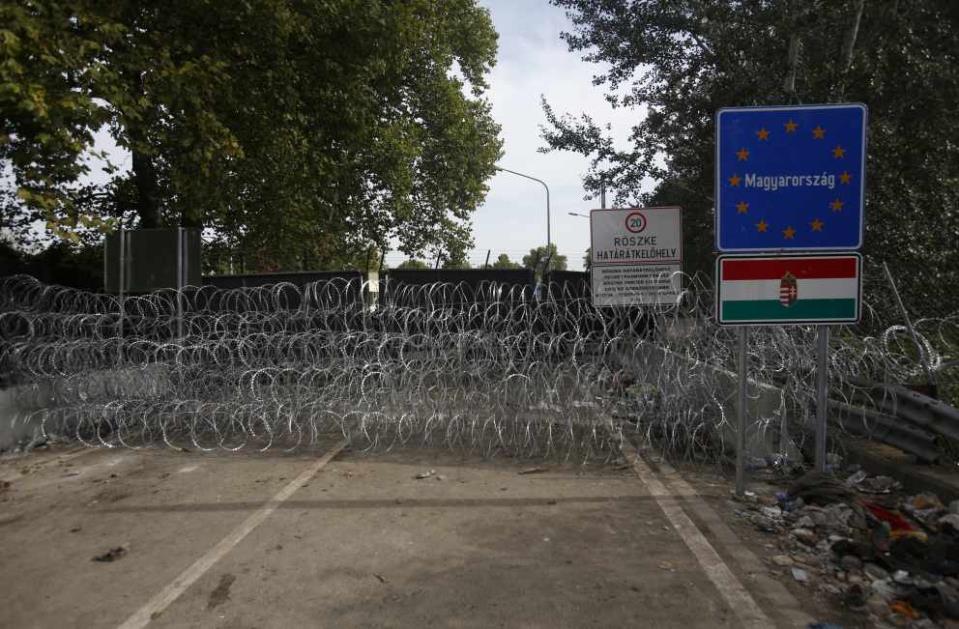
“The best solution must be found through solidarity and through discussions round a table, the Minister said when asked about Hungary’s hard-line approach to immigration. ”Everyone must carry their fair share. There are enough EU regulations and one must walk with those rules. He mentioned the importance of collaboration.
The migration crisis has again become the centre of world news recently, as hundreds of thousands of refugees flood through Europe’s eastern border, as well as cross the Mediterranean. Recently, tensions have been apparent in the eastern bloc, with Hungary putting up a razor wire fence and Croatia using busses to take migrants to the Hungarian border.
France and Germany were two of the major countries backing the relocation of the 120,000 migrants reports read, however the majority of Europe was already in favour. Through the Quality majority vote, some of those countries who voted against the relocation would still need to take their share.
The Dublin regulations need to be revisited – Home Affairs Minister Carmelo Abela
Mr Abela believes that the Dublin regulations definitely need to be revisited, however as to the type of change that states want, one would need to wait and see
The Minister said that the regulation was mentioned in a Justice and Home Affairs Council meeting, but only in reference that there is a push for a reform. He said that times have changed and when the Dublin regulations were introduced, the influx of migrants was not on the same level as today. “It could be it worked in the past, but today, when talking of thousands of migrants, the regulations definitely need to be revisited”.

Asked if there is a majority needed to change the regulation, the Minister said – “more or less there are a number of countries that are calling for a revision of the regulations. In general, my feeling is that there is a general consensus for the need of some sort of change, however one would need to see what kind of change”.
He explained that there are those who do not think an extensive change is needed, while there are others who believe there is need for a complete overhaul. “It is important to start discussions, but I think such a vote is quite a while away”.
The meeting saw the Interior Ministers from across the EU agree to relocate 120,000 refugees from Italy and Greece, but only after overriding opposition from some Central and Eastern EU countries.
The EU Council for Justice and Home Affairs Ministers saw Slovakia, Romania, Hungary, Czech Republic against the mandatory relocation of these refugees, with Finland abstaining.
This meant that the Ministers saw the decision pass through a qualified majority vote.
The 120,000 will be relocated over two years and will be split into two phases. All relocated refugees will come from Italy and Greece, however if during this two year period another country requires relief, then the Council will consider relocating a portion of the 120,000 from that country.
Hungary was originally one of the countries set to have refugees relocated, however, it spurned the idea, so the number of refugees that were expected to be relocated from Hungary could very well be added on to those to be relocated from Italy and Greece, or perhaps another EU country.
EU Commission hopes next Justice and Home Affairs Council will focus on further Dublin system reform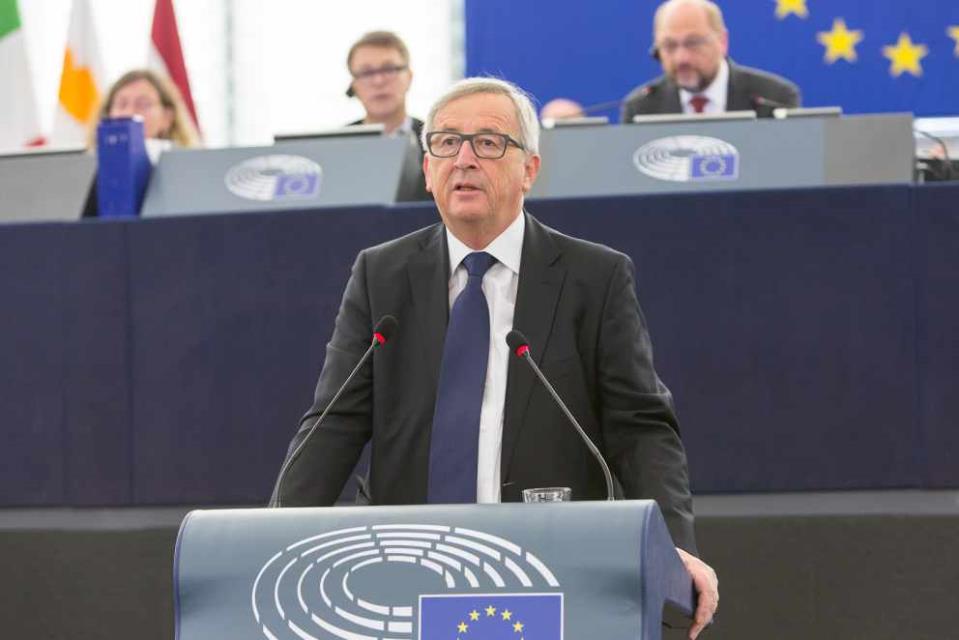
"Today, European Home Affairs Ministers have taken an important decision to relocate 120,000 refugees from Greece, Italy and other Member States directly affected by the refugee crisis, less than 3 weeks after the Commission came forward with its proposal. The Commission welcomes the efforts undertaken by all Member States to reach this result, and salutes in particular the tireless work of the Luxembourg Presidency of the Council," a Commission statement read.
Following this decision, the EU is now in a position to relocate a total of 160,000 people in clear need of international protection in the coming two years. "The Commission and the EU agencies will organise together with the Member States the necessary coordination to implement the mechanism on the ground".
The Commission said it has been working constantly for a coordinated European response on the refugees and migration front. "Relocation is part of a comprehensive approach to deal with the ongoing refugee crisis. Interior Ministers are now expected to move forward on the other proposals made by the Commission, including the EU List of Safe Countries of Origin and the further reform of the Dublin system, at the next Justice and Home Affairs Council on 8 October. At the same time, the root causes of the refugee crisis must be addressed. That is why tomorrow Heads of State and Government will discuss the immediate priority actions which are necessary to address the instability in our vicinity, and the refugee pressures on neighbouring countries".
The Commission will continue to work in close cooperation with the European Parliament, the Council and the 28 EU Member States, as well as with key third countries such as Serbia and Turkey, it said.