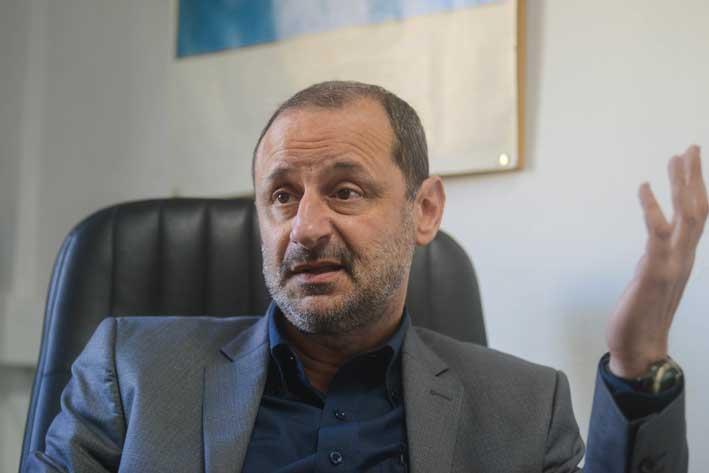
The newly-elected rector of the University of Malta did not mince his words when he spoke, with pride, about his work in his new position.
“We’re the only national university,” Prof. Alfred Vella said when interviewed on PBS on Friday night, a strong message that the University at Tal-Qroqq will endeavour to remain the best choice students will have to further their education even when other institutions open up.
He did not mention the idea to build a campus at Zonqor Point, which was first billed as an American University of Malta and later changed to American Institute of Malta, but his words were interpreted to refer to this project which has created controversy both from the environmental and educational point of view.
He boldly said that competition from other universities is the least of his worries, largely because the University of Malta he is now leading is already facing its own challenges. But he pointed out that “no other entity can be described as a comprehensive university” in the same way that the Tal-Qroqq University can be.
“We offer a whole gamut of courses,” he said, and “we are the only national university. I still have to see another university that comes close” to what the Tal-Qroqq University can offer.
Alfred Vella elected new rector
Interviewed this morning on PBS radio, Professor Alfred Vella said that during his term in office as rector of the University, he will work hand in hand with the government. He said it is understandable that a government with an only national university takes a big interest in the running of the institution.
“Surely the government does not need a no-man. But I will not be a yes-man either,” he said.

“There were instances in the past when it wasn’t the government that influenced the decisions at the University, but the other way round. Maybe, if the government interfered more, the result of the rector’s election might have been different.”
He said that the University’s mission is also to influence the public. In fact, when asked about his thoughts about the environment, an issue which Prof. Vella has voiced his concern about, the new rector said that he expects that he and his colleagues at the University are involved in important decisions on a national level.
“The truth is, we do not have the power to function autonomously, we need the support of the state,” but he still insists that the government does not dictate what happens at the University and how this functions.
“The only power a rector has is in the art of convincing,” he added.
Prof Vella said that continuity does not mean that there will not be any changes. Every Pope that takes the leader's seat at the Vatican has to make a number of changes, he said.
Regarding bureaucracy, he said that the public needs to understand that, for example, before introducing a new study unit, the University needs to dwell into a very complex process. It has to check on lecturers, the programme, if it can be amalgamated into another topic or if it is worth to do kick start a new topic on its own. “Quality is very important. This is the process that people refer to as bureaucracy.”
On transparency, Prof Vella said the University management is constantly being challenged over this matter because it has to take a lot of important decision.
He still does not know who will the pro-rectors will be but said that his contender, Godfrey Baldacchino, would be an ideal candidate. Prof Vella thanked Godfrey Baldacchino for creating such a big interest in the rector’s election. “This is the first time that the media stated to discuss the election of a new rector before it happened. And this is thanks to Baldacchino.”
On Bart’s Medicine University, he said that the preoccupation on medical student’s placement has been discussed. But the relationship between the two intuitions is ‘peaceful’.
“Universities have to work hand in hand. We just need to be careful that this relationship is not one-sided,” he warned.