Close to half of respondents, 41.2%, believe that the government is corrupt, a survey commissioned by The Malta Independent shows.
Respondents were simply asked: Do you think the government is corrupt? Overall 41.2% believe so, 38.7% do not, while 19.2% could not decide either way.
When removing the ‘don’t know’ answers from the equation, the proportion of respondents who think the government is corrupt climbs to 51.5%, with 48.3 who believe it is not.
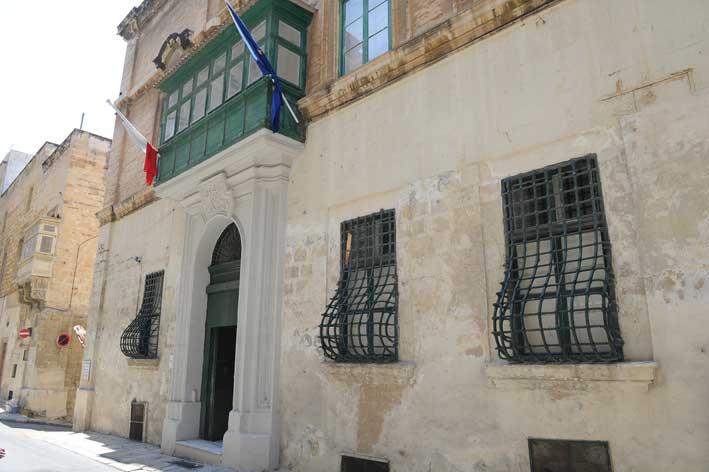
The government has been accused by the opposition of fuelling a corruption crisis, with the controversial €3 million government expropriation deal a property on Old Mint Street, the €4 million Café Premier deal, the Australia Hall saga, the ICIJ revelations in the Panama Papers scandal and the building of an ‘American Institute of Malta,’ on an Outside Development Zone in Zonqor, to name a few.
Panama Papers refers to the discovery that Energy and Health Minister and the Prime Minister’s chief of staff Keith Schembri concurrently hold a trust and a company in New Zealand and financially secretive jurisdiction of Panama respectively.
The above scandals, together with the government’s refusal to publish major energy and health contracts – citing commercially sensitive information – have further fanned the flames.
Both Dr Mizzi and Mr Schembri have denied any wrongdoing, with the Prime Minister promising to publish the aforementioned contracts in the name of transparency.
The results of this survey come against a backdrop of a marathon Parliament session today. MPs are discussing the motion of no confidence presented by the Opposition Leader Simon Busuttil in Dr Muscat’s Government.

Spread of PL and PN voters
Among those who voted for the Labour Party in the last general election, 17.4% believe that the government is corrupt, the majority, 69.4%, believe that it is not, while 13% were undecided.
On the other side of the political divide, among those who voted for the Nationalist Party in the last general election, unsurprisingly 72.8% think that the government is corrupt, 9.8% do not while 16.8% could not take a decision.
Over half of those who were not eligible to vote in the last general election, 57.1%, believe that the government is corrupt.
When viewing the spread of respondents by age and how they voted, a proportion of 36.1% of respondents aged between 18 and 24 believe that the government is corrupt. This could possibly indicate that those closer to 18 view Dr Muscat and his government unfavourably, but as they approach their 20s the picture changes somewhat.
In the case of those aged 65+ it would appear that they are in favour of Dr Muscat and his government. This is an increasingly important cohort in view of the ageing population currently being experienced by Malta and the rest of the developed countries around the world.

Only 26.7% of respondents in this cohort view the government as corrupt. 50% of respondents aged 65+ prefer to place their trust in Dr Muscat rather than the Opposition Leader, and likewise 51.2% view the government’s performance favourably.
More males than females believe that the government is corrupt, at 43.2% and 38.7% respectively. Similarly, more males than females also believe that the government is not corrupt, at 39.3% and 38% respectively. This is possible because more females than males could not decide whether the government is corrupt or not, at 21.4% and 16.9% respectively.
Interestingly, just under half – 49.3% of respondents – of those who chose not to vote in the last general election found the government to be corrupt. This reflects an increased level of suspicion and disillusionment for those working within the political sphere.
Disillusionment in politics by those who chose not to vote in the last general election is further illustrated by the majority of such respondents, 62.7%, who chose ‘neither’ when asked if they trusted Dr Muscat or Dr Busuttil more.
This newsroom showed how corruption and the Panama scandal – which is a corruption related scandal – ranked as the top two concerns by respondents, at 38.1% jointly. This indicates that corruption is placed prominently in the minds of the electorate, whether they view the government favourably or not.
Previous stats
This newsroom also analyzed trust scores, and found that while Dr Busuttil is making headway, the public still places its trust in Dr Muscat. Asked whether they trusted Dr Busuttil, Dr Muscat or neither – respondents placed 40.9% in the Prime Minister, 31.2% in the Opposition Leader and 24.1% chose neither.
When asked to rank their trust for each leader separately on a 10 point scale – where 10 signifies the most trust and one the least – Dr Muscat was awarded an average score of 5.7 while Dr Busuttil received an average of 4.9. The gap between the two leaders continues to narrow – however Dr Muscat still remains on top in all counts.
The survey also found that overall, 40.8% of respondents viewed the government’s performance as positively, 40.3% negatively and 19% were unable to decide. With regard to the Opposition’s performance, 34.5% viewed it as positive, 41% negative and 24.6% were unable to decide either way.
Turning back to the Panama Papers scandal, it was found that 49% of respondents want the Prime Minister to sack his chief of staff Keith Schembri, while only 22.9% think he should stay. While slightly more people feel that Dr Mizzi should resign, at 54.2%, only 26.2% think he should retain his position.
The April 2016 iSurvey – the fifth of its kind – was commissioned to Business Leaders Malta on behalf ofThe Malta Independent. A total of 600 respondents were used, representative of age, gender and spread of localities. With such a sample size, the margin of error is +/- 4%. More info from the iSurvey will continue to emerge throughout this week.