Malta has come a long way in the last six years. From the introduction of divorce, the country has been on the fast track to become a leader in the world when it comes to civil rights.
The last couple of days in the election campaign has seen another move in a more liberal direction, with the Labour Party, the Nationalist Party and the Democratic Party all speaking out in favour of a national informed discussion, based on scientific research, about the legalisation of recreational marijuana.
Prime Minister Joseph Muscat even went so far as to tell One Radio that he would also be in favour in launching a discussion to regulate of prostitution.
It could be said that this is another attempt by the Muscat spin to deflect from the serious allegations surrounding him and his inner circle and to further pander to the youth.
However, in an era where young people are mostly characterised by political disenfranchisement, it is no real surprise that the political parties are doing their utmost to appeal to this demographic.
It is hard to believe that the proposal will not alienate a significant portion of the population, considering that Malta is a mostly conservative country. What is unfortunate is that political parties may be armed with the knowledge that the mostly partisan and fiercely loyal elderly age bracket will vote for them regardless of any proposal that goes against the moral code.

In fact, Joseph Muscat has ploughed on with civil rights legislation after civil rights legislation against popular approval.
On to the issues at hand, in his announcement Dr Muscat said that he would be looking at the Portuguese and Canadian models regarding marijuana legislation. This is puzzling, because Portugal and Canada have vastly different systems on the legalisation of marijuana. In Portugal, individuals found in possession of small quantities of drugs for personal use (this includes ecstasy, heroin, cocaine and marijuana) cannot be subject to criminal penalties. In such cases, the drugs will be seized and the case transferred to a local Commission charged with implementing a rehabilitation strategy.
However, the cultivation and trafficking of cannabis is still illegal, albeit subject to reduced sentencing.
Canada, on the other hand, has recently passed legislation for the full legalisation of the soft drug. Having already introduced it for medicinal use, the Trudeau government has divvied up bills on the regulation, distribution and sale of marijuana.
Those who want to grow their own marijuana will be limited to four plants per household. Canadians will be allowed to carry up to 30 grammes of dried cannabis for personal use but those who sell or give marijuana to minors, or drive under its influence, will face stiff penalties. The government is proposing a system of roadside saliva tests to ferret out drugged drivers.
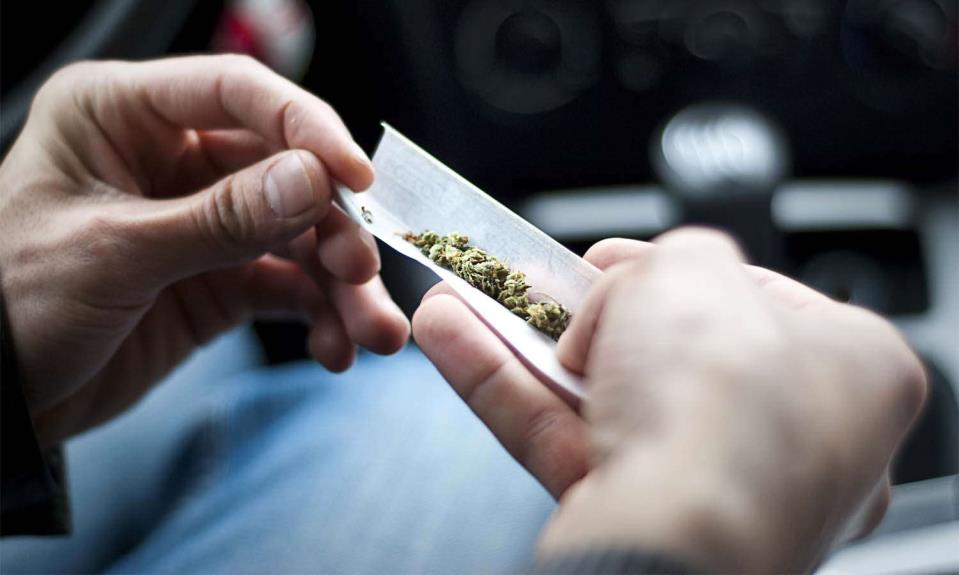
Strict guidelines will be set on how marijuana can be marketed.
The legalisation of prostitution presents a more complex argument. The core belief is that anti-prostitution laws are counter-productive as they do nothing to ensure the safety of the women in the profession.
On the one hand, it could be argued that attempts to regulate prostitution and monitor working practices and standards will protect minors and women against exploitation. However, this may not necessarily be true and there are numerous reports on the subject that contradict each other.
For instance, there have long been claims – specifically in French newspaper Le Monde – that upwards of 70 per cent of sex workers in Amsterdam’s red-light district are without legal documentation or residency cards, implying trafficking. It does seem odd, for instance, that photographs are strictly prohibited in the area.
There would undoubtedly be economic benefits from the legitimisation of both industries. Beyond tourism, by taking the money out of drug traffickers, the government will be able to regulate the market (as is done with both alcohol and cigarettes, which are arguably more harmful to an individual) and access previously untapped revenue streams.
With regard to prostitution, taxation and licensing may not only bring safety but will once again allow a significant amount of money to be claimed by the government. Finances brought in from both fields could be used to fund numerous social and educational programmes around the island.
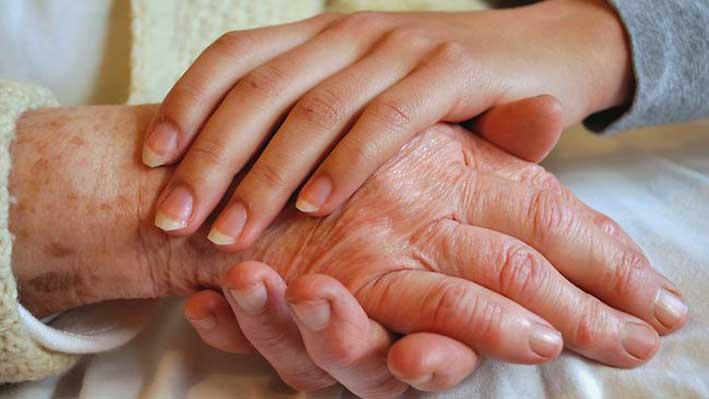
The subject of euthanasia was floated around during the previous legislature, and it would not surprise me if the Labour Party’s manifesto included such a proposal. It is a deeply personal choice and, in the face of an individual’s suffering, who should decide whether that person should be permitted to end his or her life?
This may, however, be a bridge too far for the PN; with its long-standing relationship with the Catholic Church it seems unthinkable that the same party that abstained in respect of the Civil Rights Bill would welcome such a controversial proposal.