The Valletta 2018 Foundation, in collaboration with Heritage Malta, have launched the first edition of Qatt ma Ninsa a collective memory project, aimed at collecting stories about objects related to the sea.
Addressing a press conference earlier this week, Valletta 2018 Foundation Chairman Jason Micallef explained how Qatt ma Ninsa invites the public to bring along objects, photographs or memorabilia related to the sea to the Maritime Museum and to share memories and stories associated with these objects.
He remarked how the stories that people tell each other make up the identity of a people, and stressed the importance that such stories are collected and shared, or otherwise perish.
Heritage Malta Chairman Joseph Buttigieg noted how Qatt ma Ninsa builds on the annual event Life at Sea, which this year is in its ninth edition.
Malta Maritime Museum curator Liam Gauci explained how through Qatt ma Ninsa, the Malta Maritime Museum wants to hear the stories and histories of families to record what lays hidden in homes.
Qatt ma Ninsa will run all day on Sunday 15 June between 9am and 5pm. The subsidised entrance fee is of €2, however visitors can also log on valletta2018.org or heritagemalta.org and take a quiz and obtain free entrance to the museum for the day.
An exhibition featuring 10 objects from the national collection will also be exhibited at the museum. This exhibition includes objects from the recent and not so recent past, connected with which is a fascinating story.
A group of experts from various fields of work and study will also be on hand at the museum throughout the day, and they will be photographing the objects brought in by the public, and recording the anecdotes related to them, compiling a database of collective memory.
Stories shared may end up being the inspiration for a song, a play or even a contemporary dance piece as part of Valletta 2018’s cultural programme of events.
Join us online facebook.com/Valletta2018; twitter.com/Valletta_2018 2
On exhibition from the national collection
The largest Roman anchor ever found
The largest lead anchor ever found in the Mediterranean Sea was brought to the surface in 1962 by the British Royal Air Force Sub-Aqua Club and the Royal Navy Boom Defence, with the collaboration of the Museums Department. It had lain for centuries some 300 metres off Qawra Point in sea around 40 metres deep. The anchor, which measures over 4 metres and weighs over three tonnes could have been cut from a Roman ship during a storm.
The Maltese sailor and Charles Dickens
When, in 1859, the Royal Charter was about to be shipwrecked off the Welsh coast, one of her crew, Guzeppi Ruggier from Birgu swam to shore with a rope; an act which saved almost forty lives. Ruggier, known as Joe Rogers, was honoured as a hero and the event was even mentioned by Charles Dickens in The Uncommercial Traveller.
.jpg)
The Dead Man’s Penny
In August this year, the world will commemorate the outbreak of the First World War. Malta did not escape this war unscathed and many Maltese men joined the British Navy. In 1918, the HMS Louvain was torpedoed and sunk by the U-Boat UC22 in the Aegean Sea; this was to prove the largest single tragedy for Malta during the war; only 10 men survived out of a crew of 151. The families of the dead men were sent an official recognition of their sacrifice in the form of a bronze medal known as the Dead Man’s Penny.
1920s photo album and camera
Among the thousands of photos preserved at the Malta Maritime Museum, several photo albums stand out from the others in the collection. Many of the photos within these albums would have been taken with a camera similar to the Kodak Folding Pocket B2 on display, and provide an intriguing look at how Malta has changed over the last century.
A dollhouse for Myrtle
In the 1940s, an Englishman found himself far from his homeland working at the Dockyards in Malta. In his spare time, he built a dollhouse to take back to his daughter Mertyl – all his colleagues lent a hand to build the miniature rooms and furniture. After the war, he brought the dollhouse back to England for his daughter, only to find that she had been killed in air raid during the Blitz. The dollhouse was cherished by Mertyl’s cousin who eventually donated it to the Malta Maritime Museum.
.JPG)
The barber to the royals
Rosario Merola was an Italian violinist enlisted with the Royal Navy in the 1890s. He eventually settled in Malta, and with his charisma and talent soon became a popular and sought-after barber. He owned and managed four sumptuously equipped salons which were patronised by Maltese and English high society. He attended to various Royals who visited Malta and his haircuts were the most fashionable in town. Join us online facebook.com/Valletta2018; twitter.com/Valletta_2018 3
A Maltese boat for an admiral
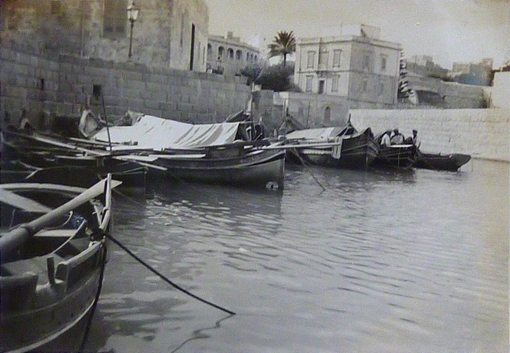
Il-Pasalv was a boatman from Senglea whose daghjsa was his pride and joy. When the HMS Surprise was stationed in Malta during the 1950s, her CnC Admiral was so taken by the daghjsa that he decided to enlist it as his official barge. Il-Pasalv and his daghjsa travelled with the HMS Surprise, visiting Monaco, Barcelona, Venice and the French Riviera - in the lagoon at Venice, he even raced and outran a Venetian gondola. Il-Pasalv was so proud of his daghjsa that he eventually renamed her Surprise.
Dockyard memories
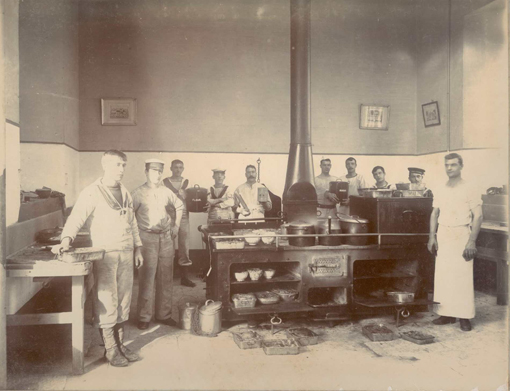
The Malta dockyards have been in existence for over 600 years. This helmet and punch clock are just two of the thousands of objects at the Malta Maritime Museum related to dockyard life during the twentieth century. Many of these stories and memories are still preserved within the Maltese community.
Lampuki pie
Malta’s fishing industry was for centuries neglected by colonial rulers, yet the tradition continued despite adversities. Today Malta’s fishing fleet is nowhere near the size of those of other Mediterranean countries, but things are changing and the fleet is growing slowly. This weighing-scales was made specifically to weigh fish and was used by the wife of a fisherman to sell her husband’s daily catch in villages around Malta. The enamel pie-dish is still used today to make a time-honoured favourite; Torta tal-Lampuki.
Malta’s evolving maritime history
People come to Europe for different reasons; some are escaping persecution or war, some are simply escaping poverty and seeking a better way of life. Migrants’ boats often get into trouble at sea; over the past decade, servicemen in the Maritime Squadron of the AFM have assisted and saved thousands of people trying to reach Europe by boat across the Mediterranean. This migration is also part of our Maritime history, and this piece of a migrant boat forms part of the collection at the Malta Maritime Museum. The Swift Class patrol boat also on display was built at the Malta Maritime Museum’s Ship Model Making Laboratories; the P24 has provided Malta with a watchful eye over her territorial waters for decades.