What does modernism look like when it does not arrive through rupture, but through quiet transformation? Throughout his career, Ġużeppi Briffa (1901-1987) explored this tension, subtly bridging inherited traditions with new visual possibilities to challenge artistic expectations. Reluctant Modernism: The Art of Ġużeppi Briffa revisits this negotiation, presenting a retrospective of an artist whose importance deserves reassessment.
This retrospective, curated by Christian Attard at Il-Ħaġar, Heart of Gozo Museum, is presented as part of the 29th edition of the Victoria International Arts Festival. Bringing together 110 paintings and drawings from 32 lenders - including private collections, Heritage Malta, and ecclesiastical institutions - the exhibition presents a substantial body of work rarely seen on this scale. Organised into six thematic sections, it not only offers a structured overview of Briffa's practice but also brings renewed attention to an artist whose importance has often been overlooked.
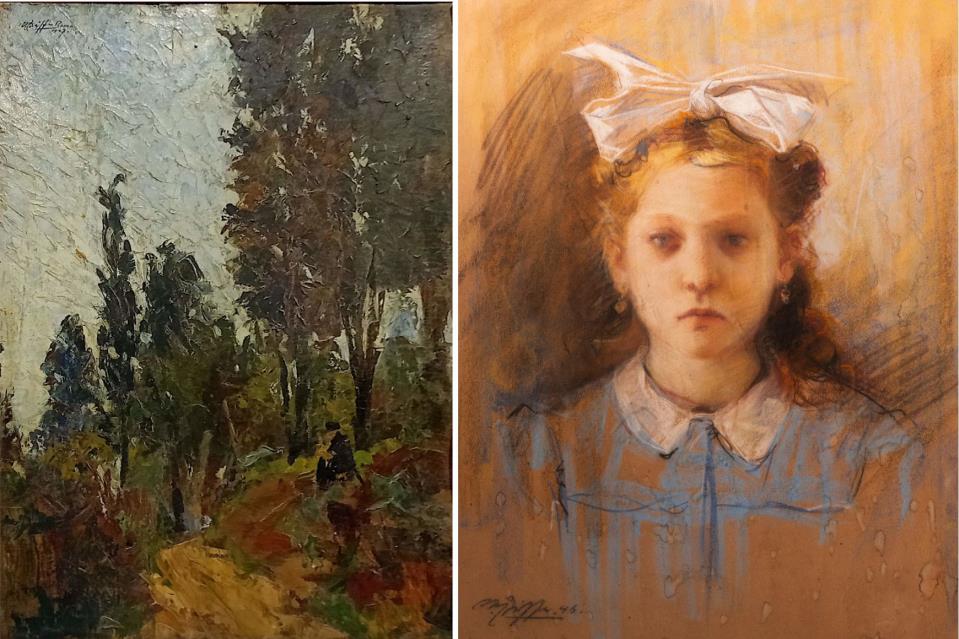
Briffa occupies an in-between position in 20th century Maltese painting. He neither fully embraced radical experimentation nor remained bound to established conventions, instead working through a gradual reshaping of familiar visual forms. Trained initially under Edward Caruana Dingli (1876-1950) and later in Rome at the Accademia Regia di Belle Arti, while also attending classes at the British Academy, he developed a strong foundation in painting that was informed by both academic discipline and wider artistic exposure. His career unfolded largely within ecclesiastical settings, where he undertook numerous commissions and achieved recognition during his lifetime.
Yet his later obscurity can be linked to circumstances beyond artistic merit. The loss of works during wartime, alongside disagreements over how his paintings fit within church interiors, may have played a large role in limiting his long-term visibility. At the same time, his work reflects an awareness of a changing visual world: brushwork can become more open, compositions more stylised, and iconography is influenced by contemporary media such as photography and cinema.
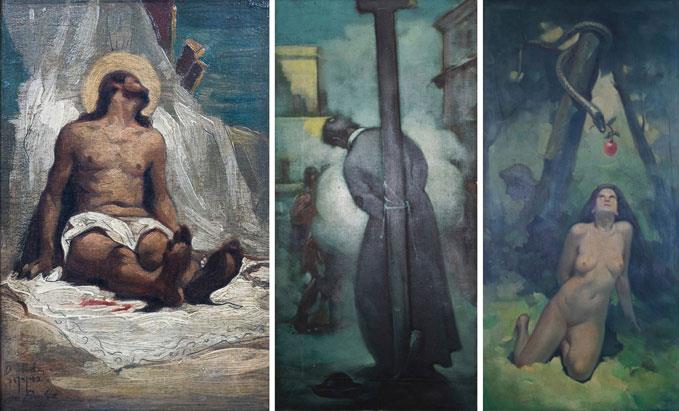
Rather than rejecting tradition, he adapted it from within, working with forms that audiences recognised while quietly altering their structure. Recent scholarship and exhibitions have begun to underline his importance, positioning Briffa as a significant artist who negotiated continuity and change through gradual adjustment rather than dramatic break.
The opening section centres on portraiture. Briffa was especially drawn to the human figure when it carried personal significance, and his many self-portraits suggest an attentive way of seeing that moves outward towards the sitter and inward towards himself. Formally, many of these portraits soften the usual distance between artist and sitter. Rather than asserting control, they create a quieter exchange in which presence is shared. This creates an understated, informal approach to portraiture, one that values sensitivity over display and suggests a more reciprocal relation.
If portraiture reveals Briffa's attention towards individual presence, the following section broadens up to examine the artistic and cultural references that informed how he understood, transformed and implemented visual culture. In paintings such as Eve and Dun Mikiel Xerri, the visual language of cinema appears to inform his approach to composition and atmosphere. Unconventional viewpoints and the emphasis on mood contribute to a more psychologically charged relationship between figure and environment, where the setting becomes an active part of the emotional narrative.
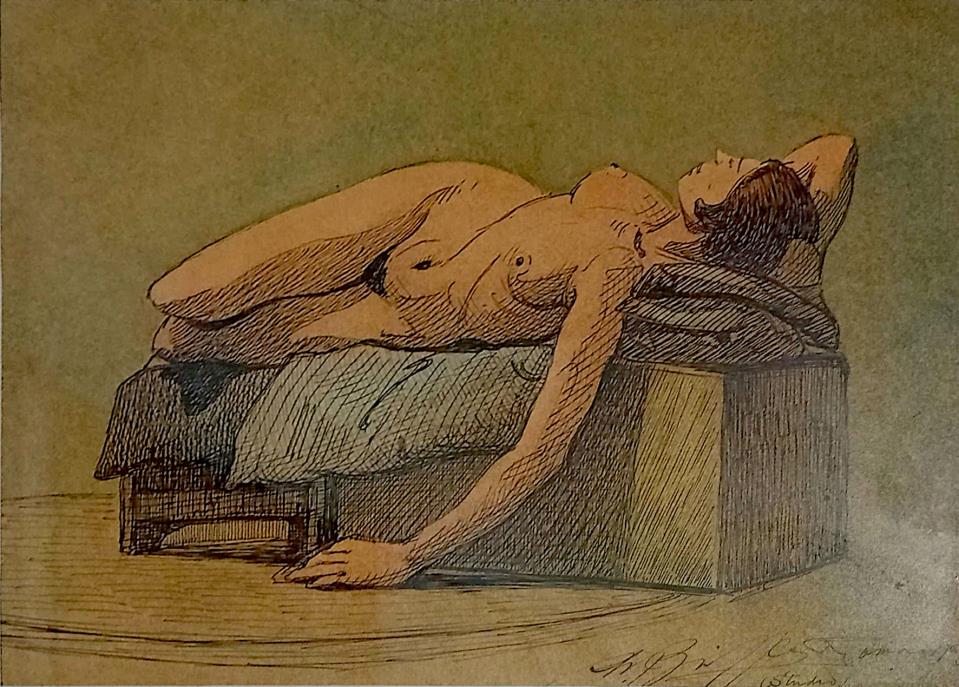
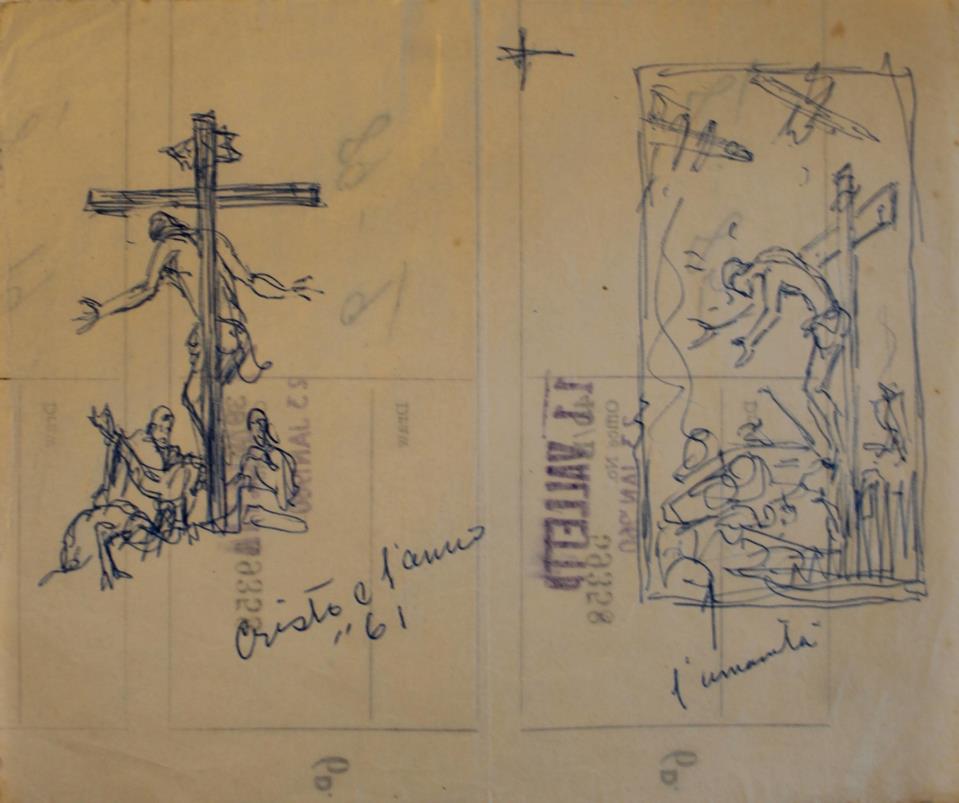
This same flexibility in handling form continues in his drawings, where line and gesture become more open to exploration. Presented are numerous sketches of varying scales, produced both in Malta and abroad. Ranging from delicate to restless and searching, these works reveal his on-going refinement while also offering insight into his creative process, with annotations and notes reflecting his statement in later years that all his works are a result of direct looking.
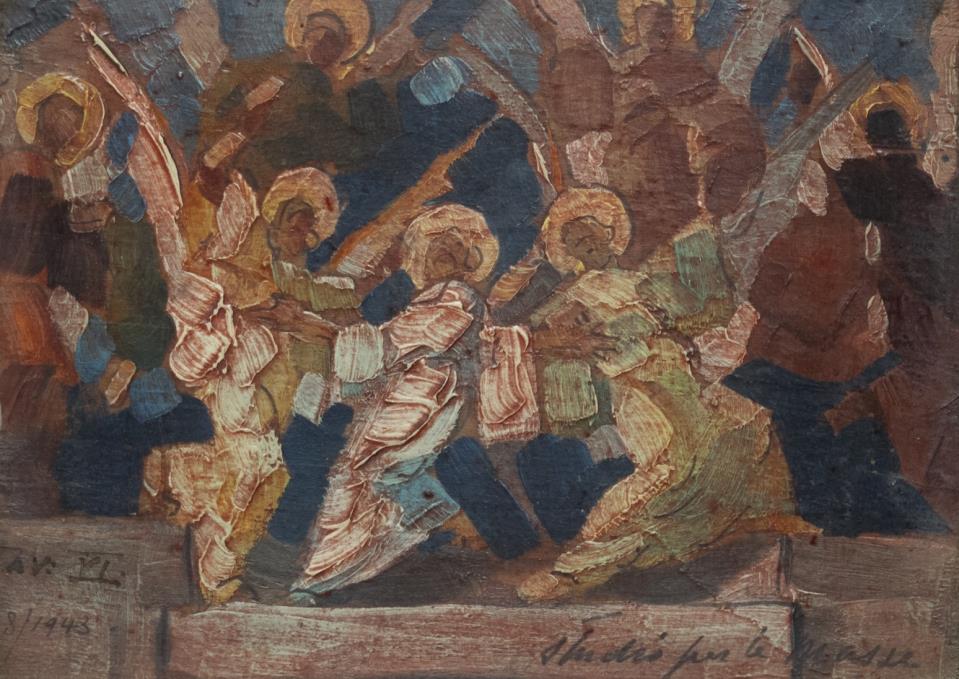
Yet one of the most striking aspects of Briffa's practice, alongside his engagement with popular culture, is his ability to negotiate between the sensuous and the spiritual. This balance often placed his work in tension with established ecclesiastical expectations and conventional ideas of how religious imagery should function. Through the interaction of form, technique, and painterly handling, his figures move beyond physical representation, creating a space of contemplation that approaches the metaphysical. This is particularly evident in his studies, where density, accumulation, and the rapid application of paint reveal a process driven as much by material exploration as by spiritual reflection.
Briffa's connection to Gozo also marked a decisive stage in his career, particularly through his work at the Church of St Augustine in Victoria, which established him as a serious presence within ecclesiastical patronage. His influence extended beyond his own practice, laying the groundwork for later generations of Maltese artists such as the highly regarded Anton Inglott (1915-1945) and Emvin Cremona (1919-1987). Presented alongside works by these artists and others, the documentary produced by curator Christian Attard together with his children Noah and Sarah, introduces a more personal perspective on Briffa, with family reflections adding another layer to the understanding of his artistic development and legacy. Also available online, it extends the exhibition's reach beyond its physical venue, helping to bring greater recognition to an artist whose significance merits wider appreciation.
Through a thoughtful selection of works, the exhibition reveals an artist of considerable skill and range, whose position within Maltese art deserves renewed attention. In Attard's words, it "celebrates an artist that merits celebration" and this exhibition makes a convincing case for why Briffa's contribution should be more widely recognized.
Reluctant Modernism: The Art of Ġużeppi Briffa is open to the public until 8 September at Il-Ħaġar, Heart of Gozo Museum, Victoria, Gozo.