I reluctantly emerged from my cosy lair once again to brave the chilly air in Valletta. I had been summoned to an open house at 315/316 St Paul's Street to take a look at the baroque Palazzo Prince d'Orange. I couldn't visualize a palazzo on those steps. I had passed there so many times over the years and all the entrances in that part of St Paul's street seem undistinguished and pedestrian, how could a palazzo possibly be lurking there? Curiosity got the better of me so off I went to see what was happening in those darkened doors and entrances which look so dismal, but which also give Valletta its character.
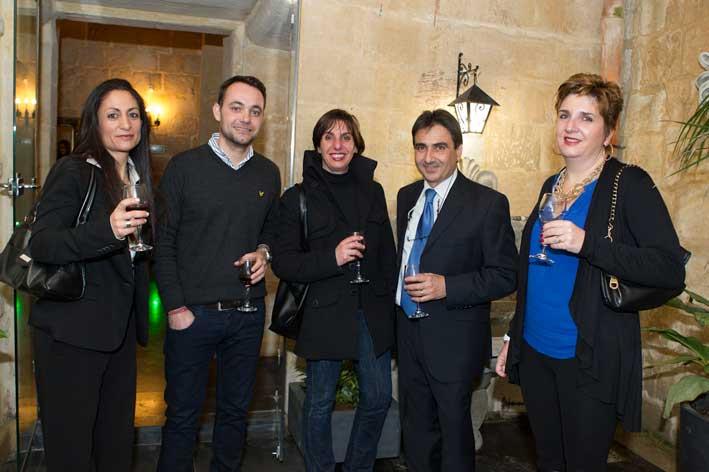
Well, I really was in for a surprise. As soon as I stepped into the hall of the palazzo, which is beautifully restored and decorated I met Dr Claude Busuttil of Arc studio whose company was responsible for the building part of the project. He told me that the palazzo originally served as a casa bottega evident from a mezzanine with an independent entrance at street level. He explained that the concept of casa bottega has been re-implemented in its re-use. The mezzanine has been restored as office space while the overlying spaces, which were originally a single residence have been converted into two independent dwelling units. A duplex apartment and triplex penthouse were designed to accommodate the needs of the contemporary city dweller, hence contributing to the rehabiliatation of Valletta.
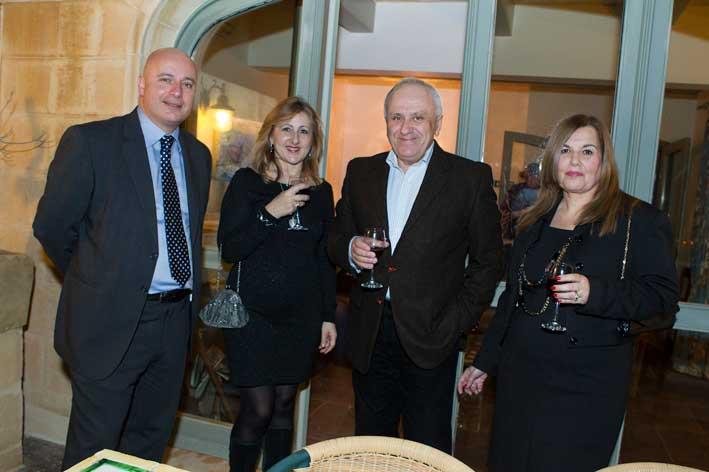
Dr Busuttil, a conservation architect, studied in Florence between 1987 and 1998 and it is from there that he graduated with a masters degree. I recall that the President of France had bestowed upon him the title Chevalier des Arts et des Lettres after he had organised a conference commemorating Vauban (the foremost military engineer of his age) and his influence on Maltese fortifications. Dr Busuttil was also executive secretary at the St John's Co-cathedral Foundation for a number of years. He is at present working on his Ph.D. thesis. I didn't ask him for details though, in the course of conversation he did mention the many interesting documents he is coming across at our National Library, in the course of his research. Dr Busuttil continued to explain as I looked around admiringly at this elegant palace, that its design and rehabilitation was based on the two fundamental conservation principles, in his words, "namely minimal intervention and any additions to be clearly distinguishable from the historic parts."
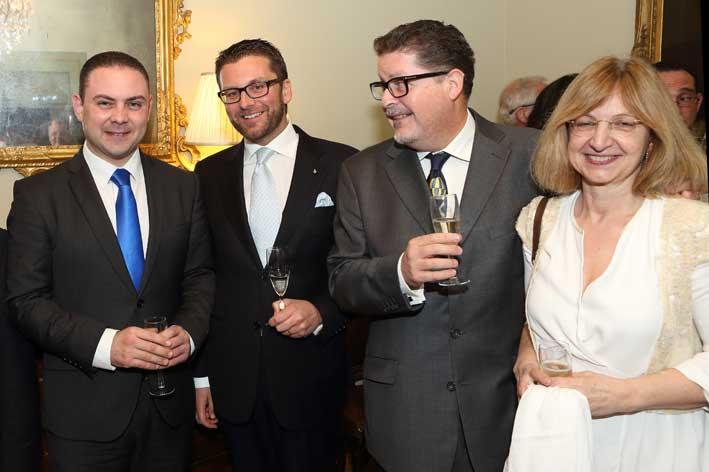
I liked the typical Maltese flagstones which were used as flooring in the main areas whereas a cotto Veneziano was used in the food preparation and dining areas. The sleeping areas have timber flooring "as timber always creates a feeling of warmth whereas various kinds of marble were used in the bathroom floors," Dr Busuttil explained.
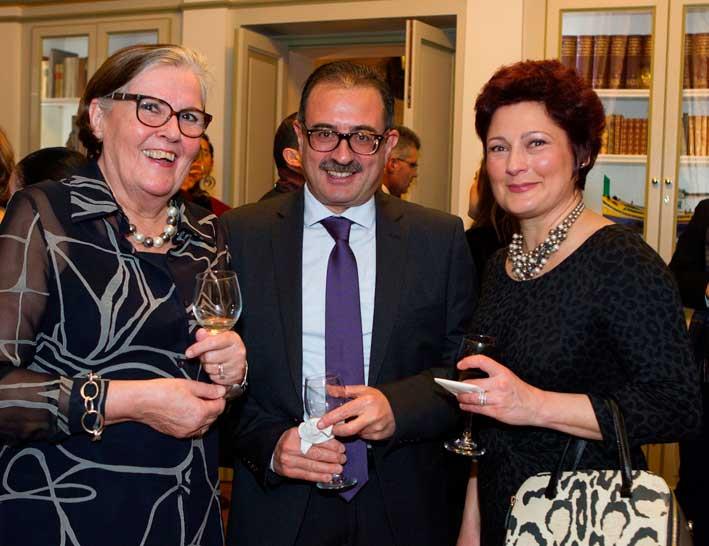
I also spoke to Jankarl Farrugia whom I last remember at one of the Corinthia hotels in St Julian's. He told me that after leaving the Corinthia he had spent time in the Middle East working for a luxury hotel chain. He then set up Hotelogique with Frankie Spiteri. "This is in line with the country's direction to attract quality clientele," he explained. "Our company strives to focus on quality tourism through delivering a personalised service to guests and elegant and finely designed boutique hotels through top local designers and architects." Hotelogique was conceived to provide management services for boutique hotels. "Our company will be operating and shortly launching a new group of hotels in Gozo, tucked in the quaint village squares, as well as a 14 room boutique hotel in the St Julian's area." Mr Farrugia continued to tell me that the Palazzo Prince d'Orange is their flagship property which is already paving the way for Hotelogique to a more varied and diverse portfolio of distinct properties across the islands.
The owners of the Palazzo are Mr and Mrs Wilfred Tops. I spoke briefly to Mr Tops who is Dutch (no doubt this is why their property is named after Prince d'Orange) and who told me that the piano nobile, before it was converted, was used as a location in Spielberg's film Munich which, you may recall, was about the 1972 Olympic massacre and the subsequent Israeli revenge. As a matter of fact 90% of the film was shot in Malta in some 42 different locations, this being one of them.
A small group of us were guided round to all the floors and apartments by Elvira Petroni, once a neighbour, who is involved in this fabulous project and who commented on each suite enthusiastically. This palazzo has truly been lovingly converted. It also has concierge services and personalized guest relations. There are courtyards and terraces and astonishingly, as you would not suspect it looking at it from the outside, lovely views of the city and the harbour, from the back terraces.
I have no idea who the interior designer is, however, I wish to congratulate them. Each apartment has its own character and everything is done with exquisite taste.
I went home with the feeling that I should throw everything in a skip and start all over again using today's colours, sliding glass doors, double glazing. But it is too late for that. Apart from the question of money almost everything I have, down to the last frying pan is full of memories. And I cannot afford to throw those away.