A debate on the future of the euro as a currency saw economic experts warn that a failure of the monetary union would bring about dire consequences unlike anything we have ever seen.
The debate topic – “Does the Euro have a future”, saw keynote speaker Chief Economist of the Institute of International and European Affairs Dan O’Brien, panellists Michael C. Bonello - former Central Bank Governor and Gordon Cordina - Executive Director E-Cubed Consultants take part. A recorded speech by the Minister for Finance Edward Scicluna was also aired.
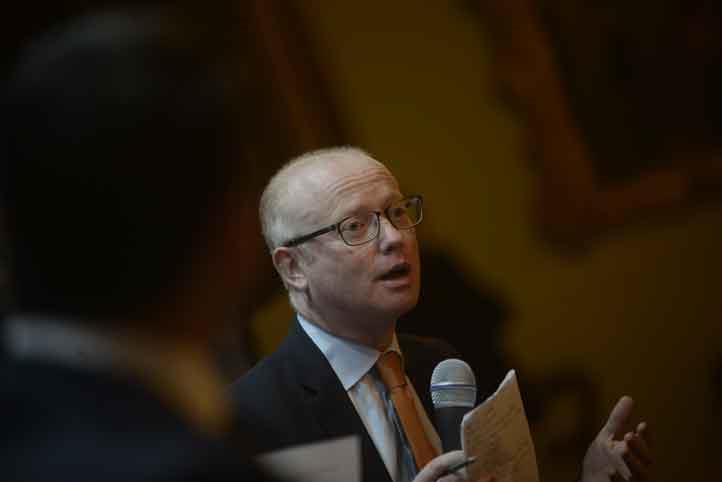
Dan O’Brien said that there is no going back from the creation of the Euro and it needs to be made to work, otherwise Europe could face Armageddon. This was backed by Mr Bonello, who argued that “It is not a question of if the Euro has a future, it is the fact that we cannot afford not to have the Euro alive”. He argues that had Malta faced the crisis with its own currency, things would have been much worse.
“What I believe will save us is that the cost of the Euro area breakup will be worse than anything we have seen so far”. He spoke of several studies about this, predicting disastrous consequences for the Euro area as well as the UK should the Euro area go up in smoke. Mr Bonello said that the Euro has been a boon to an exporting country like Germany and it would suffer as well. “The exchange rate in Germany today would be around 15-20% below should it be using the Deutschmark. So they have good reason to help the Euro keep alive”.
The event is organised by Leading Talks and sponsored by The Malta Business Weekly and the event was held at the Chamber of Commerce building in Valletta.
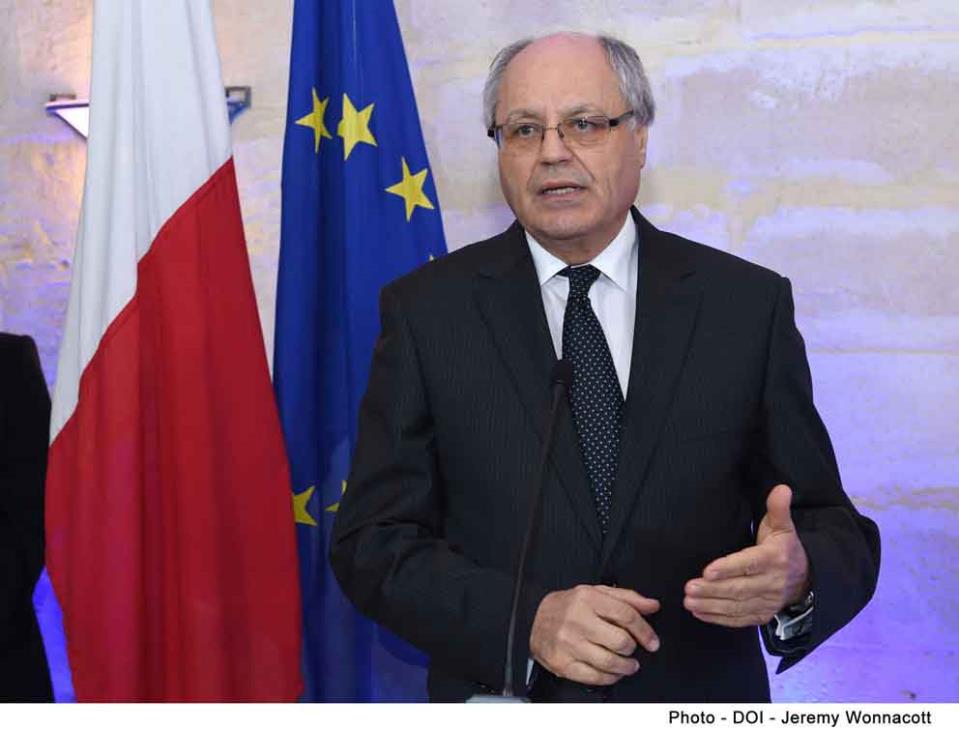
Minister for Finance Edward Scicluna spoke of devaluation and revaluation of Eurozone economies. “This is something that is currently missing. The stronger economies must revaluate, increasing wages, demand etc, in order to help weaker economies within the euro pull out of trouble, and have the value to export and compensate”.
He highlighted that the Euro has had its good and bad times, and during the good times he was never convinced that the Euro was ready to face all challenges, however he is not pessimistic now when people are questioning the Euro.
“The whole principle is not just economic; it is political, and some of the strongest, richest, most advanced countries in the world have come together. They are determined together that they want to see a strong union, and a strong union can come about through strong monetary union and a single currency.”
Dan O’Brien stressed that there is strong political will to maintain the Euro. He mentioned how EU countries stepped in with Greece and how determined countries were to help solve the crisis. There are people who say that the crisis was caused by the euro however I disagree. There was a misallocation of capital by countries, including those like Iceland outside of the Eurozone, where vast amounts of cash entered countries creating a bubble. The Euro didn’t cause the crisis however has proved to be the perfect method of transmission for crisis.
“Had Greece not been in the Euro, it would not have had the transmission effect throughout the rest of the Eurozone”.
Political divisions
The existence of the Euro has created political divisions between the North and South of Europe and without the Euro we would not have seen these divisions. This has led to antagonism and distrust, which is corrosive within the system, Mr O’Brien argued
“The crisis has seen other impacts, where much of the elite are now less convinced of European integration due to the way the crisis has been managed. The crisis has eroded trust in the EU among electorates and has caused concern that it has led to dominance by the larger countries through a power shift, and the way rules are applied in Europe are not applied fairly”.
“In theory having a single currency has benefits, reducing costs of doing businesses for example. Tourism here has done well, so there is no doubt these benefits have been proved, however its hard to see any major gains from having a single currency”.
“Our systems politically and financially have become addicted to growth and we see the politics in countries where there is no growth becomes increasingly difficult”.
He said that some economists believe we are reaching the end of growth. He said the economy today in the Eurozone is still not as strong as it was 7 years ago. “Malta is, however, the second fastest growing economy in the EU”.
He showed a graph of the four big economies within the Eurozone, that amount for 80% of the EU economy, Italy, Spain Germany and France, showing the perception of a North-South Eurozone divide. France and Germany are similarly quite high on performance, however Italy and Spain are in trouble. He stressed that, however, there are some northern countries, like Denmark and the Netherlands, who are not performing well.
Asked about his views of what the Euro would look like following the UK decision to stay or leave, Mr O'Brien said that “we are very worried and there are many reasons to think that British people will vote to leave. If they did, it would cause a a number of problems for Europe. It would lead to more concentration of power in Germany and weaken Europe’s position of power. Turning to labour mobility, he said that the Euro has not seen an increase in labour mobility.
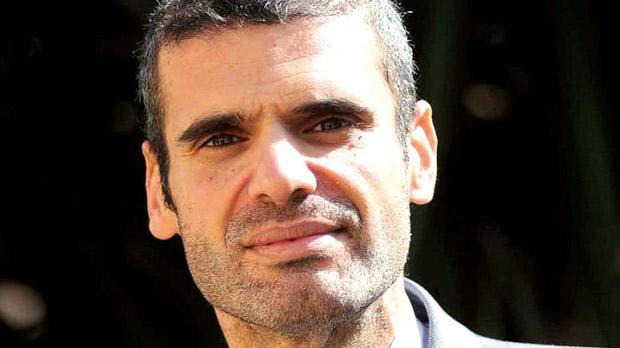
Dr Cordina said that the Euro was not the cause of problems today, however “made us more aware of them. If we find ourselves in such problems, this could be due to the labour market, and the Commission has not been sufficient in transferring jobs to where people are located. Have the jobs shift to people rather than people shift to jobs”. He blamed the credit markets, for pricing credit in ways that resulted in crisis, stating that creditors abused the system of the euro thinking that Germany would come to save anyone who is in trouble.
“Of course growth is crucial. Have we reached a situation of no growth…? Well when that happens civilisation will either collapse or reinvent itself, just as Europe reinvented itself when Europe explored other continents”.
He mentioned investment in areas with the highest potential, stating that we could focus education in areas that are less productive within the EU. “It is from there where we can achieve the largest amount of growth”.
He spoke about the fundamental design flaw of the Euro system. “To put it into simple terms, forming a currency union is like getting married and to come out of it can be traumatic”. Turning to Greece he said that he finds it hard to see Greece leaving the Euro and “hopefully will not be a plausible one. The design flaw is the fact that the marriage lacked fundamental requirements”. He said that where surplus funds can be invested, and could be moved to areas where potential for employment exists.
“In 1959 a famous economist said that governments should stabilise economy, allocate resources to areas where the private sector fails to do so and redistribute wealth. Unfortunately all we have is the stability package within Europe”.
He adds that the Euro has been a good thing, however if there are mechanisms not that do not work correctly, then work in these areas must be undertaken.
A currency without a state
Mr Bonello is worried that thoughts in top economic circles is that “we have lost the plot. The problem is we are too concerned with the here and now and the problem we, and the politicians have, is that we have to deliver today rather than 10-15 years down the line. I don’t share the Minister’s optimism on political will, as the history of the Euro shows political will is lacking”.
“The European Central Bank has been forced to stretch the interpretation of its mandate close to breaking point, however it has been left with no option. We had to take action to save the system. There were times when the system came close to collapse, when markets were frozen. The failure of the euro is mainly due to an inherent design fault. In 1999 it was a bold move, an act of faith, to create a monetary union, with their decision for countries to keep control over fiscal and economic policies. “What you had was a currency without a state. The degree of pessimism at the time was widespread, believing it wouldn’t believe”.
He mentioned the failure of governments to abide by the rules, with countries running 5% GDP deficits before the Eurozone came about, yet the Euro gave them some safety and the element of market discipline in countries like Italy did not exist. “Steps had been taken, like the 3% deficit rule, however the absence of this exchange rate independence, meant that the onus of correction is put on structural policies and it became evident that the political will to abide by the rules was not available in many countries”.
“France and Germany in 2002, persuaded the waiving of the 3% rule as they were both going to exceed this rule and they got away with it. The German Chancellor at the time wrote a letter to the Financial Times saying his government would not abide by rules from Brussels, yet now preaches austerity and abiding by the rules”.
“We have seen the extent to which governments have gone to bend the rules. They have given France another two years to reach its deficit target, without sufficient explanation, for example”.
“The only way to see even distribution of investment and work is if the stronger economies invest more. The logic of a monetary union does not foresee countries permanently in surplus and others permanently in deficit. A symmetrical adjustment is needed. You cannot tighten the belt of countries while other countries have the ability to invest further in the union”.
Mr Bonello said that Should the Euro area implode it would not be pleasant, where austerity would be imposed however trade patterns have changed since the days when Malta traded with the UK. Had we had to face the 2008 crisis with our own currency things would have been much much worse, he said.