Malta is a place of refuge for many people fleeing across the Mediterranean to the Maltese islands to escape suffering and persecution, German President Joachim Gauck said today.
Speaking during an official luncheon held at the Auberge de Castille, Mr Gauck said: “The Phoenician word for the Maltese archipelago, Malet, means a place of refuge. And that is precisely what Malta is again today – a place of refuge for many people fleeing across the Mediterranean to the Maltese islands to escape suffering and persecution.”
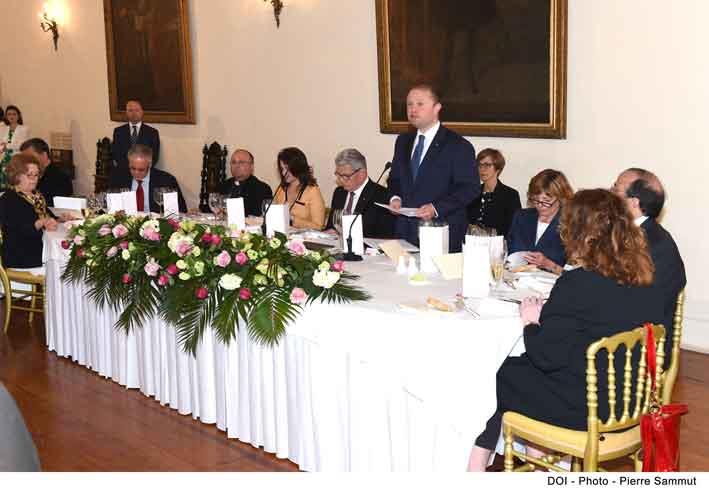
Mr Gauck said that, for this reason, migration and asylum policy issues are extremely important to Malta. “We in Germany appreciate Malta’s engagement and achievements in taking in refugees. Rest assured that Germany is aware that in doing so Malta is facing huge challenges. That is why we need to discuss ways in which to distribute the burdens fairly. And yet, it is the responsibility of each and every individual and of every state to do what it can to ensure that we receive refugees in a humane manner.”
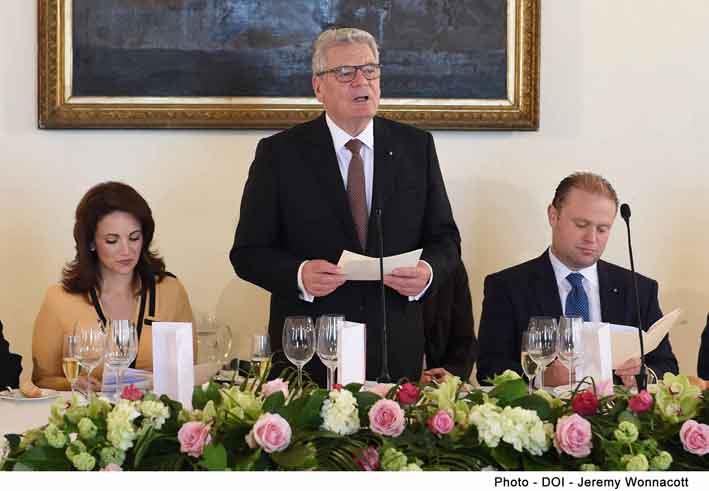
Like in 1945, when Europe was itself a continent of the stranded and displaced, today refugees are seeking safety in a Europe which has pledged to uphold human rights. “Showing these people solidarity is a pan-European responsibility. The aim of a truly European policy on refugees must be to protect not only Europe’s borders, but also human lives on those borders.” Europeans can only meet this aim if they work together, he said.
The German President said one aspect of the debate is the need to look at the causes of the refugee flows as well. “One of these is the arc of crisis from the Maghreb to the Middle East which is posing new challenges to our foreign policy. I have just visited Tunisia, one of our North African neighbours. The barbaric attack on the Bardo Museum in Tunis reminded us all once again that terrorists want to wreck democratic developments. Four years on from the start of the upheaval which swept the Arab world, it is clear that there is still a long way to go to democracy and to political and economic stability. Our partners in the region are dependent on help from the European Union as they make their way along this road.”
We must not get accustomed to tragedies – Prime Minister
Prime Minister Joseph Muscat also touched on the subject of migration. “Solidarity is one of Europe’s most fundamental values. However, this principle should not be limited to the economic aspect. As the EU’s southern-most state, Malta, like our neighbour Italy, is very much in the eye of the storm on the plight of thousands of migrants who try to reach Europe from North Africa by sea. As we witnessed in recent days once again, thousands do not manage to complete their voyage. We cannot and must not allow ourselves to become accustomed to the avalanche of news of more and more tragedies. Last week’s remembrance ceremony for the migrants who perished off the Libyan coast touched the Nation’s hearts and moved the international community. But we cannot stop there.”
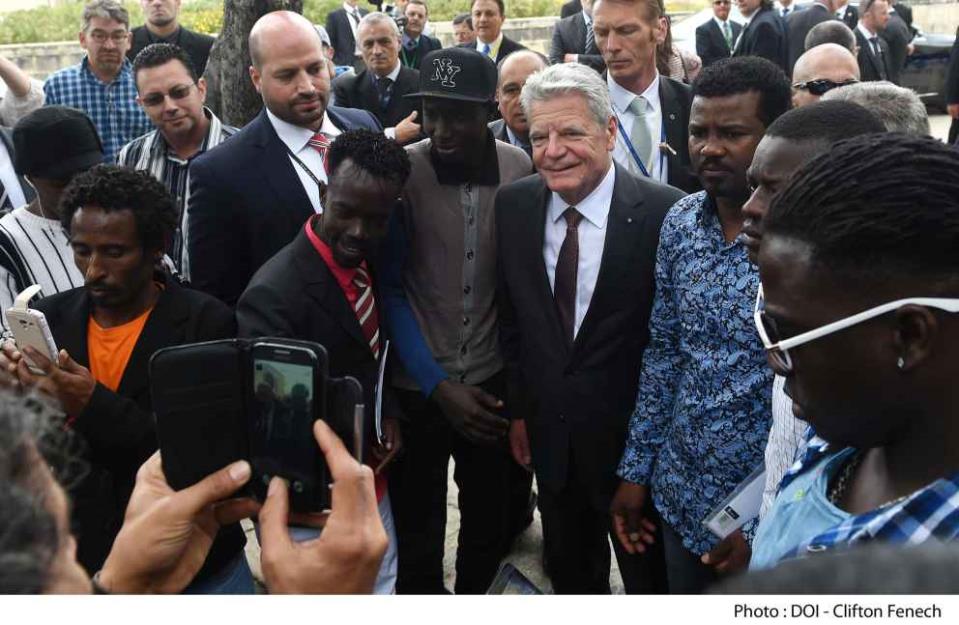
Dr Muscat said Europe needs to focus on Libya and do everything in its power to stop the criminal gangs which have free reign due to the open borders in Libya. “Strong action needs to be taken in order to protect those who are being exploited whilst fighting against the evil and cynical traffickers who seek to get rich at the cost of people’s lives. As EU Member States, we must all do our utmost in order to ensure that the situation in Libya stabilises itself as soon as possible and that migrant tragedies do not become accepted as normal occurrences.”
The Prime Minister said he was pleased that the EU-Africa Summit which is planned to take place in the coming months, will be held in Malta. “My country has a natural vocation to serve as a natural bridge between the two continents. We look forward to a genuine debate taking place and we wish that NGOs working on human rights play an important role in the summit. Meanwhile, we also need to have frank discussions on the options for fair distribution of responsibility towards asylum seekers in the EU.”
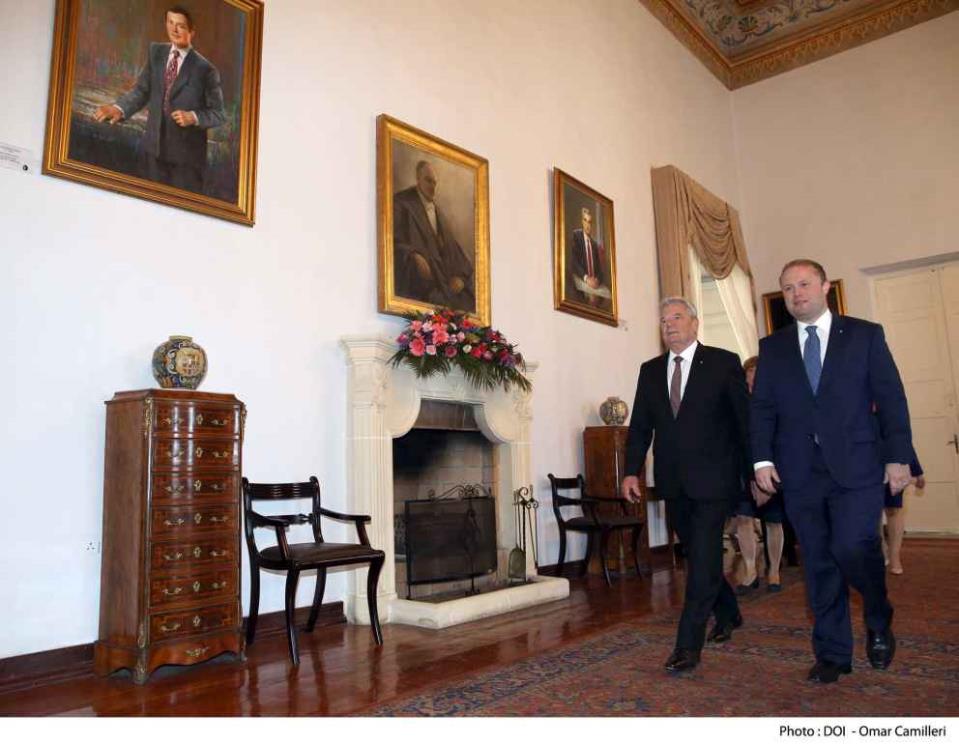
Dr Muscat also noted that that Malta, as Germany, has shown that sound financial and economic policies do pay off. “The government’s economic policies can be summed up in one word : Optimism. During these last two years, a situation of stagnation has been turned around into one of optimism for the future.
Malta is truly an optimistic country. We are surrounded by economic and political instability both in the north and south. Yet we are moving forward, creating jobs and prosperity. The Maltese economy continued on its expansion path with the gross domestic product increasing by 4% in real terms in 2014 over the previous year. The level of unemployment fell from 6.4 per cent in 2013 to 5.9 per cent last year. The budget deficit is shrinking gradually down to 2.3 % from 2.7% in 2013, whilst the level of public debt fell to 68.6% of total gross domestic product from 69.5% a year earlier.”
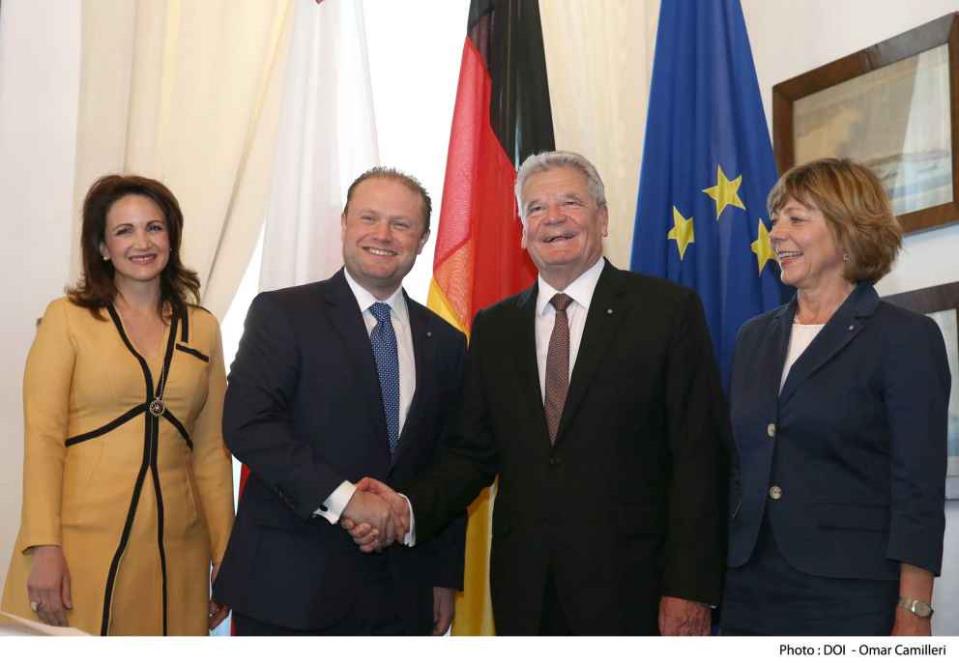
The foremost objective of my Government is the creation of jobs. We are working to implement a further part of our plan, led by the Deputy Prime Minister, which will see the creation of a development bank. This project will consolidate and widen our banking system and assist businesses that have the ambition to undertake new and innovative projects so that they can continue to grow, develop and create jobs.
The Prime Minister also lauded Germany as a country that has played an important part in the development of Malta’s modern economy. “Germany has consolidated its position as one of Malta’s top trading partners, accounting for approximately 10% of Malta’s exports in each of the last ten years, and a similar proportion of our imports in the same period.”