Just under a year ago, on 23 June 2014, Economy Minister Chris Cardona drew a crowd of journalists to the site at White Rocks Pembroke, announcing the call for international expressions of interest with a vision for a number of hotels, all at least less five-star, as well as luxurious housing units to be developed in the area.
A year has passed since that day, and in response to questions sent by this newsroom, the Economy Ministry has confirmed that the submitted Expressions of Interest were evaluated and the list of qualifying proponents has been made public. "The Privatisation Unit is now working on the advanced Request for Proposals".
The 11 business concerns that qualified to submit their proposals, once the request for proposals is launched, are: Mediterranean Leisure Resorts Consortium, Li Guancheng Group, BIB JV, London and Regional Properties, Madliena Tower Consortium, BAK Consortium, Viceroy White Rocks Consortium, Kid Shellen LLC & Riviera Developments, Man Brothers Arabian Group (UK), International Trade Holdings Company KSC and Trebee Co. Ltd.
When the call for EOI was announced last year, the Economy Minister said that the135,600 square metres of the White Rocks complex would only cover 38 per cent of the project area, which is 449,885 square metres, or 45 hectares, in total. Dr Cardona had made it clear that the government was not considering land reclamation as part of this project. He had said that not all the proposed footprint would be built up and all the usual rules and safeguards would apply. He had promised that the development would also need to adhere to rigid sustainable development concepts based on green construction principles in the design, build and operation. In addition, Dr Cardona had said the project would be solely financed by the private sector.
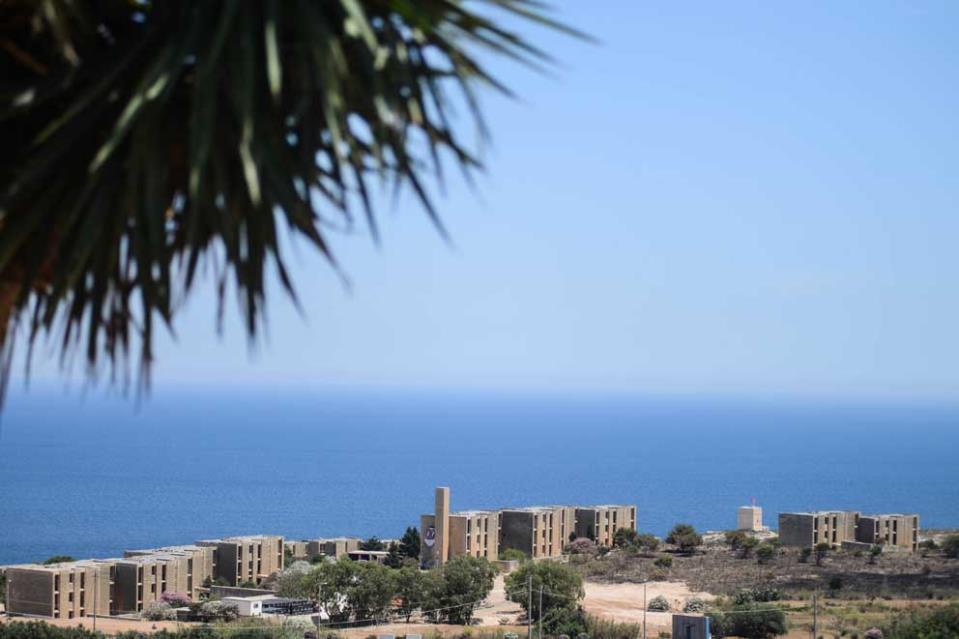
The proposed 449,885 sqm is actually larger than the 369,000 offered in the 1995 development brief and will, in fact, incorporate more ODZ land towards Bahar ic-Caghaq.
Applicants who have expressed an interest were obliged to follow key parameters, including protecting and conserving important natural resources on the planned location (including agricultural land, ecological and archaeological/historical areas and undeveloped coastline). They are also to support the tourism sector through promotion of Malta and to maximise benefits to the Maltese economy through increased investment, tourism and business opportunities and others.
Applicants also have to enhance the planned location through long-term sustainable investment and modernised facilities, retain and improve existing infrastructure on the planned location, retain and improve the existing landscape, use the planned location for quality development which conforms to the Malta Structural Plan and provide safe and convenient access to planned locations, including on-site parking.
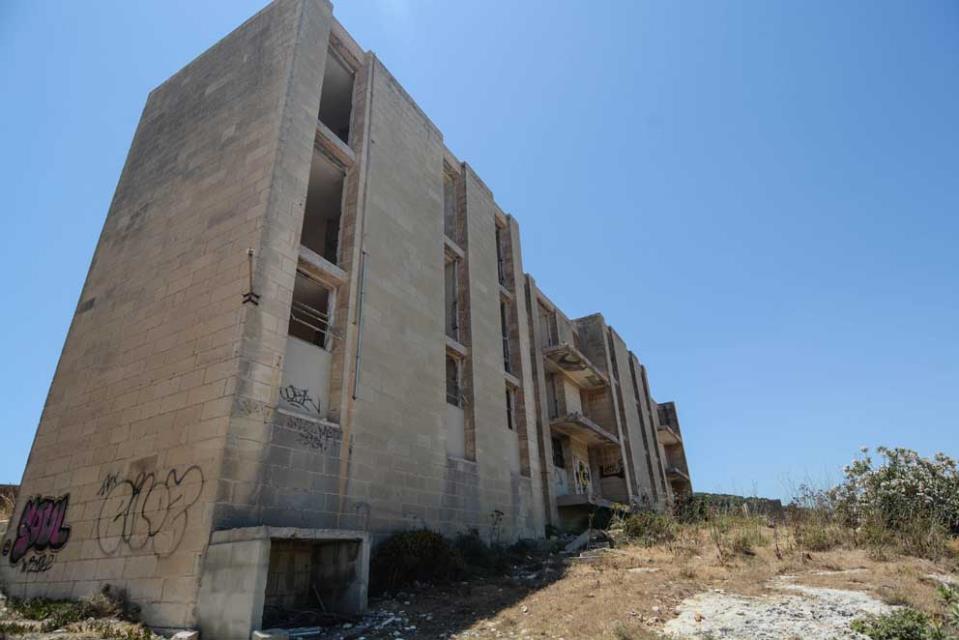
The White Rocks complex includes a sizeable portion of currently undeveloped land, bounded by the existing buildings, the Coast Road and Martin Luther King Street, which leads to the former naval officers' mess.
Last July, environment NGOs expressed concern at the project, and argued that the proposed redevelopment of the dilapidated White Rocks complex should not extend into adjacent areas of pristine garigue and cultivated land, which are included in the land being offered to developers.
Compared with the Zonqor University project, the White Rocks proposed land usage is considerably larger. Were the government to use their original proposal and construct the whole university in Zonqor, 91,000 square metres of land would be used. The White Rocks project, in comparison, would use a total of 449,885 square metres.
White Rocks has been touted in the press as an alternative area for the American University of Malta, and the White Rocks complex and grounds, without the surrounding area, stands at 135,600 square metres, which is a more than adequate size to house the University. However, since expressions of interest have been issued, the government seems adamant that the White Rocks site to be used for this separate project.
As of September 2014, 17 investors had received the international EOI for the design, construction and operation of White Rocks Malta. Each paid a €10,000 non-refundable collection fee. Since only 11 were approved, six seem to have been dropped.
Although White Rocks has proved to be Malta's White Elephant in the past, Dr Cardona pledged during his press conference that the government "is sure" that work would begin during this legislature and had, at the time, mentioned that significant interest had been shown in developing the surrounding area over the years.
Timeline
1960: The complex originally served as the Bahar ic-Caghaq Married Quarters and construction began in 1960, just four years prior to Maltese Independence in 1964.
1979: It was converted into a holiday complex following the departure of British forces in 1979.
October 1995: The Planning Authority released a White Rocks Development Brief that divided the area into three zones. Zone 1 covered the White Rocks site, Zone 2 - the underlying garigue extending to the sea and Zone 3 parts of the adjacent fields.
1999: A public tender was issued based on the Development Brief.
2003: A Consortium had previously expressed interest, but the 2003 general election came round and nothing came of the project. An article written in July 2010 read: "Following the events of 9/11 and the SARS epidemic, a tourism complex alone was not deemed viable and the consortium had asked for amendments to the project brief, allowing for the development of real estate. Prime Ministers Eddie Fenech Adami and Lawrence Gonzi had rejected the request. Subsequently, the consortium never did sign an agreement with the government and the project was shelved until 2010, when the sports complex project was announced"
2010: the government seemed to have changed its mind in 2010, with Prime Minister Lawrence Gonzi suggesting a sports and leisure village, but discussions with the British consortium led nowhere.
July 2014: Economy Minister Chris Cardona launched an Expression of Interest by which interested parties could submit applications for possible development of the site.