Francesco Baranca, the general secretary of Federbet – a non-profit representative body of gaming sector operators based in Belgium - did not mince his words when he said that Malta’s football league championships are little more than an exercise in match-fixing.
To many it might not come as a surprise but such harsh words coming from a representative body of the gaming sector cannot be taken lightly.
His comments to this newsroom came after a report – Annual Fixed Matches Report 2015 – was published by Federbet which goes as far as stating that every week, the European betting houses remove en bloc matches from leagues like Malta, Albania, Cyprus, Montenegro, Bulgaria, Indonesia and Canada – the 10th least corrupt country in the world – because they clearly reflect signs of being fixed.
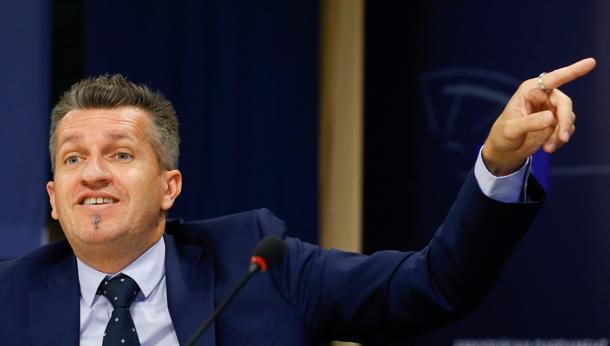
Mr Baranca – who is a jurist specialist in criminal law and served as legal councillor for some of the biggest betting companies in Europe including as head of their legal departments – apart from the fact that he is also an expert witness in a number of match-fixing cases – explained that betting patterns is what gives away that certain leagues are fixed since it is obvious that when the odds get “crazy”, it is a sign that someone is attempting to fix a match.
Mr Baranca pointed out that in all fairness, Malta tried to do something about the situation but it had a minimal effect.
“Football in Malta is dying a slow death. Players go to Malta to learn how to fix a game,” he said.
He also highlighted that two Malta football club officials were named in a match-fixing inquiry being held in Italy after more than 50 people were arrested or detained throughout Italy last month and more than 70 placed under investigation in an operation code-named ‘Dirty Soccer’.
The inquiry Mr Baranca refers to is part of a widespread match-fixing inquiry led by anti-Mafia prosecutors in the southern town of Catanzaro.
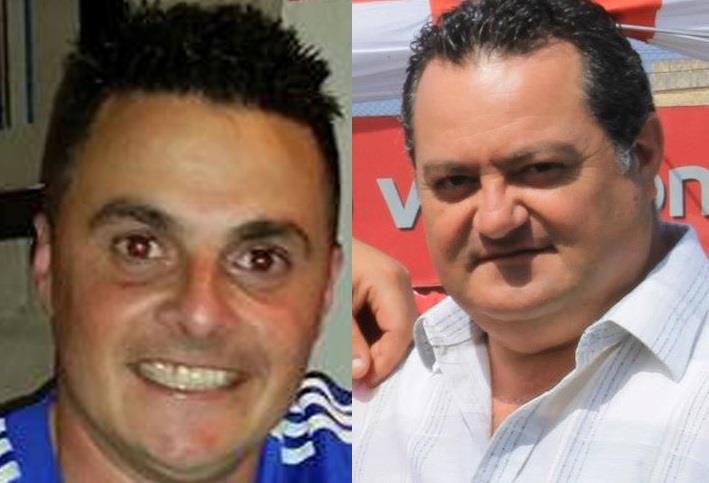
Two of those arrested are Maltese – former Msida FC president Robert Farrugia, 45, and his brother Adrian, 34, Mosta team manager. A third man with a Maltese connection is Felice Bellini, born in Catanzaro, who was an official of Gudja United. All the people arrested are implicated in a match-fixing ring that targeted games in the third and fourth tier levels of Italian football.
Apparently, Mr Farrugia, who is implicated in the Italy scandal, allegedly told an Italian national over the phone that Chinese gamblers had threatened to kill his brother, Adrian.
When Mr Farrugia was contacted by a newspaper for a comment, he said he had nothing to say.
The transcript of the phone call intercepted by the Catanzaro police and published in the Italian press shed light on the rough side of the illegal betting network. In his alleged conversation with Felice Bellini, a former Italian director general of Vittoriosa Stars with past links to Gudja United and Qormi FC, Mr Farrugia allegedly laments the loss of €52,000 on the low level match Aversa Normanna versus Barletta. Barletta unexpectedly won and Mr Farrugia blamed team coach Ninni Corda, who was also arrested in the sting.
It is alleged that Mr Farrugia told Mr Bellini the coach should refund the €52,000 lost on the match because Chinese gamblers were threatening his brother.
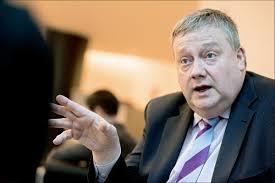
Belgian MEP says enough potential evidence to draw conclusion
During a European parliamentary hearing held in late 2013, the same representative of Federbet had said he was convinced that most championships in Cyprus, Malta or Uzbekistan were fixed. During the same debate, S&D Belgian MEP Marc Tarabella, who is the co-president of the Sport Intergroup at the European Parliament, had said that the EU’s law enforcement agency Europol had detected some 680 suspicious cases of fixed matches between 2008 and 2011 and the numbers were soaring.
“Since the beginning of 2013, 200 new suspicious cases had been identified. The numbers are soaring,” he said.
The matches under the spotlight are mainly those from the preliminary rounds of the Champions League and Europa League between little known teams, often from the Baltic States or elsewhere in Eastern Europe.
In the light of the Federbet report, as recently as two weeks ago, the same MEP told an online Italian journal: “In some championships like Malta or Cyprus… the spectators are the only ones to not know the final result.”
This newsroom asked Mr Tarabella what drove him to make such a statement about Malta and Cyprus. He said that in 2013, 680 suspicious cases of match-fixing was enough potential evidence to draw a conclusion.

The countries highlighted in the Federbet report where it is impossible to bet are Albania, Cyprus, Malta, Montenegro, Bulgaria, Canada and Indonesia.
Following the publication of Federbet’s 2015 report, Mr Tarabella said during a news conference that players found guilty of involvement in match-fixing should receive Europe-wide, or even global, bans.
“Harmonisation of law, to consider that it is criminal to fix a match and to have a law for all of Europe and maybe outside Europe; if a player is condemned in one country, it would not be possible for him to play in another country,” he told euronews in an interview.
Worthy of note is that the Federbet report comes at a time when the beautiful game has turned ugly; FIFA, the sport’s global body, is currently battling corruption allegations.
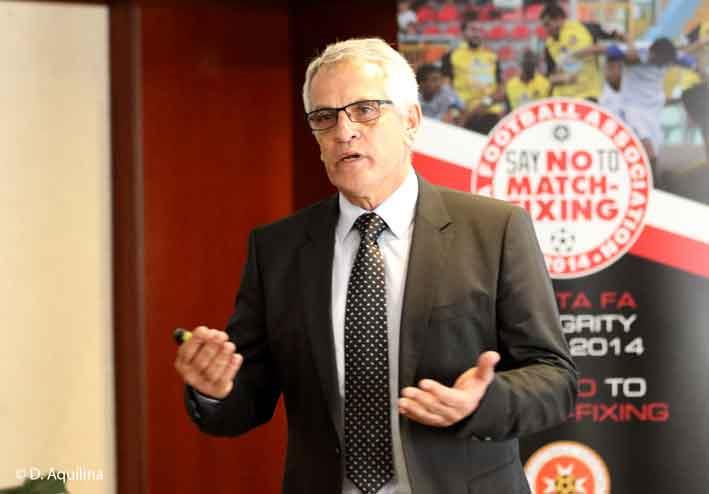
MFA’s integrity officer says much more is needed than the monitoring of betting patterns to combat match-fixing
In 2013, the Malta Football Association, in conjunction with Sportradar, launched an educational programme aimed at tackling match-fixing in Maltese football.
The ‘Say No to Match-Fixing’ initiative was taken by Sportradar whose aim was to better educate players, referees and club officials about all the relevant issues surrounding modern day match-fixing. Sportradar monitors betting patterns in the same way Federbet does.
This newsroom spoke to Franz Tabone – the MFA’s integrity officer – who explained that the initiative started two years ago in conjunction with Sportradar but did not stop there.
He said that as the MFA’s integrity officer, he has taken a personal initiative and has given several presentations to politicians, law enforcement agencies, and sports journalists on how best to tackle match-fixing while giving an insight into what the MFA is doing to combat the illegality.
Mr Tabone said that UEFA has invited him many a time to explain to other countries what Malta is doing in this regard. He said that the campaign to tackle match-fixing has been widened to second and third division clubs, the only difference is that Sportradar is not directly involved.
“Everyone should join forces to tackle match-fixing. What is the Belgian MEP, who cared to mention Malta many a time in the EP, doing to tackle match-fixing,” Mr Tabone asked.

He further explained that the MFA is the only body who has stuck its neck out and has put its integrity officer at the forefront.
“We have seen a heavy decline in match-fixing when compared to two, three years ago. This in no way means that match-fixing is not taking place. The MFA is doing a lot to tackle match-fixing but it is not as rampant as is being claimed.
“The problem is that Federbet is ultimately competing with Sportradar, and this might be why Federbet comes out with such sensationalist claims.
“While it is positive that there are organisations or companies out there competing on whose monitoring betting patterns are the most credible, since this means we have more watchdogs, we need much more than that to combat match-fixing.
“By monitoring betting patterns, one can have indications that a match is fixed but nobody can ever conclude 100 per cent that matches are fixed simply by monitoring betting patterns,” Mr Tabone – a former footballer himself – pointed out.
Mr Tabone also highlighted that he had met with Mr Baranca in Brussels some two years ago to discuss the Federbet report, but Mr Baranca never presented any proof whatsoever on match-fixing in Malta.
He continued: “Mr Baranca – who is a friend of mine – seems to find as much difficulty as anybody else to produce evidence, which cannot be based only on betting patterns. We need hard facts in hand. Witnesses need to come forward, but will they?”
He also emphasised that, ultimately, players are responsible to safeguard the game.