A report by the Group of States Against Corruption (Greco) of the Council of Europe has criticized the current system used by the government to appoint judges, urged a review of the code of ethics for MPs and warned that the country is lagging behind on the issue of party financing.
Greco’s third evaluation report noted the recent scandals involving judges in the past years, which have somewhat tarnished the traditionally acknowledged sound reputation of the Maltese judicial system and have triggered a debate on integrity and accountability matters within the judiciary. “As a result, popular satisfaction with justice as a whole has never been so low. There are certainly some shortcomings in the current system which could constitute problems in the future, and opportunities which have not been fully exploited for anti-corruption purposes,” it said.
“More particularly, the system governing the appointment and discipline of judges is due for an overhaul with the overall aim of instilling greater transparency and independence in such processes; this would additionally help to clarify public expectations about the qualities and standards of behaviour expected from those in judicial office.”
Greco said Malta needs formalised, objective criteria and evaluation procedures for judicial appointments with guarantees of due independence, impartiality and transparency. The same guarantees of independence, impartiality and transparency need to apply also in the appointment of boards and tribunals exercising judicial functions.
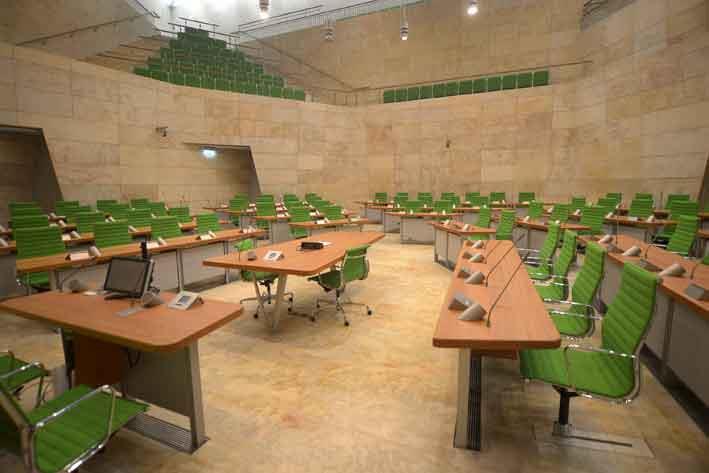
Code of ethics for MPs
The report also urged Malta to review the code of ethics for MPs and the parliamentary Standing Orders related to integrity, ethics, financial/activity declarations and conflicts of interest with a view to adopting improvements that would provide more coverage, consistency and clarity. It said that while a number of good disclosure rules and practices were introduced in recent years, the code of ethics of MPs was now due for thorough revision and update. The current code does not sufficiently cover some topics that one might expect to see in such a code (e.g. third party contacts, misuse of confidential information, misuse of public resources – money, offices, equipment, facilities, staff, etc.) and several of its provisions raise substantial questions and ambiguities with regard to their application (e.g. acceptance of gifts, honoraria, disclosure of personal interests at the outset of parliamentary debates, etc.).
There was also no designated source of counselling or training with regard to the code, and it also lacks an adequate supervision and enforcement mechanism.
It noted that a Standing Committee is currently working to address ethical issues in Parliament; draft legislation is now underway to reinforce ethical conduct and accountability in public life. This legislation would be a step forward that, if adopted, would apply not only to members of parliament in general, but also to ministers, parliamentary secretaries, parliamentary assistants, as well as employees in a position of trust and persons engaged as advisors or consultants to government and any statutory body.
With regard to MPs, Greco said Malta needs to take measures to ensure there is appropriate supervision and enforcement of the rules on the declaration of assets, financial interests and outside activities, and the standards of ethics and conflicts of interest provisions applicable to members of parliament. It said a range of effective, proportionate and dissuasive sanctions needed to be available.
Party Financing
The report also touched on the subject of party financing, noting that Malta had only made moderate progress in this regard. Out of recommendations pending, only one had been implemented satisfactorily. The rest remained partly implemented.
Greco said that the ratification by Malta of the additional protocol to the Criminal Law Convention on Corruption, which criminalised bribery of domestic and foreign jurors and arbitrators, was a commendable achievement and solidified further the national legal framework, which was already subject to important reforms in 2012. It also said that the adoption of the Financing of the Political Parties Act would represent a decisive step in the setting up – for the first time in Malta – of a national legal framework regulating political financing.
Greco said moderate progress was achieved by Malta in respect of transparency of party funding. It noted that the 2013 bill, a private initiative of several MPs, was replaced by the new 2014 bill developed and fully supported by the Justice Ministry and made subject to broad public debate. Nonetheless, since the Act was still not enacted, none of the six recommendations made earlier had been implemented or dealt with in a satisfactory manner, it said.
Greco concluded that the current level of compliance with the recommendations remained “globally unsatisfactory” and decided to reapply the rule concerning members found not to be in compliance with the recommendations contained in the mutual evaluation report.
Government statement
In a statement the government said it welcomed the Greco report and the recommendations put forward. It noted that Greco had recognized the measures implemented in the past few years to combat corruption and the justice reform.
The report also discussed various themes which are both important and sensitive for Malte as they affect the work of the institutions that are most crucial to democracy. The government appealed for objective discussion on these themes.