Prime Minister Joseph Muscat stressed the sensitivity of the discussions that have just come to a close in Brussels, calling them the toughest, longest and some of the meanest discussions he has witnessed and taken part in.
The European Council Heads of State have agreed to see 40,000 migrants relocated from Italy and Greece, as well as 20,000 persons from outside the EU qualifying for protection resettled.
The leaders arrived at a concept where the weight of migration will no longer be burdened solely by frontline states, Muscat said.
"There is acceptance that responsibility lies with everyone and not only frontline states". He called this the birth of a new principle.
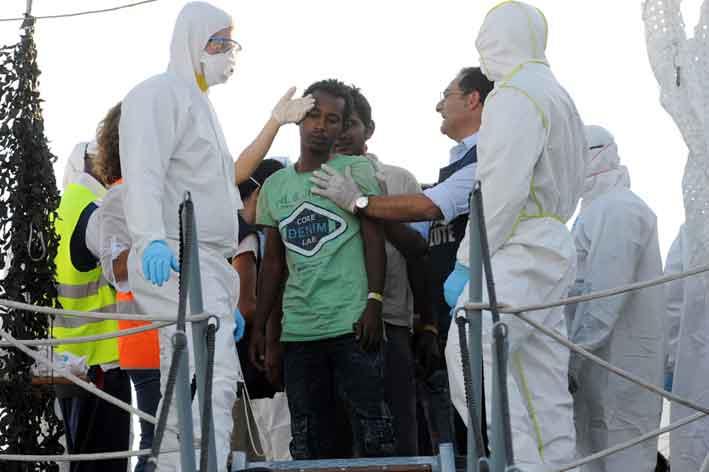
The next step involves looking at the key (the number of migrants each country will host). "What is being said, and we agree, is that it must not be the European Commission who impose these quotas on countries, but rather this be decided through agreement between the countries. We as Malta agree with this position". he said.
As for why Malta is not, alongside Italy and Greece, one of the countries which will see migrants divided among other EU countries, the Prime Minister explained that Malta is not in an emergency situation seeing hundreds or thousand of migrants arriving on its shores. “Right now the amount of arrivals in Malta are sustainable. The number of arrivals are much less than in previous years”.
"Today, considering Malta is not in an emergency situation, we will accept some of these migrants. Solidarity is not solidarity a la carte where one can advocate solidarity when in need. "We have seen a year and a half without any major migrant arrivals".
He again stressed that there is agreement on the concept, that "if we again enter into a situation like back in 2009, where there was a substantial number of migrant arrivals, a situation of emergency, our country can look forward and expect help from the EU".
"I believe it is a substantial change that emerges from the fact that we had such lengthy negotiations. This was not business as usual, not a status quo". The negotiations were no walk in the park, he explained, stressing that a "new EU concept was born today".
As for the setting up of frontline border zones and facilities, the Prime Minister assured that this would be utilised during emergency situations, "where a country would be able to request help from EASO and from Frontex in order for them to help in reception centres. We are not in crisis and to be clear, it cannot be the EU who decides to create these reception centres, it must be the country who asked for support from the Commission. The Maltese government has no intention in this regard".
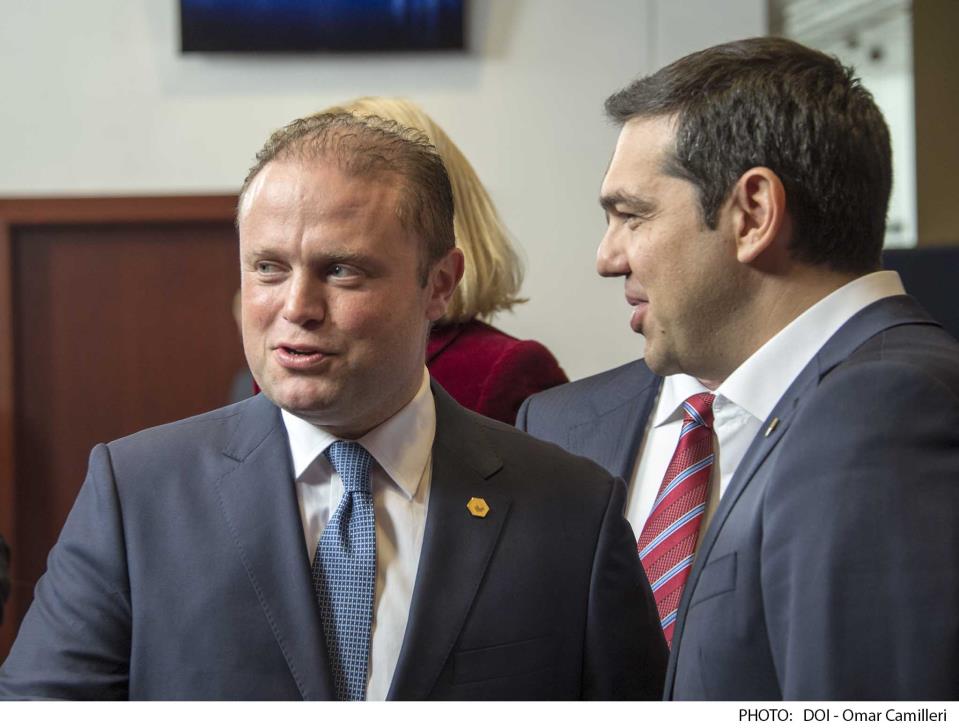
The Prime Minister, asked about the lack of the words 'voluntary' or 'mandatory' within the text in relation to the relocation of 40,000 migrants, said that this is called "constructive ambiguity".
The Prime Minister explained that the politicians' word as well as the Council's conclusions guarantee that member states will take the 40,000 migrants.
"First of all countries are taking part in this process out of their own free will, however they all decided to take part in the process. Some of the member states who had reservations were arguing of the problem with going back to their voters and telling them that Brussels forced them to be involved in such a programme. The solution was for them to be able to voluntarily do so, and all states did with a few exceptions. The exceptions were the UK and Denmark, who have an opt-out clause, Ireland who also have such a clause still need to confirm, Bulgaria who have yet to decide and and Hungary, which according to the Commission have seen a greater influx of migrants than is being seen in Italy and Greece. Is it voluntary, mandatory? Are they voluntarily tying themselves to a mandatory system? I think its semantics. The political decision was to have all EU member states enter into this programme and this is unprecedented".
"When push comes to shove, everyone seeks to protect his or her turf. I was impressed with the example we gave as Malta, saying that although we have suffered the brunt of this phenomenon over the years and given we are not suffering from an emergency, we won't opt out of solidarity, I am quite sure this position changed the mood for a number of representatives which softened their position".
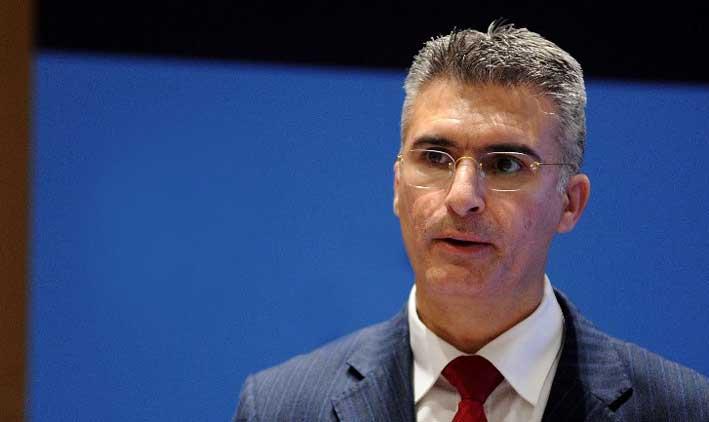
"Interior Ministers and the Commission, by the end of July must come up with the quota numbers. He said that a commitment is within the text which, if a country sees an influx of migrants, our commitments as to how many people we can take would be suspended".
The Prime Minister mentioned that the number of 40,000 from Greece and Italy is very small, given that thousands of migrants land in Italy each day, however this is "a political point. Europe is ready to change the situation that existed until yesterday. Where now there is agreement that division of migrants in cases of emergency".
The next step is to get this burden sharing on a permanent basis, he explained.
On the topic of partisanship, the Prime Minister argued that he is keeping away from political bickering, adding that when the PN was in government, there was a strong influx of migrants and all it managed to achieve was a pilot project.
Turning to the new powers to be given to Frontex, which will give them the power to initiate the return of economic migrants to their home countries, he said that the subject will be discussed during the Malta Summit later this year.
Turning to other issues, he said discussions took part on the report regarding the future of the Eurozone, "where we are saying that yes, evolution of the Euro-zone is needed however our red-lines, where financial questions remain under the control by governments".
"We believe things must always evolve, like the banking union, but it must not be used as an excuse to affect the national competence on taxes and have these powers devolved to Brussels".
Mentioning the situation in Greece, the Maltese Premiere said that moods were more positive this morning, however things are changing by the minute.