I would here like to debate a simple yet extremely vital question in an attempt to comprehend the complexity of artistic creation. The process of creativity is an enigmatic one which has provoked debates and even entire wars. All powers tried and are still trying to censor, bury and even destroy creativity.
For a while now I have been talking on and debating works of art and also the relationship of this sphere of human activity with others; politics, religion, ideology, culture, economics and more. With a scholar friend of mine, Prof. Antonio Sparzani, whom I met in Milan, I have engaged in long discussions on such matters. They were discussions which investigated basic elements of creativity. I also recall similar discussions with my brother Brian as well as with his wife, the poet and pianist, Olga Vasilieva. It is a question which is integral to all artists, and the more one profoundly enters into its deserved depth, the more one loses themselves in a forest without exit; a labyrinth.
What is this force which impels one to create?
We have consistently tried to study how art, in its own particular way, always participates in the identification of certain fundamental aspects which determine the definition of man and his strange existence within this world.
Art together with philosophy and religions always tried to assert ways of how man finds his presence within the world. The three spheres, meaning Art, Philosophy and Religion, are perpetually competing with each other in their attempts to try and make sense to the nonsensical beingness of our existence.
In particular historical periods, one of these three even appropriates the form or the content of the other. Many times art, especially in the contemporary era, takes on the role of philosophy; other times it became a religious action and prayer. In different eras philosophy became religion. Yet one thing remains dominant: that no matter how or where we search, these three spheres are always assisting towards the providing of an understanding on our surroundings, or the lack of.
Art always had a particular relationship with religion because even it has characteristics which involve practical and creative action. It is artistic action which is driven by the creative machine. Creativity is an integral and fundamental element in every artistic action.
Art, one could say, for whoever believes in the creativity of existence and the cosmic universe, is a reflection or a copy or an imitation of God's divine act. As God/divinity was the fount for the beginning and the end, is art imitating this divine action. The artist is god or like god, or an imitation of god. Whatever this creative action, meaning to create something out of nothing, it pertains to the mysterious and divine world.
When Matisse was asked if he believes in god, he quickly replied; "Do I believe in God? Yes, when I am working". When someone enters into this dangerous world of artistic creativity, he will, whether he likes it or not, encounter these existential questions and he needs to be prepared so 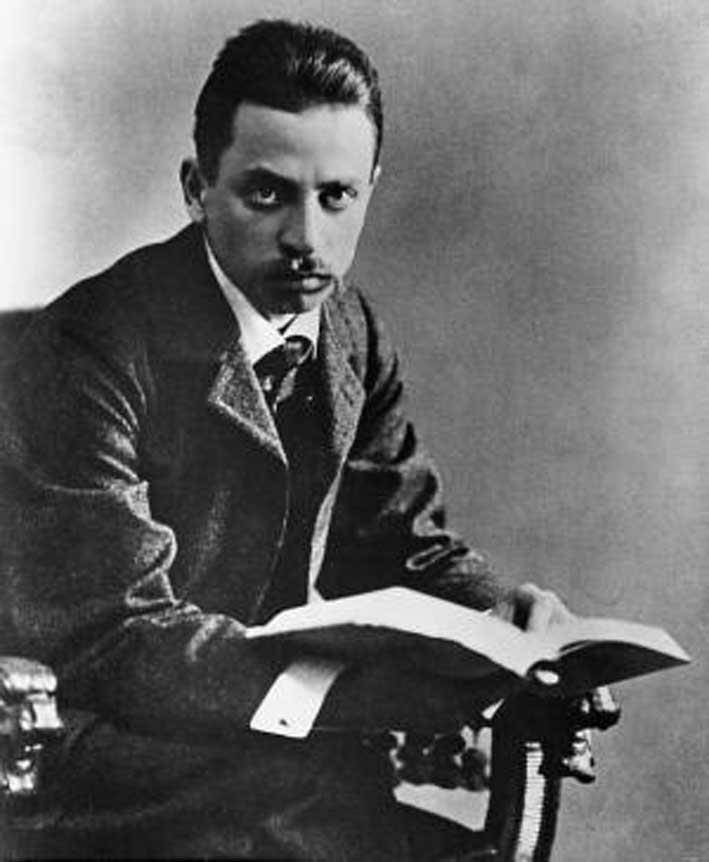 as to confront them.
An artist always needs for his work to challenge the act of divine creation with his own artistic actions. Without this binding chain between art and the divine (whatever it is, whether one believes or not) he will never manage to create and discover. Yes, one can paint pleasant souvenir images; one may even take things seriously and paint things which require great virtuosity and talent. However, an artist is an artist because his work is manifest in human existence. Without this element, one cannot create art but instead produce sugar-coated titbits, sweet enough to hang in our living rooms surrounded by an overabundance of culinary indulgences.
When I criticize works of art and when I discuss art during my lectures within the Department History of Art, University of Malta, it is within these parameters which I place a particular artist or specific works. Many are taken aback because they are not aware of this.
The fight of the artist is to be a voice of human existence, both when it is defined with religious language and even if not. If art is not a voice of human existence, then it is not art at all.
Yet for a human to create and take this transcendental leap, there is a high price to pay. The famous Salieri rebelled against God after having renounced everything to the divine Creator - he gave him chastity and humility, and in His name, relinquished married life, pleasure and great luxury - with the agreement to be the voice of God. Obviously, he could not comprehend how this same God chose an unhinged person, a sinner, trouble-maker, and 'monkey' like Mozart to be the eternal voice of human existence. So Salieri throws the crucifix into the fire. The composer realized that God chose Mozart to be His voice, and not Salieri, although it was Salieri who renounced all in God's name.
The forces of creation are not only strange but also cruel. The ugliness of this is, as said by Salieri to God, that "Since you chose this monkey, why did you make me conscious of his divine genius?" A double punishment.
Rainer Maria Rilke, a great German poet, in correspondence with the love of his life Lou Andreas-Salomé stressed on the great importance of creativity and the role which the artist much play. In fact he defines artistic creativity as the only form of real life, because we are solely surrounded by illusions of quotidian life. All of reality is found in the creation of the work of art. He tells her that it is something necessary for the everyday to be lost and melt into the act of creativity. The house becomes a place in which 'divine' action is being created, friends are nothing but waves. According to Rilke, the only reality is poetry, within which he finds true reality "much more than all the realities which revolve around us". And it is in this creative reality which he desired to sink to build that which he termed 'internal life'.
There is great need for creation to be the unique centre of an individual's activity. In this way, the world would begin to be seen with a new lens and will be drawn closer to aspects of our existence.
The artist, in other words, needs to lose himself in a creative trance, that which Bergson calls 'élan vital'. This is a force which throws our conscience back to the beginning of the existence of man and leads us unknowingly to the 'consciousness' of the archetype, to the first forms of our thought when the internal state of man coincides with the state of the surrounding objective world. The artist needs to revive the archetypes of the past.
Without this, we will continue to paint luzzi and bell towers which mean nothing.
Article edited and translated by Nikki Petroni
Giuseppe Schembri Bonaci is the artistic director of the Mdina Cathedral Contemporary Art Biennale which will be held between 13 November 2015 and 7 January 2016. APS is the main partner of the Mdina Biennale