When leaders push countries to the brink and then pull it back at the last minute they create a situation that produces much drama and short-term popularity but really does not work, Opposition Leader Simon Busuttil said this morning.
Speaking at the Helsinki 40 conference, Dr Busuttil said the situation in Greece is hugely worrying with just hours remaining before Greece potentially becomes a bankrupt country dropping out of the euro and turning into a humanitarian problem.
We are seeing in Greece what populism and brinkmanship can bring to a people – populism and brinkmanship really solve nothing. Hopefully, we can get some good news about this tomorrow during the European Council meeting.
Another long-standing challenge in the Mediterranean is Cyprus, still divided after 41 years, a division that will soon have been longer than the post-war division of Europe. Thankfully, there are now some commendable attempts at getting the two sides together, Dr Busuttil said.
The Palestinian problem is constantly in and out of the news and is, again, one of the long-standing challenges in the Mediterranean with reverberations throughout the world. It is difficult to speak about the challenges faced in the Mediterranean without underlining the need for renewed impetus to resolve the Israeli-Palestinian conflict.
We need to reposition the discussion back towards a two-state solution, with both States living within secure and guaranteed borders, recognising each other’s sovereignty and the right to peaceful coexistence. A good dose of the Helsinki Decalogue can guide a new peace process in the Middle East, he said.
The conflict in Syria has compounded the problems in our region being a humanitarian crisis in itself and hugely affecting immigration. The latest statistics show that four million refugees have escaped from Syria in the last four years, mostly to neighbouring countries. This is another seemingly intractable problem that affects all the Mediterranean and Europe.

Closer to home, almost literally on our doorstep, we have the crisis in Libya. This is where we can contribute from a position of trust and where we also stand to benefit if progress is achieved. Malta’s size can make it a trusted partner with our long and fruitful relationship with Libya. Malta needs to use this position to build bridges not only between the different factions in Libya but also between Libya and Europe.
We Maltese are in a unique position to help both sides within Libya and internationally. We are also in a unique position to benefit economically and security-wise of any improvement there should be in Libya. But in the guiding light of several of the principles of the Helsinki Accords, it has to be the Libyan people who should be trusted to be masters of their own destiny.
The Helsinki spirit can stand us in good stead in conflicts that are not very close to us but that affect us in an interlinked world. This time last year in Ukraine, a Malaysian Airlines plane was shot down in the Donetsk region of Ukraine. This was a great human tragedy with the loss of 298 lives in what certainly appears to have been a terroristic act in mainland Europe. The conflict in Ukraine challenges us to stand up for the respect of the territorial integrity of Ukraine.
The three great challenges we face do not emanate from a specific nation-state but sew a thread through many states and regions; my view is that the three great foreign-policy challenges we face are migration, terrorism and climate change.

Migration is a huge challenge in the Mediterranean with a wave that envelopes Europe from North Africa and Syria. We Maltese are leading the debate on a European Union platform. We are telling other European states that not being in the Mediterranean does not exonerate them from responsibility.
It is very disappointing that the European Council in its latest summit specifically about immigration didn’t arrive at a mandatory solution. It is even more disappointing that the voluntary mechanism does not even cover Malta and Malta is now taking around 300 migrants from other European countries rather than having its own burden alleviated. It is clear that the summit did not take into account the cumulative effect of a decade of disproportionate numbers arriving here as well as the size of our territory and our very high population density.
Even though one might draw some comfort from the conclusions of the summit as a step forward, we need to keep up our efforts to find a last solution.
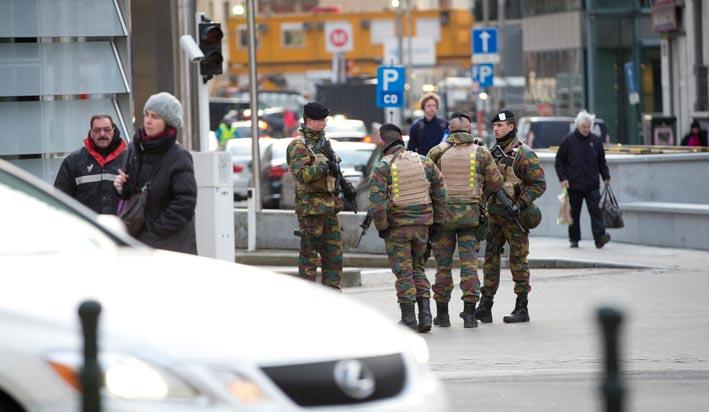
Terrorism has characterised international relations for a long time now, but it is now becoming ever more sophisticated using new means and technologies that make it an even more difficult to pin down and prevent. We cannot fight terrorism on our own. Terrorism needs a regional as well as a global response to terrorism, he said.
But we can certainly play our part. Joining like-minded states in a non-military capacity does not undermine our neutrality. You cannot be neutral between the fire and the fire-engine.
For a long time, we saw terrorism as a far-away phenomenon affecting others. But the new media, the conflicts in Iraq and Syria, the crisis in Libya, and the recent terror attacks in France and Tunisia have brought terrorism much closer home, Dr Busuttil said.
Climate change is one of the biggest challenges of our time. Since the 1960s, Malta has been at the forefront of the concept of the common heritage of humankind when we proposed the seabed and the climate as such. The common heritage of humankind is an extension of the common good we need to defend.
Climate change fuels migration. It also affects tourism and low-lying coastal areas. Again, we cannot but engage with other states throughout the region and the world to face this challenge in a spirit of cooperation built on trust.