Mr Justice Giovanni Grixti today called for a radical change in prosecution procedures in criminal cases, saying that magisterial inquiries should start being conducted by magistrates specifically appointed for this purpose. At present, such inquiries are led by the same group of magistrates presiding over criminal cases.
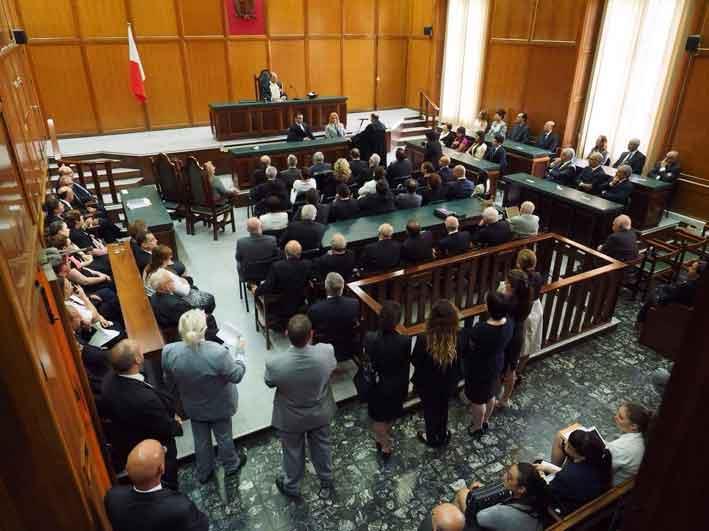
Mr Justice Grixti was addressing his first sitting, after he was appointed judge earlier this year.
The proposal by the newly appointed judge was drafted as a bill back in 1998, but following a change in administration, it was never implemented. The judge also suggested that prosecution of criminal cases should start being led by the office of the Attorney General and no longer by the police. He said that prosecutors are being overloaded with work, causing 'unacceptable delays', adding that inspectors should only serve as a witness and not a prosecutor, spending their time in court in the mornings.
The judge said that while he agrees with the recent practice of publishing statistics on the work of members of the judiciary, these could serve as an odious instrument, if not accompanied by logical explanations for the delay in pending cases.
He explained that at times, members of the judiciary inherit cases from others who have retired or have been promoted, and as result their number of pending cases shoots up in a matter of days, even if the member of the judiciary had made it a point to achieve a steady pace in completing cases.
Such statistics, he said, should be accompanied with the relevant research which explains the reasons for the delay, whether the cases were inherited and what can be done to prevent a similar situation. Mr Grixti said that during his time as magistrate, he inherited over 700 cases, some of which dating back to the 1970s.
Mr Justice Grixti lauded the 'athletic' energy by which Justice Minister Owen Bonnici is leading the ministry, implementing what he described as historical reforms. He said that all stakeholders need to be welcoming of such reforms and ready to change the way in which things work. " It is unacceptable to be resilient to change, simply to continue doing things as they have always been done," he said, referring to his own experiences as an example.
He questioned the use of long-established procedures of using cardboard folders and stamps for notifications purposes.
As from his sitting as magistrate, Mr Justice adopted a system in which appointments are fixed and concerned parties no longer had to appear at court at 9, only to wait for hours before being called in. "This system needs to be rule and not the exception," he said.
The judge also called for legislation to be drafted using the Maltese language.
Background
Giovanni Grixti obtained a degree in Doctor of Laws in 1989 and a year later, he graduated Master of Laws in International Maritime Law.
He joined the law firm Farrugia, Gatt & Falzon, and was engaged by the Ministry of Environment and Local Councils as a legal consultant. In 1992 he was appointed Chief Legal Advisor at Air Malta.
He served as magistrate for 19 years after being appointed in 1996.
He also worked as a guest lecturer at the University of Malta and as an instructor in Aviation Law with the European Pilot Academy and Malta School of Flying.
He drafted various legislations including the Local Council White Paper and the International Convention on Civil Liability for Oil Pollution Damage.
He has three children, Stephen, Angela and Louisa.