The Opposition may file a legal challenge against the government’s decision to appoint the Electoral Commission as the auditor and regulator of party financing because the same commission is made up of political party representatives and the government enjoys a majority, PN MP Chris Said said this afternoon.
Dr Said was addressing a press conference along with PN MP Claudio Grech following an earlier press conference by Justice Minister Owen Bonnici.
Dr Bonnici said the party financing bill, when enacted, will put in place a number of restrictions on party donations.
Addressing a press conference in Valletta, the minister said that the current situation is "a free-for-all" and the new bill would transform it into a more serious and organised one.
Once the bill becomes law, all political parties must register with the Electoral Commission and would lose their licence if they fail to present a candidate in two subsequent elections.

No single donor can donate more than €25,000 in one year, and a close eye will be kept on donors trying to give more via different channels.
Anonymous donations up to a maximum of €50 will only be allowed during political collection activities, he said.
Donations of between €500 and €7,000 will need to be registered however parties will not be obliged to name these people to the commission, unless it asks.
Donations exceeding €7,000 must be registered immediately with the Electoral Commission.
Candidates may spend up to €20,000 per district they contest, while spending on local council campaigns is capped at €5,000. MEP candidates may spend €50,000 over the whole of Malta and Gozo.
The Minister called this bill another milestone, following the Whistleblower's Act.
The Committee stage in Parliament ended last night, the Minister added, explaining that the next step is the 3rd reading.
The law is planned to come into force on 1 January 2016, with parties planned to register with the Commission by 30 June.
Several PN amendments approved
The former Secretary General said the commission is made up of people chosen by the two main political parties and the commissioner is appointed by the government. He argued that the Electoral Commission has checks and balances at every stage of the electoral process in the form of representatives of both parties but the same could not be said for the role of party financing. Dr Said insisted that certain information could be leaked to one of the political parties, citing the example of a draft of a PN appeal was leaked to the PL from the Electoral Commission.
The PN, he said, had proposed vesting the party finance auditing powers to the Office of the Auditor General or the Ombudsman, which enjoy trust from both sides of the house. Dr Said also noted that the smaller parties were not represented on the Electoral Commission. “We are ready to challenge this decision if it puts one party at a disadvantage,” he said.
The PN would also considering challenging the law on the grounds that income from properties rented at very low rates from the government would not have to be included in the party accounts. “The PL should give back the properties it stole form the public,” he said, arguing that the PL made thousands annually from these properties. The PN, he said, only owned a handful of state properties and this created an imbalance.
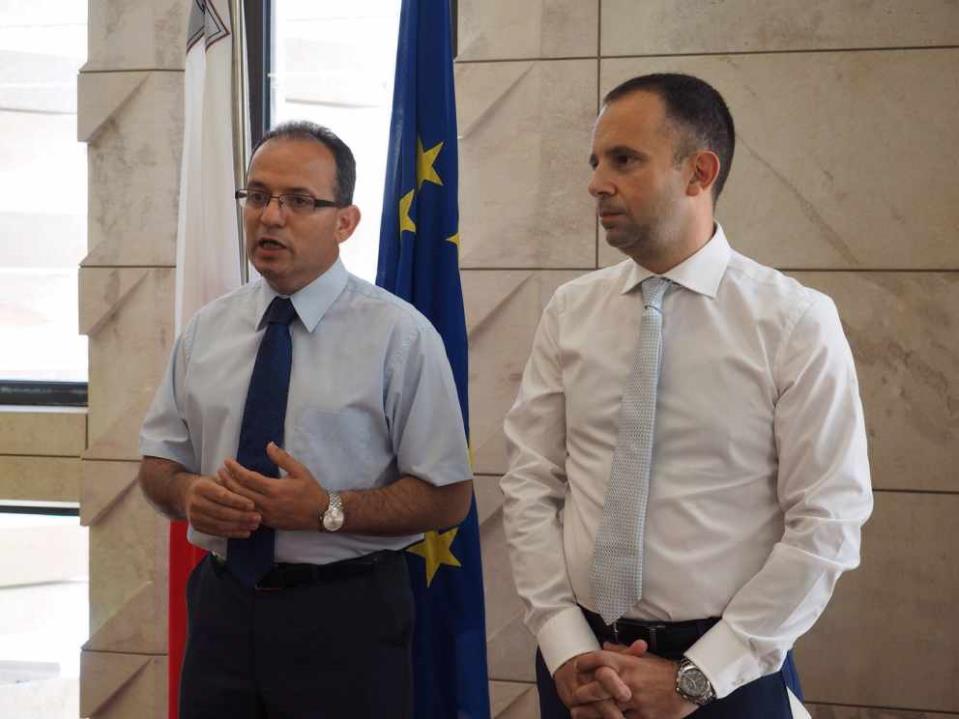
Chris Said said the Opposition had played an important role in the party financing debate and many of its amendments had been approved. Other important ones, however, were rejected.
Claudio Grech said the PN proposed that the standards for party accounting and book keeping should be on par with international levels. It also proposed that financial statements should be published online. Another important amendment was to ban donations from organisations whose ultimate beneficiaries were unknown. The committee that debated the bill, on the other hand, was assured that another law – the Foreign Interference Act – barred donations by foreign investors. Donations from entities in which the government has an interest are also banned.
The PN had also suggested increasing candidate spending to €20,000 and allowing an extra €5,000 if that candidate was contesting two districts. The government, however, overruled this and candidates can now spend a collective €40,000 on two districts.
Another proposal was aimed at limiting donations to political parties. At present individuals can give donations of €40,000 a year to political parties. “30 people could finance an entire election campaign between them,” Mr Grech said. The amount has now been reduced to €25,000 but the PN believes this should be lower.
Electoral campaigns are essentially marketing campaigns and this could put parties with deeper pockets at an advantage, even if they were not the best choice to lead the country, he said. The PN suggested capping general election campaign spending to €2 million.
Dr Said interjected, saying that no one believed that the PL spent just €1.5 million on its 2013 extravagant electoral campaign. The PN had claimed spending €2.2 million on a much more austere campaign.