I would like to talk about three friends who, in their own way, had an important effect on me. One departed from this world some years ago, Carmel. Lillian, on the other hand, continues to write poetry until today. Pino was struggling against death. Today he is on the road to recovery.
One has friends who are greatly important to a specific time in one's life. They affect how one reacts and thinks, how one sees their surrounding reality. It is as if such friends become a reference point as to how one would continue to develop. Albeit periods of separation, the relationship would be so intimate that the distance is not felt. They remain an integral part of your life even when - as happened with Carmel - they pass away.
My friendship with Carmel began almost contemporaneously to my friendship with Lillian. Both were older than me. Carmel was strongly drawn to my visual art, whilst my thoughts and rebellious praxis brought me closer to Lillian.
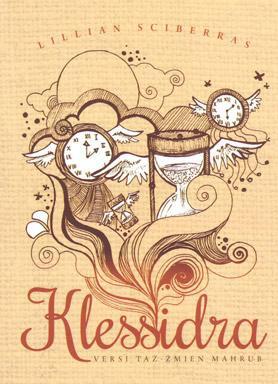
A week ago I visited my friend, David Bezzina, who is the manager of Horizons/Outlook and who published my book Shostakovich, Britten, Stravinsky and the Painters In Between: 1936, to discuss a work on Maltese għana. On my wait out he asked me to wait a minute and quickly brought me a couple of books: the book by Paul P. Borg Maqful fil-Ħabs ta' Ġbini: Carmel Attard and Klessidra: Versi ta' Żmien Maħrub by Lillian Sciberras. David's gesture caught me by surprise. Of course, David was unaware of my past. I thanked him and agitatedly drove home, anxious to read these two books.
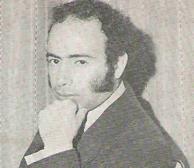 I had met Carmel at activities organized by the Moviment Qawmien Letterarju and also, later on, as a regular customer at Café Renoir in St. Julian's, where I used to exhibit some of my paintings. In fact, he had actually written some literature on my works. Just at the beginning of this friendship, Lillian, with her beautiful calligraphy, had helped me publish my first series of collected poems. Instead of using standard font, I asked Lillian to write the whole book in pen with her checkered diamond calligraphy. The book was called Jeans u Ħmieġ.
I often went out with Carmel. Beautiful outings, replete with sadness due to his dire health condition, if it can be called so. He would spontaneously quote his own poetry wherever we went. Sometimes we were even kicked out of 'civilised' places because he used to cause a commotion - something truly beautiful to me - when he would recite his own poetry regardless of whether he was disturbing the meal of those who were eating dinner near us in a restaurant. I remember the angry faces which turned to face Carmel as he stood on the chair of a cafeteria in the Preluna and began to recite a masterpiece of epic poetry on his surname; Attard. They threw us out and he acted as if nothing had happened: he continued to recite the verses amorously. The same thing happened in Gozo whilst eating at a restaurant in Marsalforn.
Lillian and myself - if not at the exact same time, then almost so - became very active in the Maltese Left movement: in the Labour Party of that time, in the Marxist cell, in the League of Social Justice, the Socialist Front, the Communist Party and many others. It was a time of beautiful unrest, when we believed we would change the world for the better with idealist revolutions. And time continued to pass us by.
Lillian's book called forth beautiful, lyric nostalgic memories and so did Carmel's, although his was tainted with sadness and frustration. It greatly reminded me of the futility of our existence. Carmel always provoked deep thoughts on the 'here' and the 'beyond'. So did it remind me of his strange anger when he called me to drive him up to Mellieħa to collect the radio which his friend had 'stolen' from him. Or when he would suddenly ask me to take him to hospital, even in the middle of the night. He was obsessed with my Ford Escort and would sometimes ask me to take him for a drive around Malta. And I would be immersed in a dream of continuous poetry whilst driving.
 As I was reading the works of these two friends and reminiscing on our days together, the news of Pino's weakening health reached me. A severe disease without ending. Great anger, and all for nothing. Courage is the only weapon against this endless battle. One tries, and tries and tries. And swears. Silence.
He called me from Turin as I was mounting my exhibition together with two other artists at the University of Malta, Valletta Campus. And I told him, "Do not worry, Pin! It is nothing. There is much left for us to do together.
Fight, Pin." And as is typical of me, I began telling him stories to make both of us laugh and I reminded him of an argument we had some years ago on bicycle races. And we laughed heartily over the telephone. I doubt he noticed that I was keeping my true feelings to myself. And probably so was he. A telephone line can hide a lot. I calmed him down by telling him that these days illnesses like his are cured. Always. I was blatantly lying to him.
However, despite such lies I still believed that Pino would win.
And like Proust a film passed in front of my eyes, and the smell of memories: Dr. Faustus, Mistero Buffo, L-Internati, Rumpelstilstkin, Tycho, Għabex, and his brilliant smile, with his brilliant white teeth, the morning espresso in his Milan apartment, running in Turin, pizzas and spaghetti.
You are cruel, Pin, to have given me such a present at Christmas time.
I went onto YouTube and searched for Maria Farantouri, DROMOI PALIOI, with the music of Theodorakis, words by Manolis Anagnostakis:
Old streets I loved and hated endlessly
me walking under the shadows of the houses
unavoidable nights of homecoming, and the city is dead
I find my insignificant presence in every corner
make me meet you once lost range of desire I am too
Forgotten and untamed I walk
holding a flickering a spark in my wet palms
And there I was walking through the night without knowing anyone
and not even one, not even one knew me, knew me....
Believe me Pin, because of you I listened to this song continuously, for a whole night, until the sun began to emerge.
I have loved and cared for you, my friend. You should not have done this to me! You should not have invented this pantomime. You had no right. Now please stop fooling around.
The interval is over now, Pin. The second act has begun and there is long left until the ending.
Article edited and translated by Nikki Petroni
Giuseppe Schembri Bonaci is the artistic director of the Mdina Cathedral Contemporary Art Biennale which will be held between 13 November 2015 and 7 January 2016. APS is the main partner of the Mdina Biennale