The National Blood Transfusion Service (NBTS) head Alex Aquilina said that Malta’s blood bank safety record is excellent and among the best in Europe.
He was asked by this newsroom how he would rate our blood banks and whether it is totally safe.
“Blood is screened for the diseases we know about. Each donation is screened. However it does not mean that checks are done for all diseases. Even when we look out for diseases, every test has its limitations.
“Blood is never 100% safe, though it is very safe,” he assured.
When asked what screening measures are in place to ensure that blood donation is safe for the donor and is unlikely to have any negative health effects, he said all items are disposable. “The donor is medically assessed prior to every donation, besides all members of staff are highly trained and fully certified.
“The safety of blood has never been better through the use of advanced technology. Safety does not only depend on testing, but also on careful donor selection and a good quality system covering all aspects from donor selection, bleeding, testing, processing, storage and distribution, and the clinical transfusion practice,” Dr Aquilina continued.
An interesting fact which came out in our interview with the blood bank’s medical director is that “cancer patients cannot donate blood except in rare cases”. Not many people know this but there is a theoretical risk that cancer can be transmitted by blood transfusion. However, there is no evidence to prove this. It is more of a safety measure.
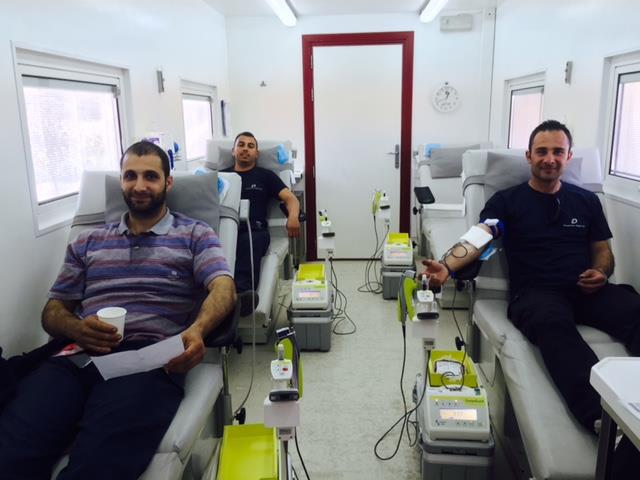
Who can donate blood?
Mr Aquilina explained that as a principle, adults who are healthy and live a healthy lifestyle may donate blood. Donors are differed if there is a risk to them through blood donation or if there is an increased risk to the patient.
Which brings us to a topical subject. Does he agree with the fact that homosexuals cannot give blood?
“The issue is based on risk assessment,” he said. “As a rule, if one belongs to a ‘high-risk’ group, people in this group should be deferred. This is clear in the blood directives (European Commission) and local legislation.
“Risk is a complex science and depends on multiple factors not least is the local epidemiology and relevant disease distribution. Risk also changes with time and science,” he added.
Recently, Parliamentary Secretary Chris Fearne said, when asked, that he appointed a number of professionals to assess the risks that exist if homosexuals were to give blood and what measures can be taken to mitigate such risks.
The Gay Rights Movement had called on the previous government and the current one to lift a “discriminatory” ban prohibiting homosexual men from donating blood. Calls by the movement started in 2011 following a move in this direction by the UK.
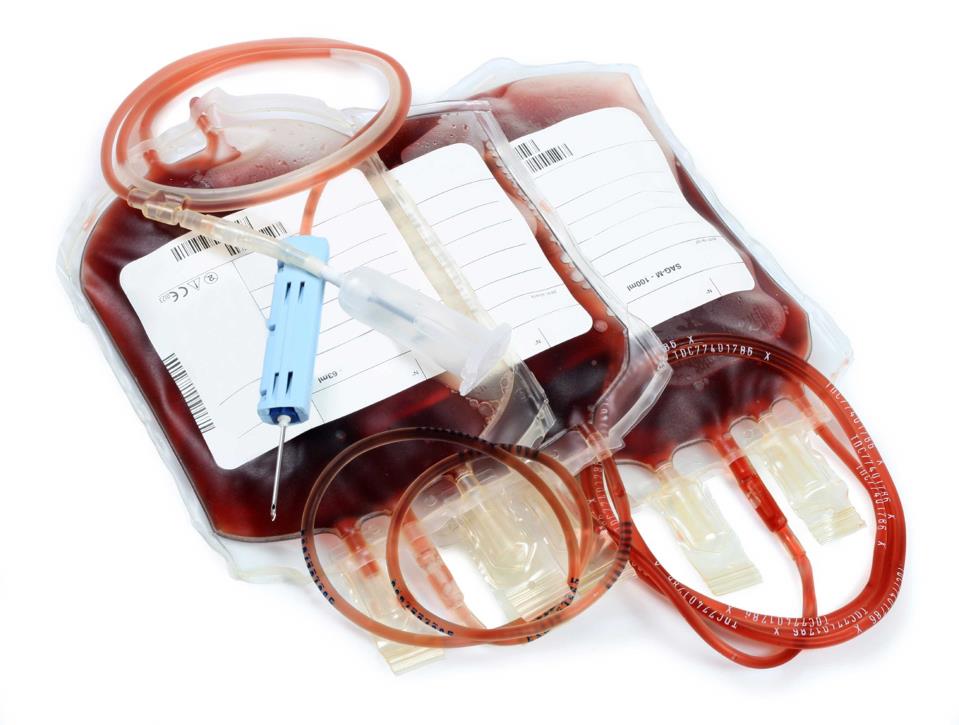
Main challenges Malta’s blood banks face
He explained that the challenges we know about relate to maintaining a safe and sustainable blood supply. Near-future developments may require new strategies, new products from blood and tissues and new technology.
“One of the main challenges is working within a very restricted budget while maintaining an increasing supply and safety levels,” he said.
Asked whether the blood bank always found a donor for O negative patients, he said: “O negative patients require O negative blood. From time to time we encounter critical shortages of this blood type and in these situations we contact donors directly through our database. No patient has ever suffered consequences due to non availability of blood,” Dr Aquilina said. About eight per cent of the population are O negative, he pointed out.
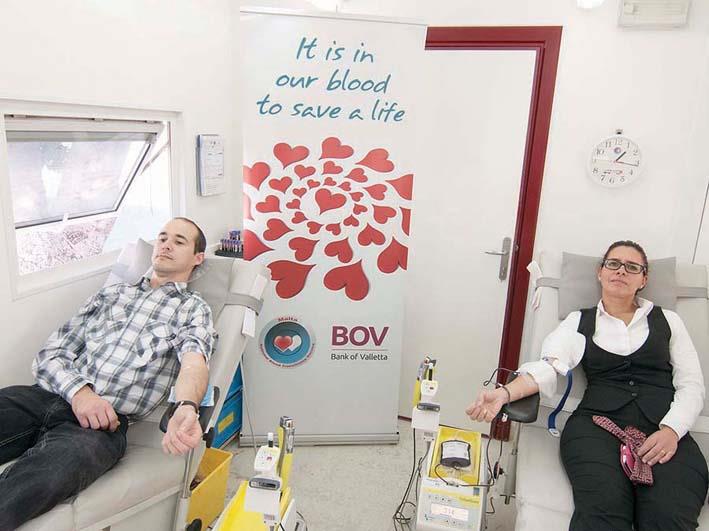
50 units a day needed to cope with hospitals’ demands
Generally, hospitals use 50 units a day so it is pertinent that this target is reached on a daily basis, he said.
The blood, he added, is used for operations, chronic diseases, accidents or any severe bleeding.
“Many operations will not require blood but this has to be available in case it is needed. Many operations will not be performed unless blood is available. Some accidents require multiple transfusions sometimes running into tens of units,” Dr Aquilina said.
Asked to give a rough idea of how much blood can a person can lose but still live, he said the issue is more about the rate of bleeding.
“A relatively small amount lost quickly and not replaced can be fatal (for instance two litres of lost blood). A small bleed over a long time may hardly be noticed until the haemoglobin is very low,” he said. An adult male has around five litres in his body.
Dr Aquilina had a few but important words for the public to chew on, despite stating that the public always responded to the bank’s urgent calls for blood: “Donate blood, you will save a life.”