The Home Affairs Ministry has sent this newsroom a copy of the revocation of Clyde Joe Cassar’s general interdiction order. But this was in response to a request for something else – the judgement showing the revocation of his suspended sentence.
The revocation of the general interdiction was published earlier this week, but the question of his suspended sentence, given that the Minister said that, according to the documents provided there was no kind of criminal record, remained.
Mr Cassar contested the Labour Party deputy leadership post back in 2008, but lost out to incumbent Toni Abela. He worked as an immigration officer, and was found guilty of forgery back in 2012 after he pleaded guilty in court.
The case revolved around an Egyptian man, who the court had heard needed to return to his country for medical treatment. In that judgement, Cassar admitted that he had played his part in forging a passport stamp, and he received a two-year sentence, suspended for four years. He was also charged with committing a crime when he was a public officer.
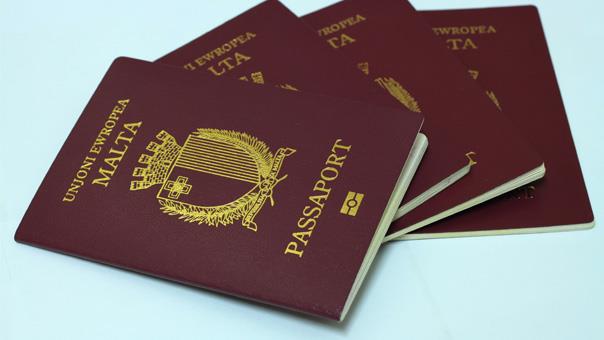
Earlier this week, this newsroom asked Home Affairs Minister Carmelo Abela about Mr Cassar’s position with the Agency for the Welfare of Asylum Seekers, given that he had admitted guilt to forging a passport stamp back on 16 December 2012, and was given a two-year prison sentence, suspended for four years.
In response, the Minister said he had been told that Mr Cassar had presented all the necessary documents before he was formally offered a job and that, according to those documents, this was not what had happened. According to the documents provided, "there was no criminal record.”
He went on to say that he had been informed that all correct procedures had been followed and that he had received an email stating that the interdiction had been revoked and the judgement changed. However, he had not seen the second judgement himself.
The General Interdiction was revoked by Magistrate Gabriella Vella, the same magistrate who issued the 2012 judgement. Mr Cassar, in his request to revoke the interdiction, referred to the fact that he had admitted the charges.

In his interdiction revocation application, Mr Cassar had argued that, prior to this offence, he had had a clean record and he had fully cooperated with the police. The application stated that he regretted his crime, and while being punished through the suspended sentence, he also faced social stigma and financial difficulties.
The application said that Mr Cassar “is married to a Serbian national, who currently does not work and is still learning the Maltese and English languages”.
It pointed out that the couple was not receiving any social benefits.
The application continued that Mr Cassar and his wife were getting by with just over €1,000 in their bank account, and that they had a loan to repay.
The application said that Mr Cassar was looking for work, but had been unsuccessful due to the interdiction as well as his criminal conduct record. It said that he wanted to be given the opportunity to not have to carry around a single mistake (the forgery), for which he had received no remuneration, for the rest of his life.
“The applicant requests the chance to start again, and believes that his behaviour over the past months shows that everything he has said is true.”
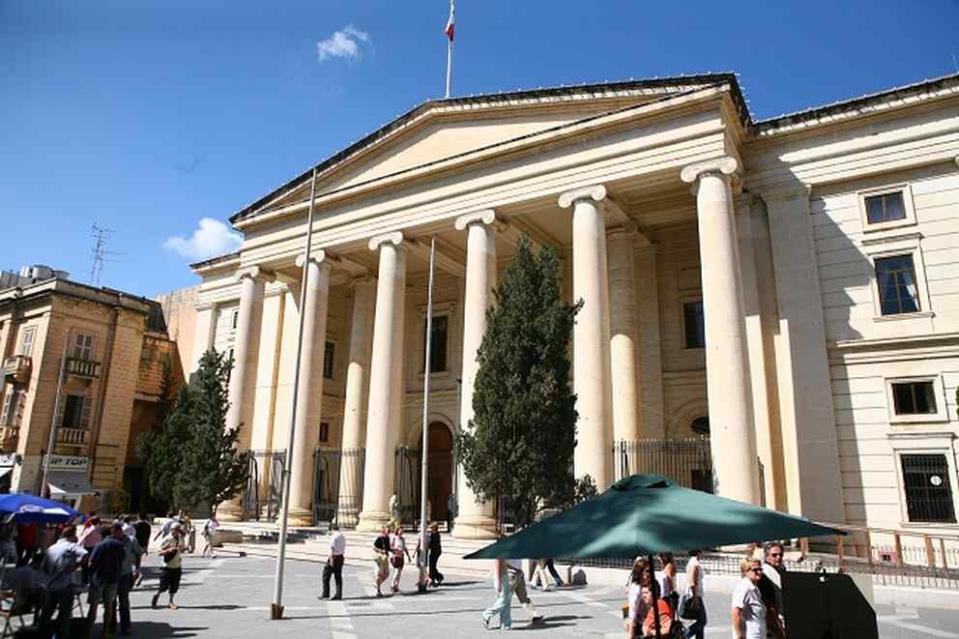
In her decision, Magistrate Vella said that, due to the circumstances of the case and the financial problems faced by the applicant, the court had decided that it was not in the interests of justice and society for him to remain subject to the interdiction, “and this so that he could find work and maintain himself and his family”.
The magistrate went on to say that the two-year prison sentence, suspended for four years, “which is a high sentence in itself, is a fitting sentence given the circumstances while also acting as a sufficient deterrent so that the applicant can both learn from his mistake and not repeat this, or any other crime, again”.
The magistrate then ordered the revocation of the general interdiction.