Prime Minister Joseph Muscat today said that while the world galvanised in seeing the pictures of a young Syrian boy dead on a Turkish beach, the issue of migration and people dying at sea cannot be forgotten.
Speaking during a radio interview on One Radio, Dr Muscat said that while the photograph of three-year-old Aylan were heartbreaking, he had seen many more photographs of dead children, yet no one seemed to take any notice at the time.
Aylan though, he said, was a different story. "This is where we see the power of the media. As soon as the photograph was published, everyone seemed to spring to action. But we cannot forget. So far, all we have heard is talk. We need action," he said.
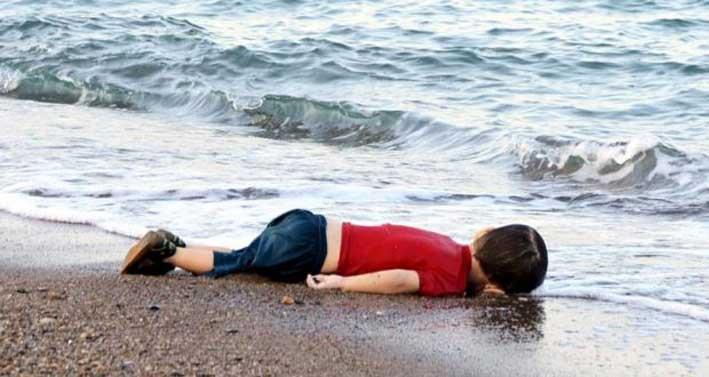
The Prime Minister said that finally, it seemed that Europe has realised that the migration phenomenon is not a Mediterranean problem and it is not just a European pboem, but a global one.
"We are consistent. I recently met with Italian Prime Minister Matteo Renzi in Florence and we reaffirmed our common position on migration. The problem was first experienced by Spain, then Malta and Italy and then Greece, but it has expanded," he said.
Dr Muscat said that the problem was now creeping into the heart of Europe with countries such as Hungary, Austria and Germany now being at the centre of it.
"But so far, all we have heard is talk. The upcoming summit in Valletta between EU and African countries should help us all find a better solution and to reach consensus on a way to manage the problem better," he said.
Economy
Dr Muscat also turned to the economy and said that this government had inherited an unemployment problem, with as many as 8,000 being jobless. "We have reduced that figure to 5,000. We know that there are still people looking for work and we also appreciate that there are people who feel they should be paid more for the job they do," he said.
However, he pointed out that the truth of the matter was that Malta's unemployment rate is the lowest that it has ever experienced and it is the second lowest in the EU, after Germany.

He also said that Malta was producing many skilled graduates, all of who are finding work. "Look at the number of nurses who are graduating, for example," he said.
He mentioned the turnaround at Enemalta and said that from being an albatross around the country's neck, it had become a vehicle for the biggest single investment that Malta has ever seen. "And in turn, it will invest in other countries and continue to expand its operations," he said.
He turned to the opposition and said it was clear that there was a big split within the Nationalist Party. Dr Muscat said that there was a faction which had been taken over by deputy leader Beppe Fenech Adami, whose sole focus was being negative. However, there were others in the Pn which did not think that way. "The other factions tell us that it is their job to criticise constructively and that they are fed up with the constant attitude of negativity," said Dr Muscat.