Combined research by the University of Oxford, Harvard University and the University of Nevada has found that students who start school later see a better overall performance.
In Malta, a current White Paper issued by the Ministry for Education made a proposal that emanated through its meeting with stakeholders, that while State Schools already have staggered opening hours, one must “study ways on how these openings can be optimized within the existing time brackets to best alleviate traffic congestion. All schools should open at least an hour earlier in the morning and the organisation of extra-curricular activities can be introduced”.
The White Paper called for further in depth discussion, consultation and analysis of the current traffic situation on the island vis a’ vis school opening times.” In accordance with Budget Speech 2015, the recommended solutions need be further investigated so as to pave the way forward in developing an effective strategy which will diffuse traffic congestion without impacting negatively on the provision of educational services and the commitment of working parents whilst keeping in mind that a one size fits all is not an adequate solution. Such solutions need to have a wide support from the key stakeholders and the Government will continue working closely with the stakeholders to deliver effective solutions with minimal negative impacts”.

The White Paper also states that it is pertinent to ask whether traffic congestion is the consequence of school opening hours. “Rather than focusing on the issue of school opening times, this White Paper recommends a wider view of the situation since Malta is experiencing traffic congestion at several peak hours throughout the day”.
The authors of the combined university study, published by Taylor and Francis, found that school start times should be at 08.30 am for students aged 10 (due to a biological wake-up time of 06.30 am), 10.00 am for students aged 16 and 11.00 – 11.30 am for students aged 18. The researchers came up with this information based on Astronomical time data and changes in sleep patterns using the biological “wake time”.
“These changes in start times would help solve the chronic sleep deprivation currently experienced by adolescents on school days”.
The researchers mentioned that large-scale studies consistently indicate positive effects of later starts in education, “and this occurs throughout the adolescent age range as measured using different tests of achievement. A powerful additional source of evidence is that positive outcomes were found whether or not later starts were implemented to address sleep issues, or the timing changes were consistent for all students”.

“Even in the early stages of puberty (11–14 years of age) there is evidence that later start times begin to have an effect on academic outcomes. In a study of data from Wade County, North Carolina, it was possible to compare outcomes within schools with variation in start times across schools because of changes in transport arrangements in the county. A start time of an hour later had a significant two-percentile point gain in state-wide maths test scores and similar changes in reading. There were two distinctive findings in the study: first, the benefits were greater for those students at the lower end of distribution of test scores; second, the two-percentile gain in grade 8 scores remained two years later in grade 10”.
The researchers from the universities explained that for the educator, student development is defined by age and the daily timetable by social conventions that vary between countries, regions and even individual schools. “In contrast, biological time is measured in developmental changes in the body, and over the day by our internal biological clock. It is no surprise given the relative novelty of mechanical clocks in evolutionary timescales that our ability to function optimally, including in learning, varies with biological time rather than conventional social times”.
“When social time and biological time are more closely aligned, as in the early years of education, this distinction is not critical. In contrast, in late adolescence the conflict between social time and biological time is greater than at any point in our lives. During adolescence biological changes dictate both a sleep duration of nine hours and later wake and sleep times”.
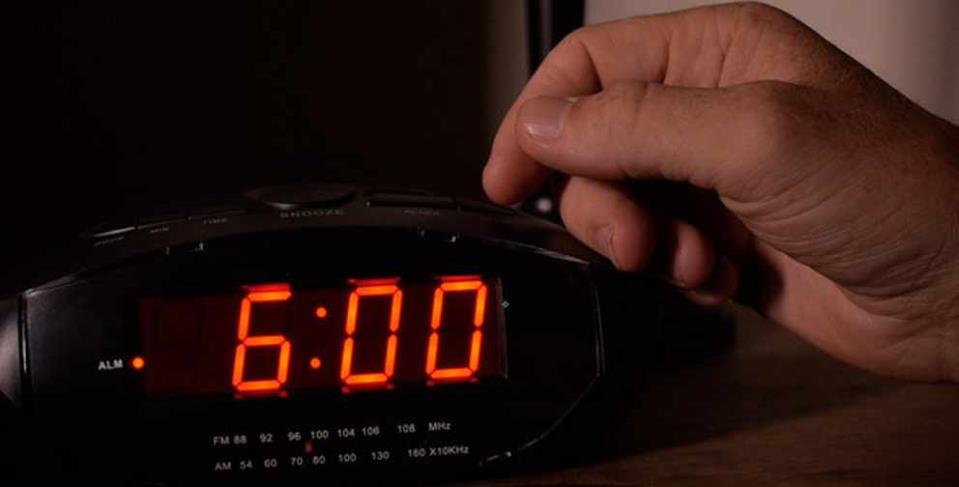
They explained that at its peak, the combination of these two biological changes leads to a loss of two to three hours sleep every school day. “Thus, a 07.00 am alarm call for older adolescents is the equivalent of a 04.30 am start for a teacher in their 50s. Failure to adjust education timetables to this biological change leads to systematic, chronic and unrecoverable sleep loss. This level of sleep loss causes impairment to physiological, metabolic and psychological health in adolescents while they are undergoing other major physical and neurological changes”
The impact of early school times on adolescents is not understood by most educators, they explained, adding that a common belief is that adolescents are tired, irritable and uncooperative because they choose to stay up too late, or are difficult to wake in the morning because they are lazy. “Educators tend to think that adolescents learn best in the morning and if they simply went to sleep earlier, it would improve their concentration. These assumptions reflect societies’ prejudice in favour of early risers in adulthood”.
The researchers also mentioned a large study that had included around 50,000 students in Minneapolis, USA. This study used data on more than 50,000 students collected before and after the time changed, and was recently replicated in schools in three different states. “The self-reported student evidence indicated that students liked the change, slept an hour longer compared to students in two other similar school districts, and reported their attendance, achievement, behaviour and mood improved”.