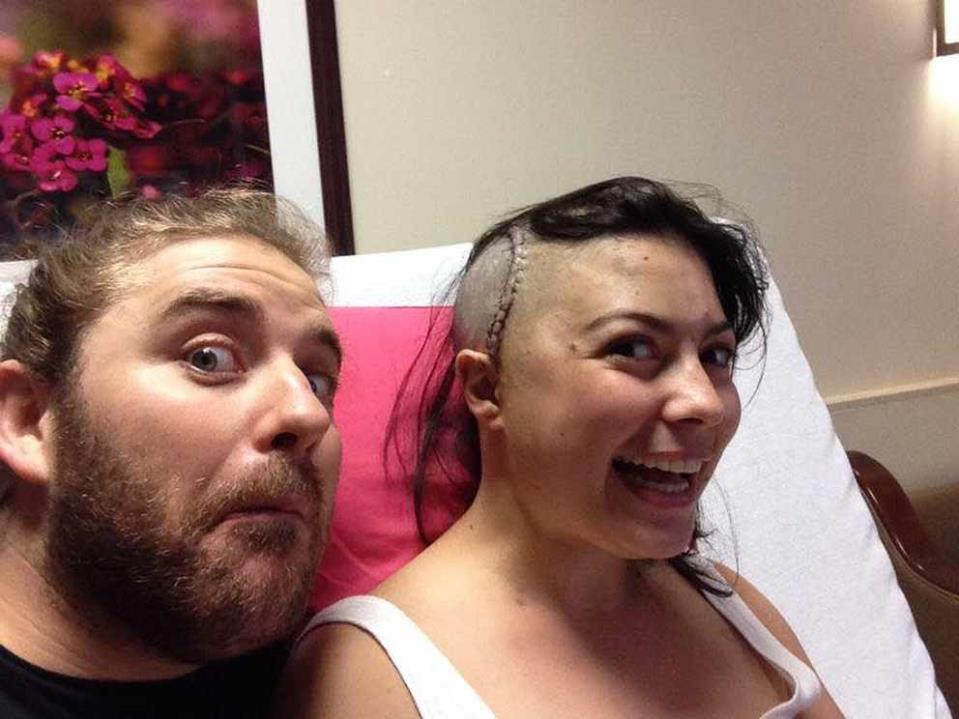
Luke Marshall’s wife, Jenni (an Australian), was diagnosed with glioblastoma multiforme, a very aggressive type of brain cancer, in July 2011. Only five per cent of people diagnosed with the condition manage to survive for two years but, four years on, Jenni is still fighting. In an interview with The Malta Independent on Sunday, Luke, who is Maltese and lives in Australia, speaks of the challenging journey the couple has been through.
The beginning
“It was a blistering hot Friday afternoon and I was five minutes late for our first date. I entered the restaurant and saw the beautiful woman sitting at the bar that matched the photograph she had sent me. I introduced myself and she immediately remarked that I was late,” Luke recalls.
Luke met Jenny when she had already been diagnosed with cancer, but was still unaware of how bad the situation was. “She was honest with me about her situation from the first date. “At that moment, all that mattered to me was the beautiful vision of a woman who had already enchanted me to my very core.”
Five days after they met, Jenni received the results of her brain scans – the tumour was back. The start of the couple’s relationship involved countless hospital visits in six different countries.
Doctors recommended gene target chemotherapy, which is intended to block the growth and spread of the cancer by interfering with specific molecules that are involved in the disease’s progression. The side effects of the medication included nausea and diarrhoea, loss of appetite, weakness, tiredness and vital organ damage. “Jenni is a fighter and she almost always had a smile on her face,” Luke says.
Things were going so well that Luke moved in with Jenni after only one month of dating. “It was like we were made for each other. We have so many memories to share – canoeing across open pirate laden waters in the Philippines and going on a food safari in Boracay.”
Risking a new treatment
In November 2013, doctors suggested antineoplastons treatment, but at the time, it was illegal in the United States. The doctor who invented it was wrestling with the Food and Drug association of America (FDA) who were trying to shut him down, even though he had proof that some of his patients who used the drug had been completely cured of the incurable. “It is a risk – but I don’t think there’s a person on this planet who wouldn’t take a chance at something if they knew it could save their life,” Luke says.
After a long struggle, the infamous treatment was sent from the United States to Jenny in Australia. She had to have her chest pierced with a six-inch needle to create a hole in which to insert a Hickman line that would carry the treatment directly into a central vein in her chest. She would then be hooked up to a portable machine that would pump 1.5 litres of the extremely salty medication into her body pretty much around the clock. For the one hundred days that Jenni was on this treatment, she never had more than two hours of continuous sleep.
“As usual, Jenni handled it like a champion and often made the three-hour drive up to Apollo Bay to visit me on the farm by herself: machine, bags, tiredness and all,” Luke says.
“Our hopes were high for this treatment and it was time to have the next round of scans. As usual, waiting for the results was nerve wracking, is it growing? Has it shrunk? Is it stable?”
But when the results came back, the tumour had grown.
A proposal
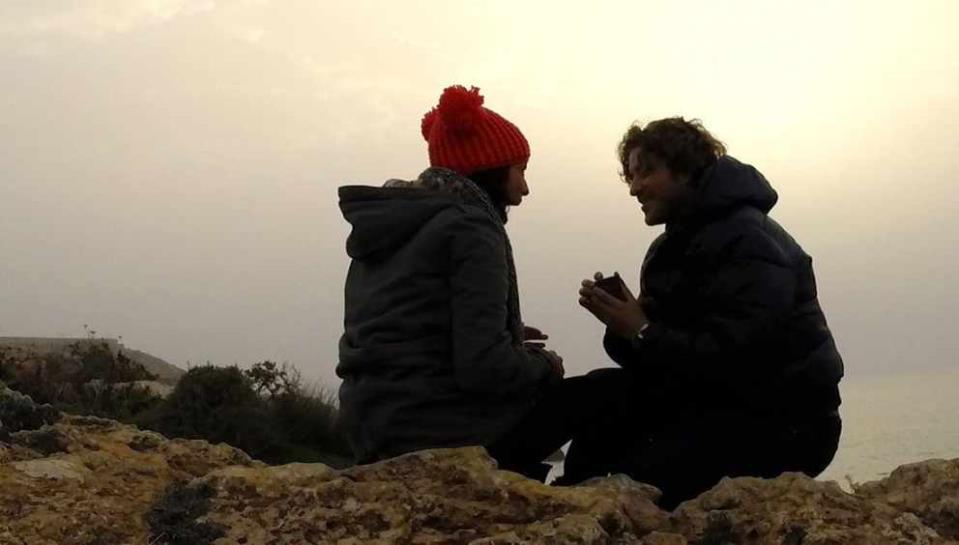
Three weeks after Jenni underwent brain surgery, the couple visited Malta. It was here that Luke proposed – under a silver sky at Riviera Bay. “I needed her to know that, no matter what uncertainties lay ahead, she could be certain that she wouldn’t be alone. I’d never been so sure of anything in my life.”
Hopeless treatments
Back in Australia, Jenni started another round of treatment. As with the previous ones, the couple hoped that this one would work, but the scans were disappointing. The tumour had now grown to the size of a golf ball and not only that, but it was now moving to the left side of the brain. This meant there was not only a risk of paralysis but also a complete brain shutdown.
“Yet another promising treatment had failed. The fact that the tumour had grown so much was terrifying. We needed to find something else, and fast,” Luke says.
Jenni went to Texas for yet more major surgery. Halfway through the procedure, she had to be brought round from the anaesthetic while the doctors prodded certain parts of her brain and asked her questions to ensure they didn’t go too far and paralyse her. The side effects of the surgery were harsh and there were days when Jenni was not able to walk without help.
But subsequent scans proved the surgery had been futile. “The pus build-up from an infection was so bad that it had pushed Jenni’s entire brain against one side of the skull, making it look like a kidney bean,” Luke explains. “Nothing was working and Jenni was in a lot of pain.”
The wedding
Nevertheless, Luke and Jenni went ahead with their plans to get married. The week before the wedding, Jenni had another round of scans but they decided to hear the results the week after the wedding, to avoid any bad news spoiling their special day. “The wedding was perfect,” says Luke “We were surrounded by love and great people and the fact that Jenni was walking down the aisle towards me after so much hardship and so many struggles was nothing short of a miracle.”
The road ahead
Today, Jenni and Luke live in Queensland, Australia, with cancer advocate Grace, who has arranged for a group of great doctors to work together to find the best combination of treatments available in an attempt to try and rid her of the tumour once and for all.
“Being part of Jenni’s life has shown me the true meaning of courage and determination. She is the strongest, kindest, most amazing person I know and I am in awe of her every day. We all hope to marry our soul mate someday. With Jenni, I’ve also married my hero,” Luke says.