The much acclaimed Life is Beautiful (1997) is a movie that many have seen with tears in their eyes and a smile on their face, in all probability, at the same time. In a jiffy Roberto Benigni manages to congregate two parallel, seemingly contrasting emotions into one experience. Naturally this also comes with the Benigni package, a genius who not only plays the part but lives the character. The great thing about this film is that this mastermind brings alive a story based on contradictions, essentially a man immersed in pain and suffering, trying to protect the people he loves by making this tragedy, where the story is positioned, look like a game.
I think that what Benigni does in this film is more than act out a part in the movie, but he accompanies us into a process of existential catharsis.
Let’s face it, aren’t we all in search of happiness? Don’t we all want to live in a state of serenity and harmony? Isn’t it everyone’s dream to make life one great adventure?
The funny thing about life is that as we struggle to find these moments of happiness a counter-reaction in the form of ‘pain’ pops-up straight away.
As a society we are continually implanting in each other the idea that joy should rank as high as possible in our quality of life index. In fact, people thrash about day-in and day-out to try and be content, delighted and cheery. Many see money and material resources as being the end that justifies the search, the reason to live for. Mind you, like many I consider myself earthly-minded. After all, that is why I work so hard and try to do well for myself and those around me so that I can have the resources to buy.
In fact I wish I had more money so that I could purchase all the things that I want for myself and for those I want to share my wealth with. I believe that prosperity can give you satisfaction and fulfillment. It can help you get through so many problems and it takes off the burden of trying to make ends meet. However, I know, we know, for a fact that money doesn’t take away the embedded ‘pain’ we bemoan.
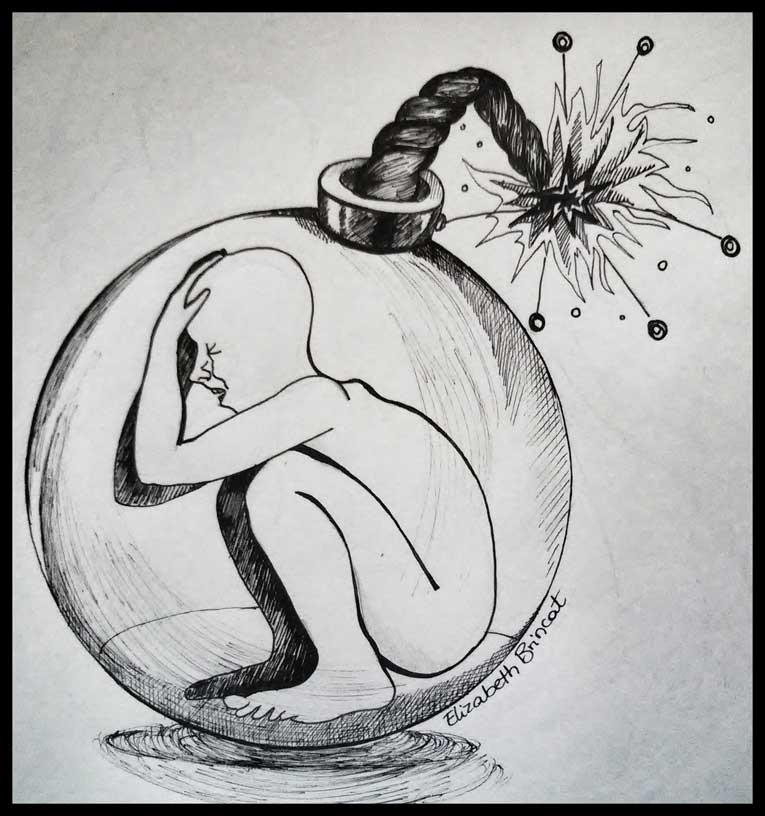
Try as we may, ‘pain’ manages to squeeze itself into our lives. This unpleasant knotty tricky feeling of discomfort, at times verging on agony, affects us and impinges on the people around us and might make us lose our focus. It can range from emotional to physical and mental ‘pain’. In any form it comes it hurts, it is sore and it impairs us. Probably the worse ‘pain’ lies in the mind. The soreness of being lonely and alone, the sting of not knowing what is to come, the twinge of losing out on an important decision - the ache of being left out.
Like many, I still miss the point why ‘pain’ has to exist in the first place. Some would even dare say that ‘pain’ has its positives because it keeps you away from taking erroneous routes. Some go as far as to say that ‘pain’ has value because it shows you where and when you have messed up in life, a sort of alarm system. Some would even articulate that it motivates people to change tact.
What I cannot add up is that whilst we cannot do anything about pain that is bound to happen, we create so much hurt towards each other.
This is where and when the cooperative spirit has to kick in. It is the role of community to create a network of support and to accompany people through their hurt. If we cannot understand that we are here for each other than we really are in a clutter. As members of a community we are called to support. We are expected to do something about the throbbing that constantly sprouts around us. For sure we are duty-bound to enjoy life and to have all the material things possible, however, at the same time we are called to live in unison.
What's more, as I write this column I am working on a piece of research trying to understand the impact of societal pressures on vulnerable members of the community. When you hear such narratives ‘your’ heart goes out to these people because in most cases ‘we’ are the culprits of pulling each other down.
For example, Maria, a young woman who was caught trafficking drugs has to face up to her challenges, locked-up and essentially forgotten by her family. Her drug addiction is compounded by the absence of the family. I will not judge anyone, it’s not my role to do that, but the pain and the anguish for this young woman is multiplied by this rejection.
Or Jimmy, a young man with an intellectual impairment who has been cast out by his mother and made to sleep in a public garden for months on end until a stranger started taking care of him.
Or Laurence who has to suffer repeated bullying as he transitions from being positioned in a female body to becoming a boy. He gets spat at, called names, abused for no other reason other than being different from the norm.
Or Rita. Do we know the pain that we mete out on this girl because she wears the scarf being a Muslim and irony of ironies is Maltese! Yet she gets abused, mistreated and discriminated and probably the next ‘natural’ thing for some or many would be to lynch her.
We cannot do much about the ‘pain’ that people suffer because of illness or some other natural condition except maybe support and help provide for these individuals. But we can do so much about so many other forms of ‘pain’.
Imagine a society where instead of constantly mounting ways how to hurt and reject, to snub and discard we create a system whereby we can live with each other’s differences. It is true that we live for ourselves but we also need to live collectively.
This is the type of pain we can do something about! This is what Benigni is about in Life is Beautiful. There is a silver lining in every challenge we face in life, but it will not happen alone – we need to believe in our strengths and have each other’s sustenance. That is what society is about, that is why we need to strive to have communities.
‘You're serving. You're not a servant. Serving is a supreme art. God is the first servant. God serves men but he's not a servant to men.’ (Life is Beautiful)