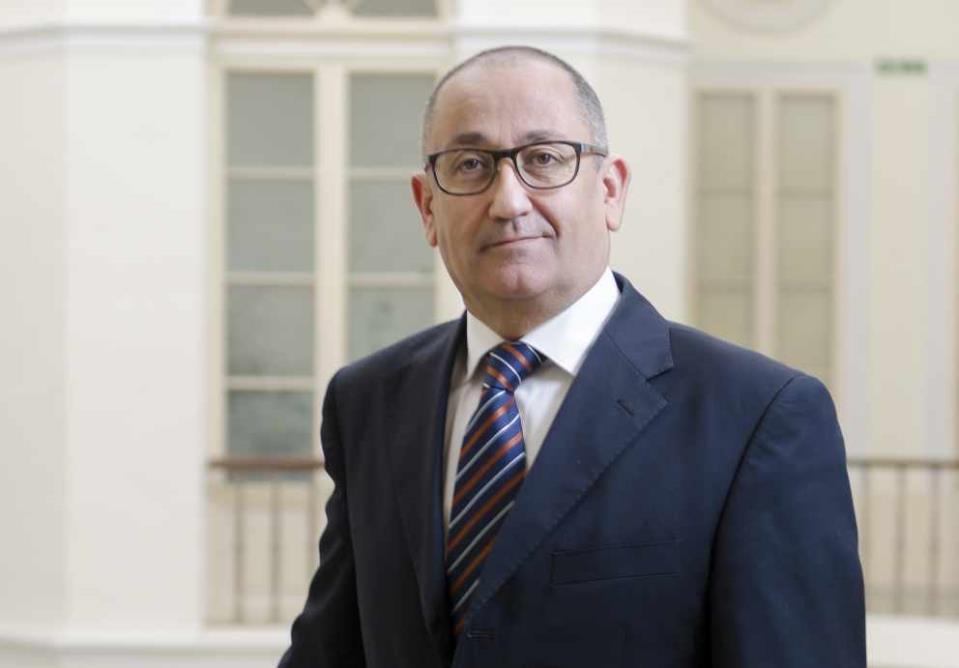
The President of the Malta Chamber of Commerce, Enterprise and Industry, Anton Borg, is suggesting that everybody using free healthcare in Malta should get a bill outlining how much the health service (hospital, medicine, etc.) has cost the country, without the patient, however, actually being made to pay for it.
In an interview given to this paper, Mr Borg said that the Chamber feels there is a need for awareness that what is billed as free healthcare and free medicine is in fact not free at all.
The Chamber is in no way suggesting that the patient be made to pay — neither for free medicine, nor for hospital visits — but the patient must be made aware of the costs of running a free health service.
Making the patient aware that, for instance, an operation, recovery time and medicine could cost the country €5,000 would contribute towards the awareness that health services do not come from thin air. “These costs come out of our taxes, and the public must be made aware of the extent of these costs,” said Mr Borg.
This will undoubtedly raise eyebrows amongst politicians on both sides. The government side may fear accusations that this is the first step towards the end of free healthcare. The Chamber, however, is optimistic that government should not be afraid of shouldering such responsibility. On the contrary, Mr Borg claims, “the government would be shirking its duties if it refrains from doing so.”
Through such a measure, the Chamber believes, spending on hospitals and medicine may be controlled.

Both political parties must rise above the usual political diatribe and realise that the country will gain if such as system is implemented. Both parties and all parties involved must come to an agreement that, in the national interest, awareness about the cost of healthcare must be brought to the fore as soon as possible.
Mr Borg added there have been instances in the past when attempts to raise awareness were made, but these were swiftly turned down by the political class as they were considered political threats to the governments of the day. Today’s politicians, Mr Borg believes, are mature enough to understand how necessary this is.
The Chamber thus appeals for a genuine understanding of how much this proposal is needed and for an early implementation of the same.
The bill could read, for instance:
Cost of hospital stay: €5,000
Cost to patient: Nil.
The Chamber, to be clear, is not suggesting the introduction of a fee, but the creation of a culture of appreciation. People must value what they are being given. The tendency is for free things to go underappreciated. “We as a people seem to think the State owes us a living, which is certainly not the case,” notes Mr Borg.
Informal feedback on such an initiative was positive and encouraging, said Mr Borg. Solid arguments opposing the introduction of a system that would sensitise the public to the true costs of free healthcare were hard to come by. Now it is up to the politicians to discuss this proposal and to implement it.
The Chamber understands that the introduction of such a system could be tricky on any government, but the Chamber appeals to the Opposition not to be tempted by the cheap political points that could be garnered from such an initiative. On the contrary, the Opposition must understand the need for this and must make its supporters understand that this step is needed. The Opposition must also come to an agreement with the government side with regards to the parameters of the proposal.
It would be to the Opposition’s benefit if such a system is introduced by the present government, because it would find the mechanism in place once it is returned to government in the eventual future.
The Chamber has issued its Economic Vision proposal with 52 recommendations. One of these recommendations insists on inculcating a Culture of Excellence, doing away with the ‘anything goes’ culture.
At the very least, we must truly understand the cost of free things in Malta.
The country’s healthcare bill is increasing year after year, both because of the increase in the number of patients, as well as because of developments in the healthcare sector.
The Chamber feels we can have better tools to tackle sickness if we are careful with healthcare expenditure, without necessarily increasing global expenditure.
Mr Borg also invited the other constituted bodies and affected organisations to voice their opinions on the matter, who have all expressed their agreement informally, yet seemed to be hesitant about doing so publically at this time. Though this proposal has not yet been discussed formally with other Social Partners, Mr Borg is hopeful that it will be in the appropriate forum in the not-so-distant future.
The public in general must also welcome this proposal for it would pay them to know what their healthcare costs are. “This is understood as long as patients will not be asked to pay any part whatsoever of the cost,” Mr Borg clarified.
The Chamber does not feel the healthcare bill should go up further, for it is already crippling the Government’s Budget. But the Chamber believes that with the introduction of this itemised bill, healthcare expenses would be spent more carefully.
Mr Borg also notes that it is important that the patient would sign the bill in order to fully sensitize the cost of healthcare to the State.
The Malta Chamber President expressed his confidence that such a system could be implemented, as he felt strongly that the political class today could rise to the occasion, and act with the required maturity for the good of the country.
“Healthcare needs to be made sustainable in the long term in the interest of the nation’s well-being. But Politics must be kept out of this,” he concluded.